Have you ever bought a Christmas cactus, only to have it bloom before Thanksgiving? You might actually have a Thanksgiving cactus!
Christmas, Thanksgiving, and Easter cacti look so similar that they’re easy to mix up. They’re all beautiful flowering houseplants, but each has a few features that make it unique.
The good news? You don’t have to wait for flowers to figure out which one you have. A quick look at the leaves can tell you quite a bit!
Meet the Three Holiday Cacti
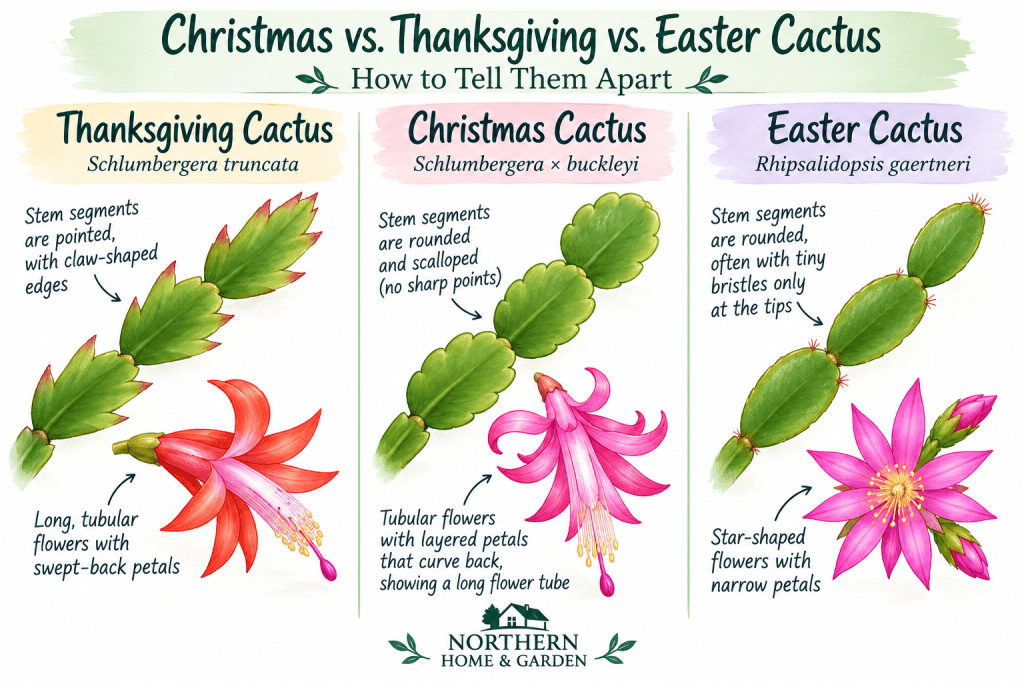
Although these holiday cacti look similar, each has its own distinctive features. The easiest way to tell them apart is by looking at the shape of their stem segments and flowers.
Thanksgiving Cactus
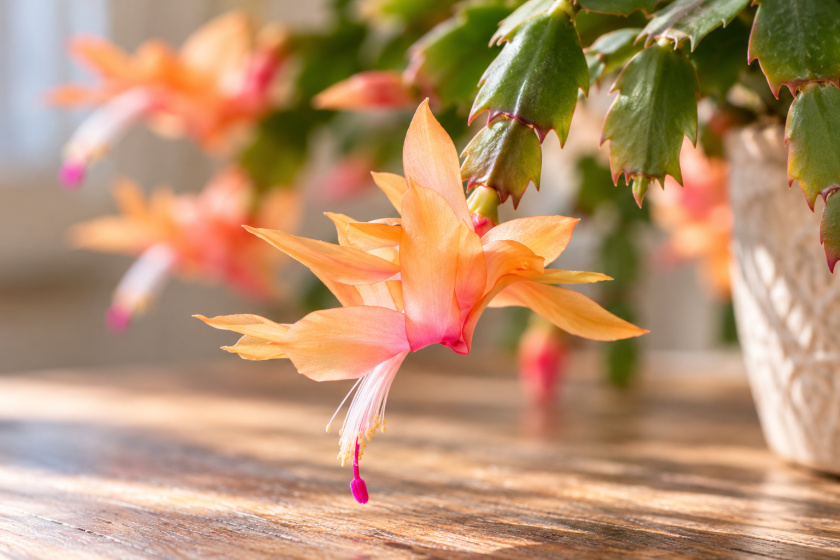
Thanksgiving cactus (Schlumbergera truncata) has pointed, claw-shaped edges along its stem segments. It’s usually the first of the three to bloom, often producing colorful flowers in the fall.
Its flowers come in shades of pink, red, purple, orange, and white. Thanksgiving cacti are also commonly sold as Christmas cacti in garden centers, which explains some of the confusion!
Christmas Cactus
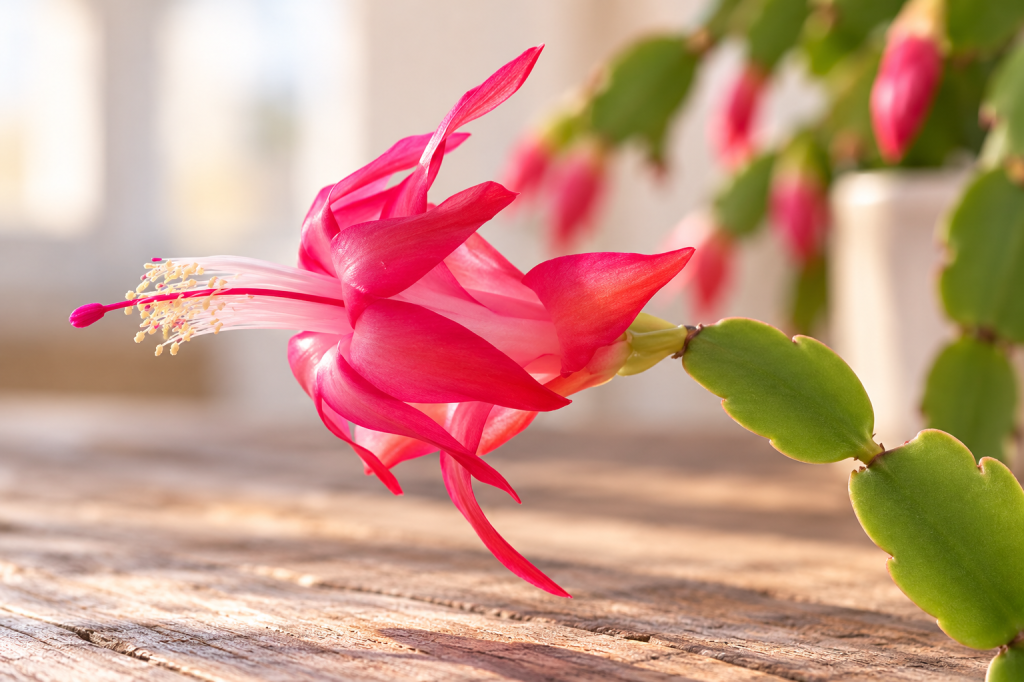
True Christmas cactus (Schlumbergera × buckleyi) has rounded, scalloped stem segments without the sharp points found on Thanksgiving cactus.
Its flowers are typically pink or reddish-pink and hang gracefully from the ends of its stems. Christmas cactus generally blooms in early winter, closer to its namesake holiday.
Easter Cactus
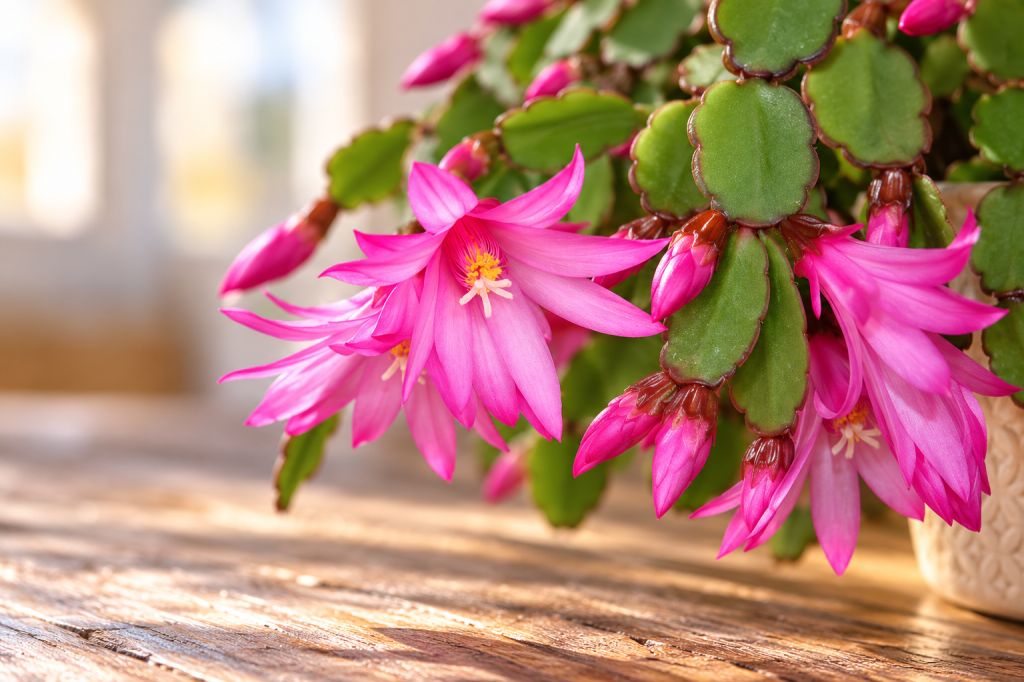
Easter cactus (Rhipsalidopsis gaertneri) has rounded stem segments, sometimes with tiny bristles along the edges and tips.
Unlike its fall- and winter-blooming relatives, Easter cactus typically flowers in spring. Its cheerful, star-shaped blooms come in shades of pink, red, orange, and white.
How to Care for Holiday Cacti
Although Thanksgiving, Christmas, and Easter cacti bloom at different times, their basic care needs are fairly similar. A little attention to light, water, and soil will help keep them healthy throughout the year.
- Light: Place your cactus in bright, indirect sunlight. Too much direct sun can scorch the stems.
- Water: Allow the top inch or so of soil to dry before watering thoroughly. Let excess water drain away, and never leave the pot sitting in water.
- Soil: Use a well-draining potting mix. Adding perlite or orchid bark can help prevent soggy roots.
- Temperature: Average indoor temperatures between 60–75°F work well for everyday care.
- Humidity: Holiday cacti appreciate moderate humidity, especially during the dry winter months.
Unlike many desert cacti, these plants are native to humid environments and prefer a little more moisture. The trick is keeping the soil lightly moist when needed without leaving the roots waterlogged.
Want Your Holiday Cactus to Bloom?
Healthy green stems are lovely, but those colorful flowers are what make holiday cacti so special!
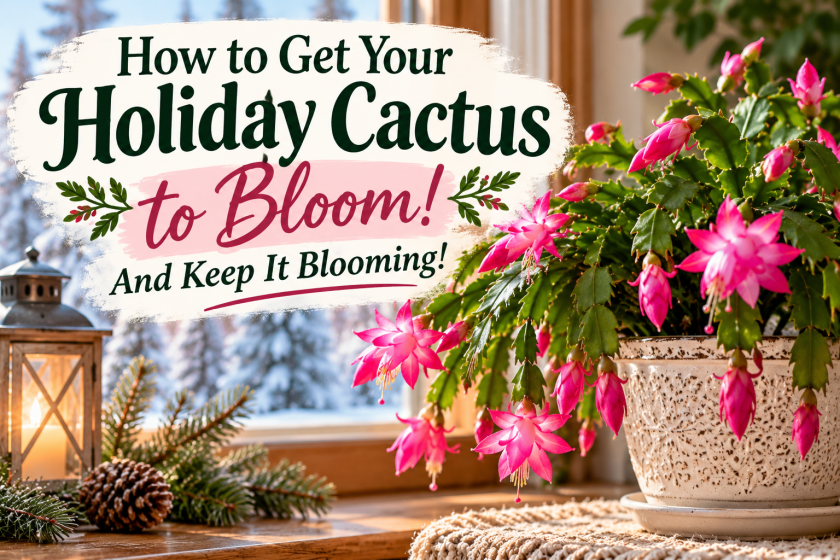
If your Christmas or Thanksgiving cactus hasn’t bloomed in a while, visit our guide on How to Get Your Holiday Cactus to Bloom for tips on encouraging flowers, including the importance of temperature, light, and seasonal rest.
Final Thoughts
Whether your holiday cactus blooms in November, December, or spring, each one brings a little color into the house when we need it most.
And now that you know what to look for, you’ll have a much easier time figuring out which holiday cactus is sitting on your windowsill!
🌻 Northern Home & Garden

