There’s something special about a Christmas cactus covered in beautiful flowers, especially when the weather outside is cold and snowy. Those cheerful pink, red, or white blooms bring a welcome splash of color indoors during the winter months.
But what if your Christmas cactus refuses to bloom? Or worse, it develops flower buds only to drop them before they open?
The good news is that getting your Christmas cactus to bloom isn’t complicated. With the right combination of light, temperature, and watering, you can encourage beautiful flowers year after year.
And if you’re lucky, you might even get a surprise round of blooms in the middle of summer!
4 Simple Steps to Encourage Christmas Cactus Blooms
Holiday cacti respond to changes in daylight and temperature. As fall approaches, longer nights and cooler conditions signal that it’s time to produce flower buds.
Here are four simple steps to help encourage those beautiful blooms.
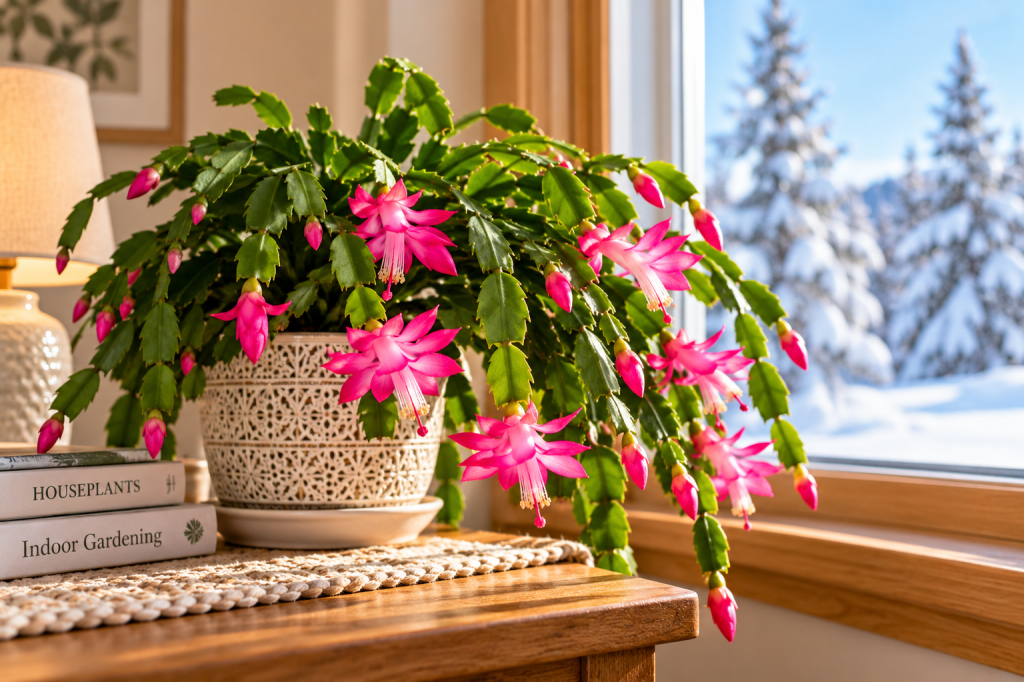
1. Give It Longer, Uninterrupted Nights
For about six to eight weeks in the fall, give your plant approximately 13 to 14 hours of uninterrupted darkness each night.
A room that stays naturally dark after sunset works well. Just remember that artificial lighting during the evening can interfere with bud formation.
During the day, keep your cactus in bright, indirect light.
2. Keep Temperatures on the Cooler Side
Cooler temperatures can encourage flower buds, even when the plant receives fewer hours of darkness. Aim for nighttime temperatures around 55°F to 60°F (13°C to 16°C), if possible.
There’s no need to turn your house into a refrigerator! A naturally cooler room may be all your plant needs.
Just keep it away from freezing window glass, cold drafts, and sudden temperature changes.
3. Water Carefully
Christmas cacti aren’t quite like the desert cacti we’re used to seeing. They’re tropical plants that prefer a little more moisture.
Water when the upper inch of soil feels dry. Allow excess water to drain away, and avoid leaving the pot sitting in water.
I use a soil moisture meter to help check when my houseplants need water. It’s especially handy for larger plants when it’s hard to tell how damp the soil is beneath all that foliage. I still check the soil myself, but it’s a helpful little tool!
4. Give It a Little Time
Flower buds don’t appear overnight.
After several weeks of favorable conditions, you may begin noticing tiny buds forming at the tips of the stem segments. It can take several more weeks for those buds to open.
Once buds appear, continue providing bright, indirect light and consistent temperatures as the flowers develop.
What to Do When Flower Buds Appear
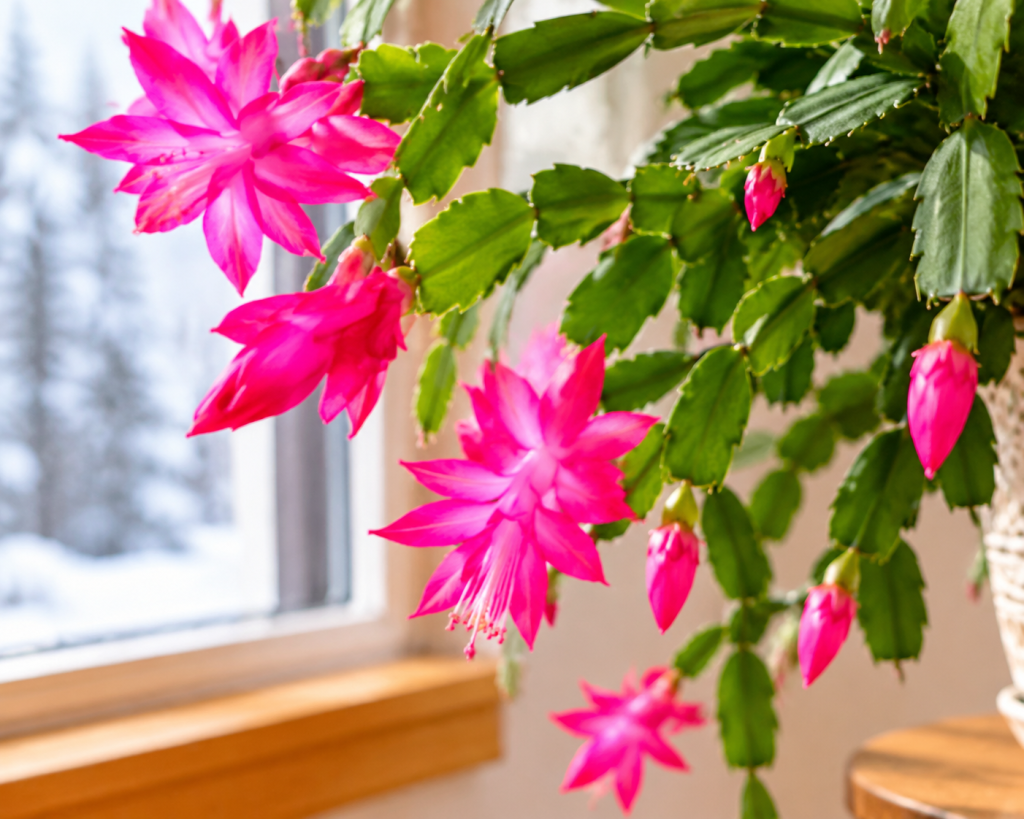
You’ve waited patiently, and your Christmas cactus finally has flower buds! Now the goal is to keep those little buds happy until they open.
Holiday cacti can be sensitive to sudden changes in their environment, especially while they’re developing flowers.
A few simple precautions can help prevent bud drop:
- Keep temperatures consistent. Avoid placing your plant near heating vents, drafty doors, or cold windows.
- Maintain steady watering. Don’t let the soil become completely dry for long periods, but avoid overwatering.
- Provide bright, indirect light. Once buds appear, your cactus no longer needs the long nights used to encourage blooming.
- Avoid sudden changes in location. Moving your plant isn’t necessarily harmful, but changes in light, temperature, or humidity can cause buds to drop.
- Hold off on repotting. Wait until after flowering to avoid disturbing the roots.
Why Are My Christmas Cactus Buds Falling Off?
If your cactus starts dropping buds, don’t panic! It doesn’t necessarily mean something is seriously wrong.
During our northern winters, indoor heating can make the air especially dry. Keeping your cactus away from direct heat and maintaining moderate humidity can help prevent bud drop.
If a few buds still fall off, don’t give up on your plant. Sometimes holiday cacti are just a little particular about their surroundings!
Why Isn’t My Christmas Cactus Blooming?
If your Christmas cactus looks healthy but refuses to flower, don’t give up on it just yet!
Usually, the problem comes down to lighting, temperature, or watering. A few small adjustments may be all it needs.
| Possible Problem | What to Try |
|---|---|
| Too much artificial light at night | Provide 13–14 hours of uninterrupted darkness for several weeks. |
| Temperatures are too warm | Try a cooler location, ideally around 55–60°F at night during bud formation. |
| Not enough daytime light | Move your cactus to a spot with bright, indirect sunlight. |
| Improper watering | Water when the upper inch of soil feels dry, and avoid soggy soil. |
| Recent repotting or other stress | Give your plant time to settle into a stable environment. |
Can a Christmas Cactus Bloom More Than Once a Year?
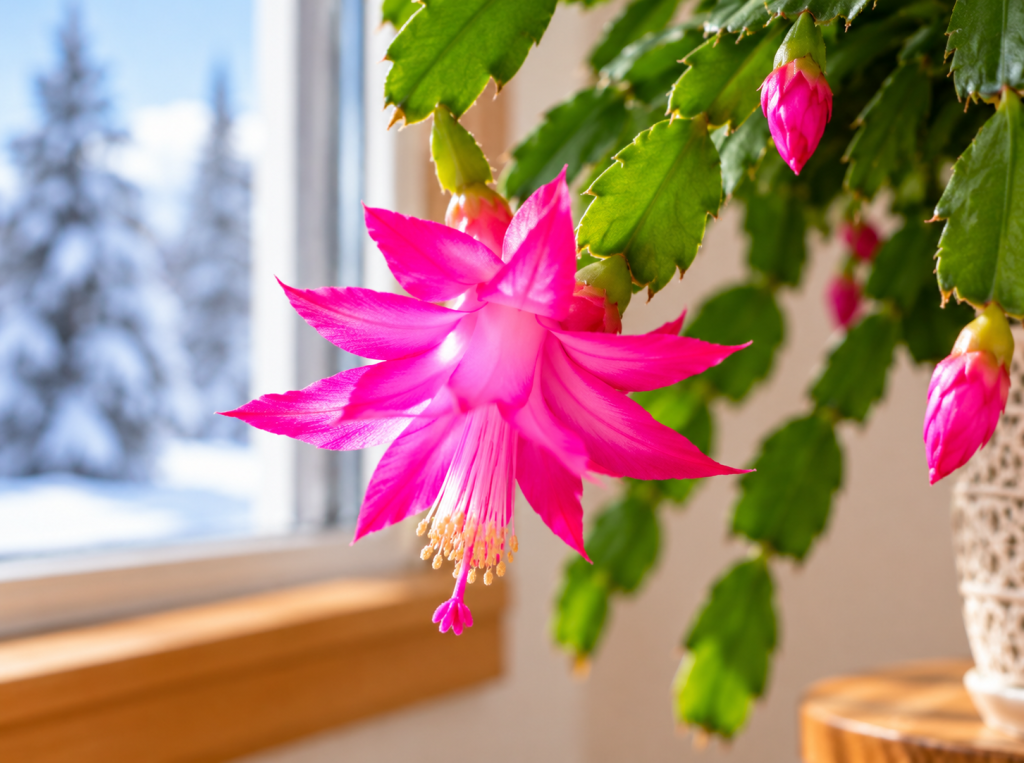
Absolutely! Although Christmas cacti are known for their winter flowers, they can bloom more than once a year when growing conditions are right.
Changes in daylight hours and temperature may encourage another round of flower buds, even outside the usual blooming season.
I’ve experienced this with my own holiday cactus. Not only has it surprised me with beautiful pink flowers in April, but it’s even bloomed in July! And the funny thing is, I haven’t done anything differently to encourage those extra blooms.
Apparently, my cactus has decided that blooming season is more of a suggestion than a rule!
While you can’t count on flowers appearing throughout the year, keeping your plant healthy with proper light, watering, and consistent care gives it the best chance to bloom again when conditions are favorable.
Caring for Your Christmas Cactus After Blooming
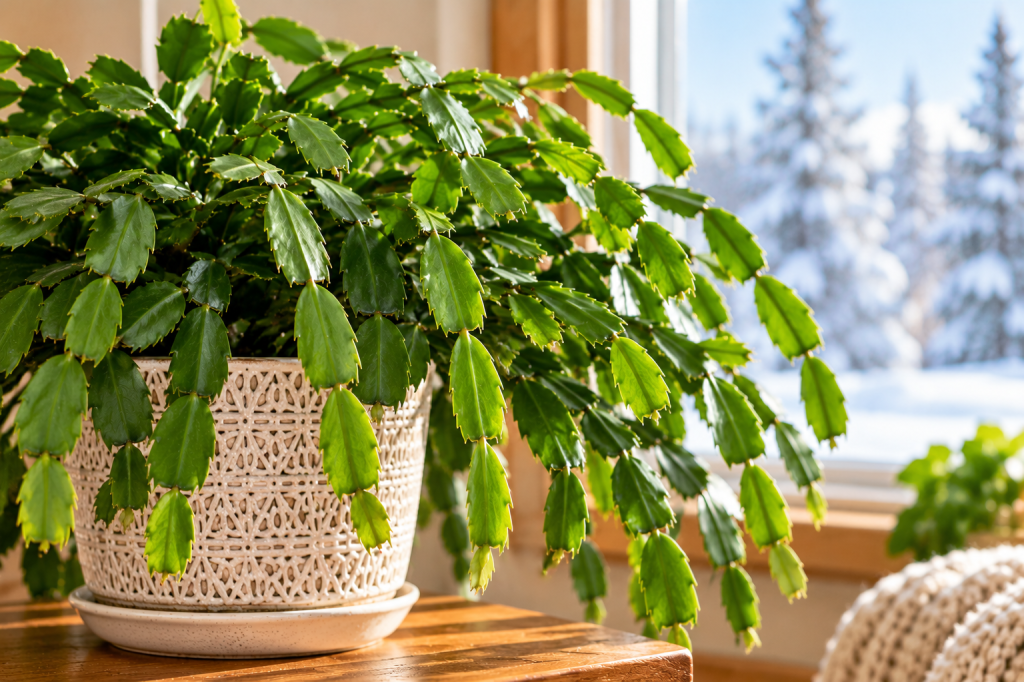
Once the last flowers have faded, a little routine care will help keep your Christmas cactus healthy and ready for its next blooming season. Fortunately, it doesn’t take much!
- Keep it in bright, indirect light. Avoid harsh afternoon sunshine that can scorch the stems.
- Water when needed. Allow the upper inch of soil to dry before watering, and never leave the pot sitting in water.
- Fertilize during active growth. A balanced houseplant fertilizer, diluted according to the label, can help support healthy growth in spring and summer.
- Repot only when necessary. Holiday cacti can bloom well when slightly rootbound. If your plant needs a larger pot, spring is a good time to repot.
- Prune after flowering. Removing a few stem segments can encourage branching and fuller growth. And don’t throw those cuttings away! They’re perfect for propagating new plants.
With a little consistent care, holiday cacti can thrive for many years, becoming beautiful houseplants that you can enjoy long after the decorations are packed away.
A Little Patience Goes a Long Way
Getting your Christmas cactus to bloom doesn’t have to be complicated. A few weeks of longer nights, cooler temperatures, and proper watering can make a big difference.
With a little patience and consistent care, you’ll give your plant the best chance to reward you with beautiful flowers.
And whenever those beautiful blooms decide to appear, they’re always worth celebrating!
🌻 Northern Home & Garden

