Ask any Fairbanks gardener when it’s safe to plant outside, and you’ll hear the same answer: June 1. Ask me when I actually plant, and the honest answer is mid-May. 😂 I’ve had to throw frost cloth over things more than once, but not every year, and that’s what keeps me gambling.
Whichever camp you’re in, the tricky part comes months earlier: knowing when to start seeds indoors. Most seed-starting charts are built for gardens that thaw in April, and the ones that mention Zone 2 can’t seem to agree on our frost dates. So here’s a week-by-week calendar built for real northern springs, with the crops I grow (tomatoes, broccoli, squash, zucchini and sunflowers) plus a few other northern favorites.
Affiliate Disclosure: This post contains affiliate links. As an Amazon Associate I earn from qualifying purchases.
Two Planting Dates, Not One
The secret to a good northern seed calendar is counting backward from two dates, because not every plant minds a chilly night:
- Cool-season crops go out around May 20. Onions, leeks, broccoli, cabbage, cauliflower, kale and lettuce can handle a light frost once they’re hardened off.
- Warm-season crops go out around June 1. Tomatoes, peppers, squash, zucchini, cucumbers, pumpkins, sunflowers and marigolds want frost-free nights and warmer soil.
Gardening somewhere a little warmer than Fairbanks? Shift every date in this post to match your own average last frost.
Where these dates come from: Fairbanks’ average last spring freeze is May 17, according to National Weather Service records, and UAF’s Alaska Master Gardener program puts the chance of frost after May 27 at about 1 in 10. That’s why cool-season crops go out around May 20 and tender crops wait for June 1. The indoor start dates are counted back from there using standard seed-starting times, with a little extra time for slow starters like onions and peppers, which grow more slowly in a cool northern house.
❄️ Northern Tip: The Mid-May Gambler’s Plan
If you can’t wait until June either, don’t start your seeds earlier. Keep the same start dates, begin hardening off a week sooner, and keep frost cloth (or a stack of old bedsheets) by the door. When the forecast dips toward freezing, cover everything at night and uncover it in the morning.
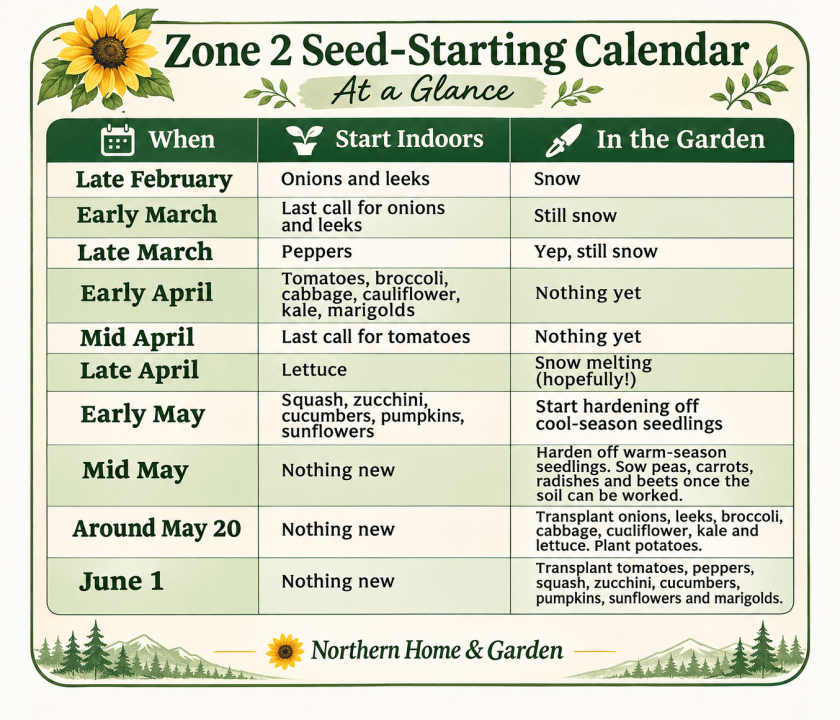
The Zone 2 Seed-Starting Calendar at a Glance
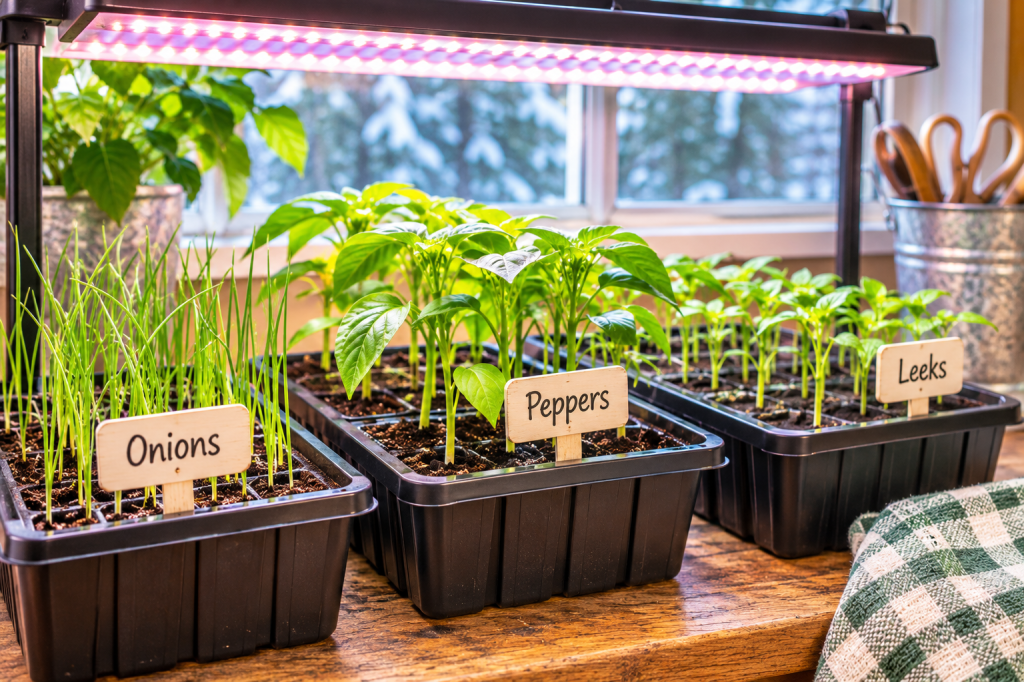
Late February and March: Onions First, Then Peppers
Onions and leeks are the slowpokes of the seed world. They need 10 to 12 weeks indoors, so they’re the first seeds of the year, right around the time the days start getting noticeably longer again.
Peppers come next, in the last week or so of March. They need 8 to 10 weeks indoors and can be slow to sprout in a cool house, so this is where a seedling heat mat earns its keep. Move them off the mat once they’re up.
❄️ Northern Tip:
Even with our days stretching out, March window light isn’t enough for sturdy seedlings. An LED grow light on a timer for 14 to 16 hours a day keeps them from stretching toward the glass.
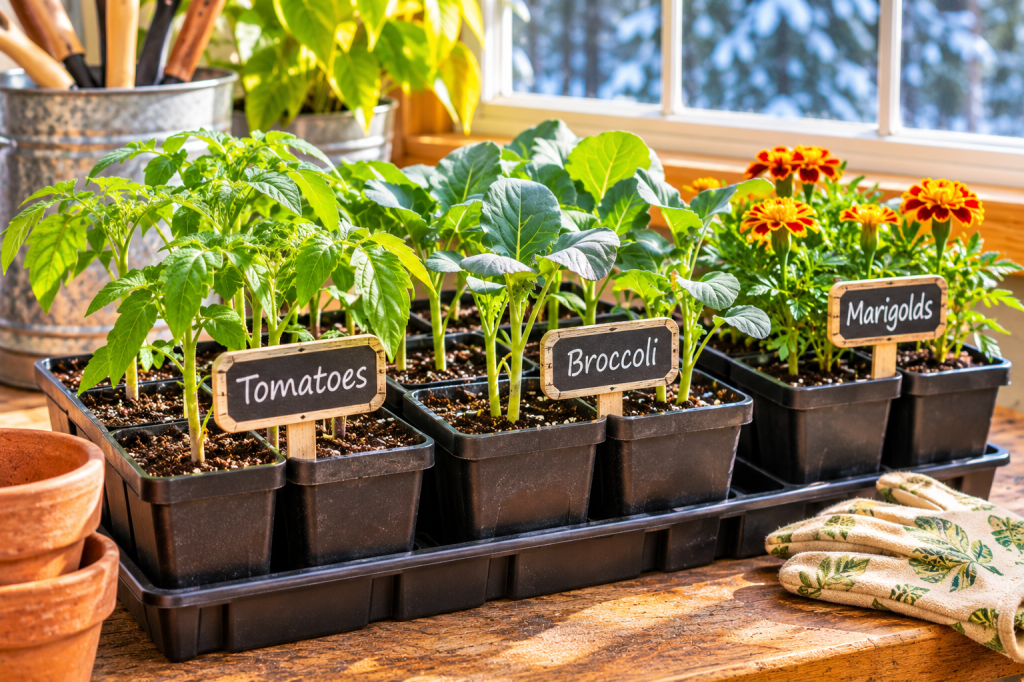
April: The Big Planting Month
April is when the seed-starting shelf fills up. Tomatoes, broccoli, cabbage, cauliflower, kale and marigolds all go in during the first half of the month, and lettuce follows near the end.
Tomatoes: It’s tempting to start them in March. Resist! Started 6 to 8 weeks before June 1, they’ll be stocky and ready to go. Started too early, they get tall, leggy and root-bound while it’s still snowing outside.
Broccoli and friends: Broccoli, cabbage, cauliflower and kale need 5 to 7 weeks, counted back from their earlier May 20 transplant date. They like it cooler than tomatoes do, so a spot away from the heat vent suits them fine.
Marigolds: They’re easy from seed and add a cheerful pop of color to vegetable beds. (They’re the bright orange ones in the garden pictures below.)
Lettuce: It only needs 3 to 5 weeks indoors and doesn’t mind cool weather, so it can go out with the broccoli around May 20.
May: Fast Growers and Hardening Off
Squash, zucchini, cucumbers and pumpkins grow fast and don’t like their roots disturbed, so they only get 3 to 4 weeks indoors. Start them in early May in roomy pots, one seed per pot, so they never need potting up before they go outside.
Sunflowers get a short head start, too. Started in early May, they’re sturdy little transplants by June, which gives them a better shot at blooming before our first fall frost.
Hardening off also starts in May. Give seedlings 1 to 2 weeks of gradually longer time outside before transplanting: cool-season crops starting in early May, warm-season crops in mid-May.
❄️ Northern Tip:
Around May 20, your cool-season seedlings can move into the garden. Keep the frost cloth handy anyway. A light frost won’t bother broccoli, but a hard freeze will. The same covers come in handy at the other end of the season, too.
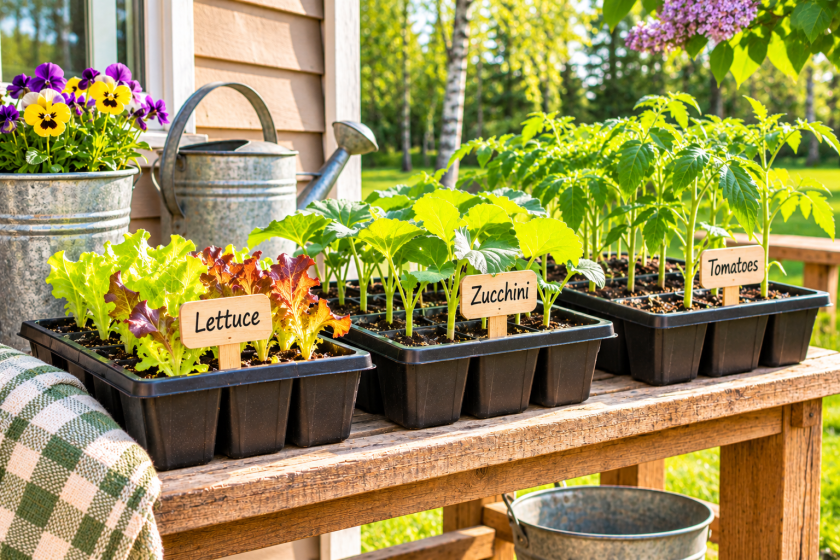
June 1: Everything Else Goes Out
June 1 is the traditional green light for tender plants: tomatoes, peppers, squash, zucchini, cucumbers, pumpkins, sunflowers and marigolds. Check the 10-day forecast first, plant on a calm, cloudy day or in the evening if you can, and water everything in well.
After that, the midnight sun takes over. With daylight nearly around the clock, northern gardens grow at a pace that makes all those snowy months of waiting feel worth it. To make sure your crops finish before fall, choose short-season varieties.
What to Plant Straight in the Garden
Not everything needs a head start indoors! Some vegetables grow best when planted directly in the garden.
Peas, carrots, radishes, and beets can be sown in mid to late May, once the soil has thawed and is workable. Potatoes can go in around the same time.
These cool-season crops don’t mind chilly weather, and skipping the indoor seed trays saves a little precious windowsill space.
New to Starting Seeds Indoors?
Knowing when to start your seeds is only half the battle. Getting them to grow into healthy, sturdy seedlings is the next step!
If you’re new to indoor seed starting, or just need a refresher, my guide to Seed Starting in a Cold Climate: A Simple Guide for Short Growing Seasons walks you through the basics, from setting up your growing space to caring for your seedlings until they’re ready for the garden.
Ready to Plan Your Whole Growing Season?
🌱 Free Printable: Zone 2 Seed-Starting Calendar
Want these planting dates handy when you’re starting seeds?
Download the free one-page calendar, complete with space for your own notes. Print it, stick it on the fridge, or keep it beside your seed-starting supplies.
The free calendar is a great place to start. But if you’d like to keep your entire gardening season organized, I’ve also created a printable Zone 2 Garden Planner.
It’s designed for our short northern growing seasons and includes frost dates, seed-starting schedules, planting and harvest logs, and monthly checklists from February through October.
Gardening in Zone 2 takes a little patience, a little planning, and sometimes a lot of optimism when there’s still snow on the ground in April!
Hopefully, this calendar makes it easier to get your seeds started at the right time and make the most of our short but wonderful growing season.
Happy planting!
🌻 Northern Home & Garden
More Northern Tips, Straight to Your Inbox 🌻
Get practical gardening advice, seasonal ideas and new posts from Northern Home & Garden delivered to your inbox.


