
Affiliate Disclosure: This post contains affiliate links. As an Amazon Associate I earn from qualifying purchases.
On the shortest day of the year, Fairbanks gets about 3 hours and 40 minutes of daylight. The sun pops up around 11 in the morning, skims along the treetops, and calls it a day before 3. We’ve learned to live with that (mostly). Our houseplants, on the other hand, did not sign up for this.
If your plants spend the winter leaning toward the window like they’re waiting for someone to come home, they’re not being dramatic. They’re hungry for light. A grow light is one of the easiest fixes I know, and it doesn’t have to be complicated, expensive, or purple.
Signs Your Plants Need More Light
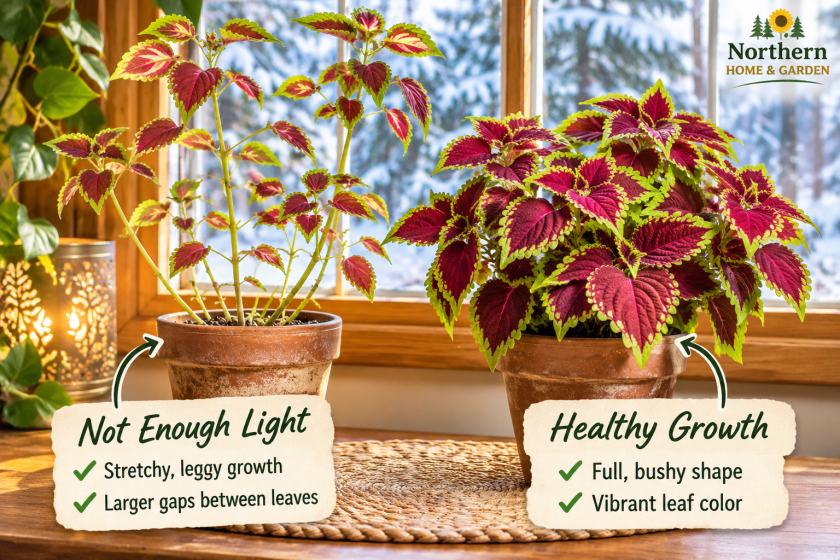
Not sure if your plants are getting enough light? Here are a few signs to watch for:
- Stretching: Long, skinny stems with larger gaps than usual between the leaves. Seedlings especially get tall and floppy.
- Leaning: Everything bends hard toward the window.
- Smaller, paler new leaves: New growth may be smaller or lighter in color than usual.
- Faded color: Colorful plants like coleus may lose their vibrant patterns and become greener when they aren’t getting enough light.
If you’re nodding along, your plants might be ready for a little extra light.
Choosing a Grow Light (The Simple Version)
Grow light shopping can feel like reading a science textbook, but for houseplants, you really only need to know a few things.
Choose a full-spectrum LED. They’re energy-efficient, produce relatively little heat, and can last for years. Look for a white full-spectrum light rather than the purple ones. Both can grow plants, but white light is easier on your eyes and lets you enjoy your plants’ natural colors. Just remember that brightness matters too: not every light labeled “full-spectrum” is equally powerful.
Pick a Style That Fits Your Space
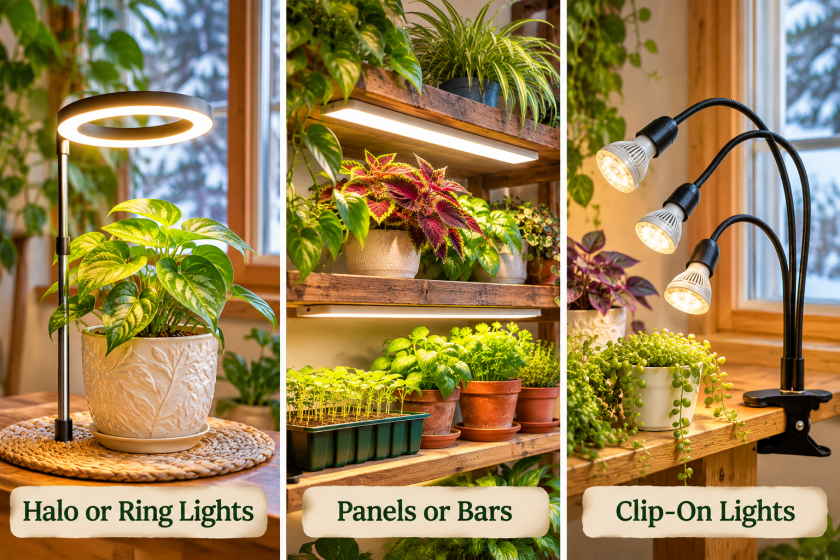
- Halo or ring lights on a stake: Handy for one small plant or a single pot. They’re adjustable and don’t take up much room, although some aren’t bright enough for plants that need lots of light.
- Panels or bars: Great for shelves full of houseplants or seedlings. My setup uses slim LED panels, one per shelf. I liked them so much I’ve bought them four times! Unfortunately, they’re no longer sold, but there are plenty of similar options.
- Clip-on lights: A simple option for a desk or windowsill plant that needs a little extra light.
Look for a built-in timer. It’s one of the most useful features, especially during our long northern winters. If your light doesn’t have one, a separate outlet timer works just as well.
You’ll find more grow light options on my Houseplant Favorites page.
How Close and How Long?
Distance: Light gets weaker quickly as you move away from it, so placement matters. Start with the distance the manufacturer recommends, then watch how your plants respond:
- Still stretching? Move the light a little closer.
- Bleached spots or crispy leaf edges? The light may be too intense. Try moving it farther away.
Hours: When grow lights are doing most of the work, here’s a good starting point:
- Houseplants: Around 12 to 14 hours a day.
- Seedlings: Around 14 to 16 hours a day.
Adjust based on how much natural light your plants receive and how they respond. Plants need darkness too, so don’t leave grow lights on around the clock.
A quick safety note: Keep lights and cords away from water and spray bottles. Don’t connect more lights than the manufacturer allows, and make sure your power strip or timer is rated for everything plugged into it.
Let a Timer Do the Remembering
In December, it’s dark when you get up and dark again by mid-afternoon. It’s easy to forget whether the grow lights are on or off, and plants do best with a consistent daily schedule.
If your lights have a built-in timer, you’re all set. Otherwise, a simple outlet timer can turn them on and off automatically. It’s one less thing to remember during our long northern winters, and honestly, I’ll take all the help I can get!
Which Plants Need It Most?
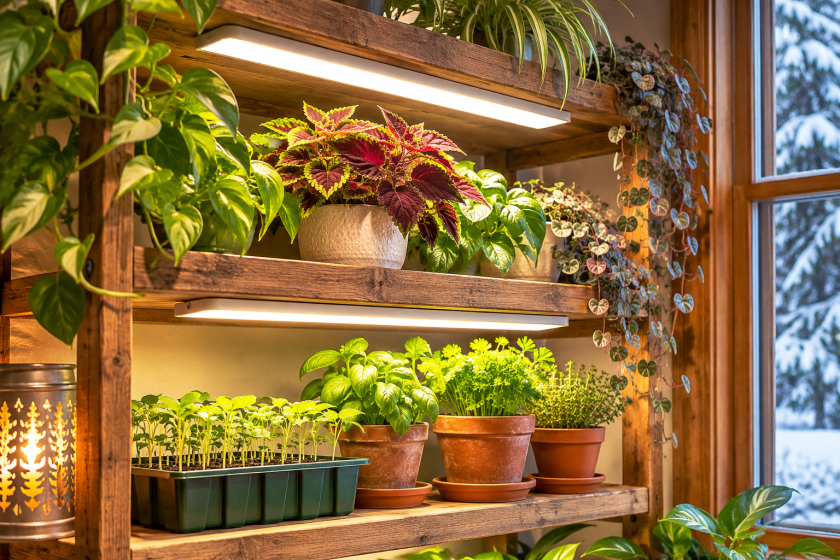
Not every houseplant needs a grow light, but some really appreciate the extra help during our northern winters:
- Coleus: Without enough light, coleus fades and gets leggy fast. A grow light helps keep those beautiful colors bright and the plant growing fuller.
- Herbs: Basil, parsley, and other kitchen herbs need plenty of light to stay healthy. A small grow light can make a big difference, especially when you’re growing herbs on a winter windowsill.
- Seedlings: If you’re starting seeds indoors in February or March, a grow light is one of the best ways to keep seedlings short and sturdy. Our northern winter daylight usually isn’t enough on its own.
One plant to be careful with in fall: holiday cactus. Thanksgiving and Christmas cacti generally need long, uninterrupted nights and cooler conditions to encourage flower buds. Keeping them under a grow light for 14 hours a day during bud formation can interfere with blooming. After blooming, a little supplemental light can help keep them healthy through the darker months.
❄️ Northern Tip
Set your timer to run during the hours you’re home and awake, like 7 AM to 9 PM. Your plants get their light, and you get a bright, green corner of the house during the darkest weeks of the year. Honestly, I think the grow lights help me as much as the plants.
A Little Light Goes a Long Way
You don’t need a fancy setup to help your houseplants through a northern winter. A good LED grow light, a timer, and a little attention to how your plants respond can make a big difference.
And by the time the sun starts sticking around past dinner again, your plants will hopefully be looking just as ready for spring as you are.
🌻 Northern Home & Garden
You May Also Like
If you’re keeping plants growing through a northern winter, these guides might come in handy:
- How to Keep Coleus Growing Indoors All Winter
Keep your colorful coleus happy until spring. - Seed Starting in a Cold Climate: A Simple Guide for Short Growing Seasons
Get your seedlings off to a healthy start, even when winter is still hanging around. - How to Get Your Holiday Cactus to Bloom
Learn how light, darkness, and temperature affect those beautiful holiday blooms.
More Northern Tips, Straight to Your Inbox 🌻
Get practical gardening advice, seasonal ideas and new posts from Northern Home & Garden delivered to your inbox.


