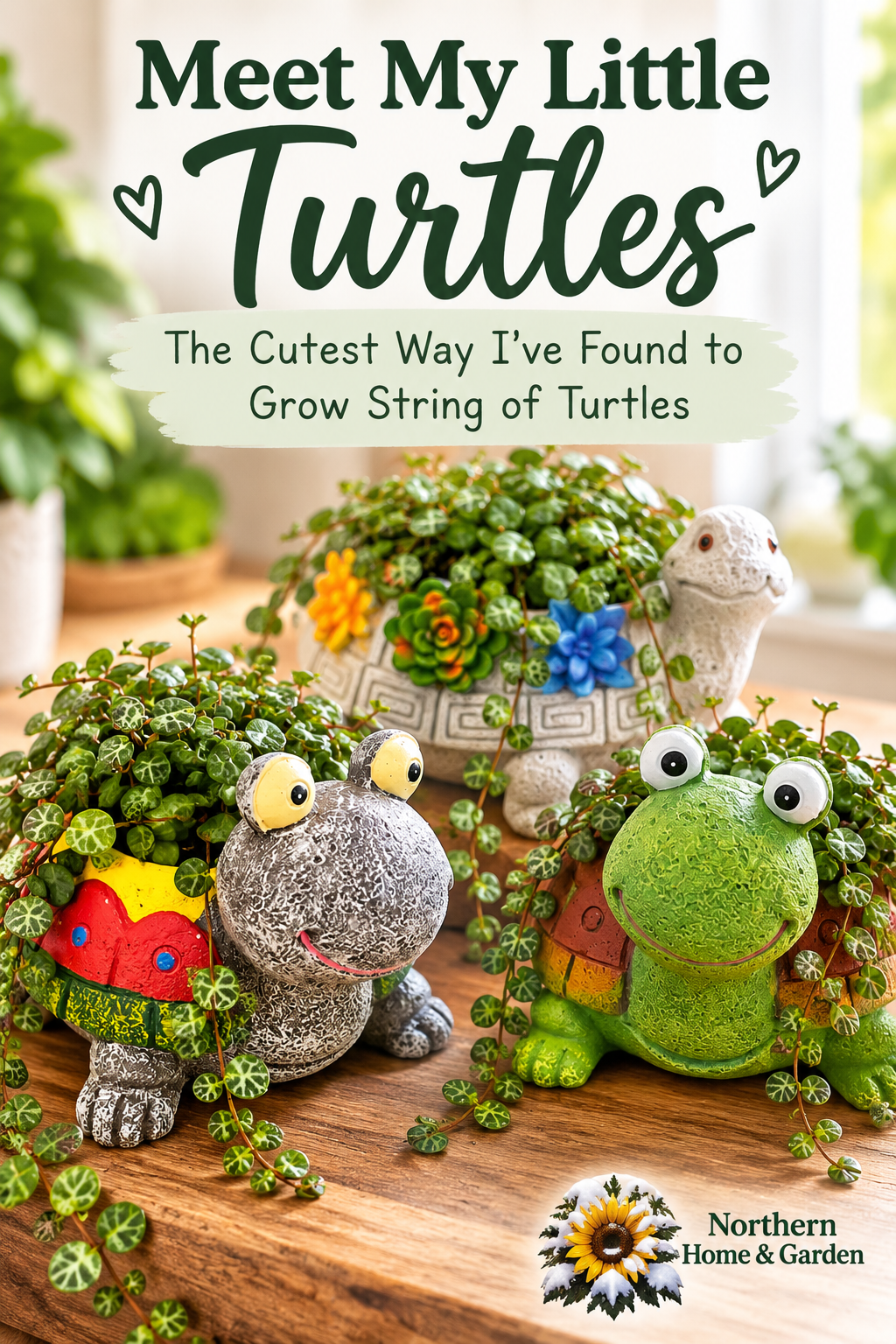
There are some plant and planter combinations that are just meant to be.
A trailing String of Hearts spilling out of a heart-shaped planter? Adorable.
Herbs growing in little kitchen pots? Perfect.
But String of Turtles growing out of an actual turtle?
Come on. 😂
Affiliate Disclosure: This post contains affiliate links. As an Amazon Associate, Northern Home & Garden earns from qualifying purchases at no additional cost to you.
Last year, I started a small plant business from home. Somewhere along the way, I started collecting turtle planters.
One turtle became two.
Two became three.
And before long, I had a small herd of turtles wandering around my house.
These little guys remain one of my favorite plant projects—and they’re surprisingly easy to recreate.
Meet String of Turtles
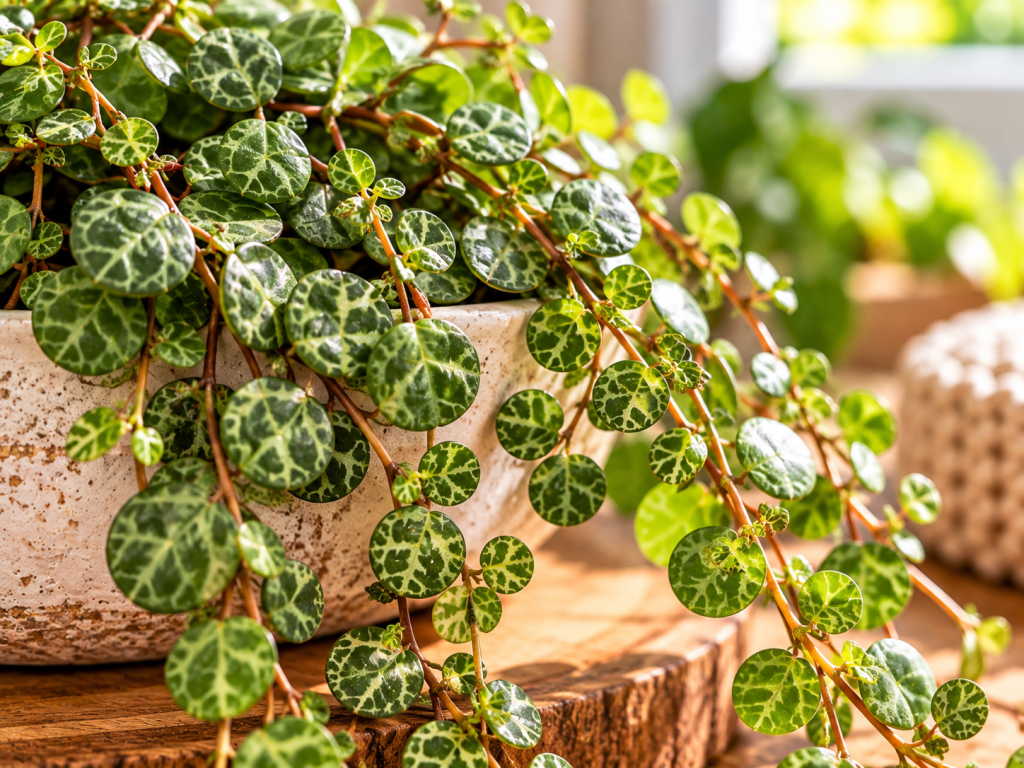
String of Turtles (Peperomia prostrata) is a small trailing houseplant with round leaves covered in beautiful markings that look remarkably like tiny turtle shells.
Which, of course, is exactly why putting one inside a turtle planter is irresistible.
As the plant grows, the vines begin spilling over the sides of the planter, creating a living green “shell.”
It’s cute when you first plant it.
It’s even cuter once it gets a little wild.
Why Turtle Planters Work So Well
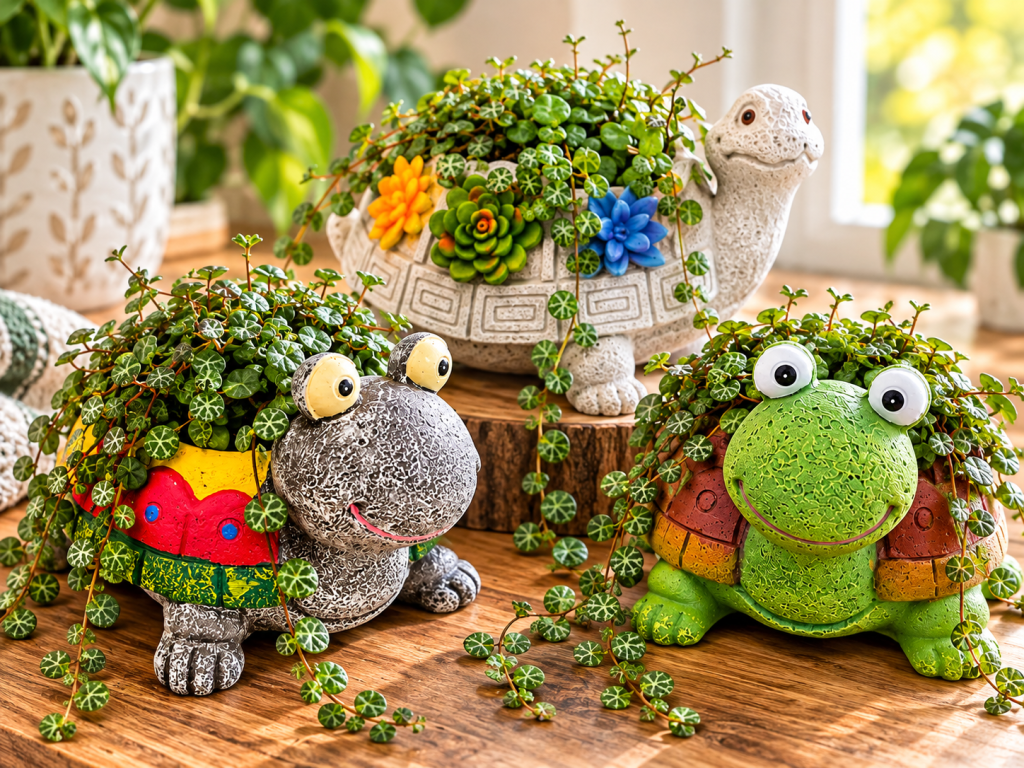
These are two of the actual turtle planters I used for my String of Turtles arrangements! I loved how much personality they added to such a tiny houseplant.
Shop my turtle planters:
The fun part is that you don’t need the exact planters I used.
Look for a small decorative turtle planter that’s large enough to hold your plant without overwhelming its relatively small root system.
The most important thing isn’t how adorable its face is—although clearly that helps. 😂
Drainage matters.
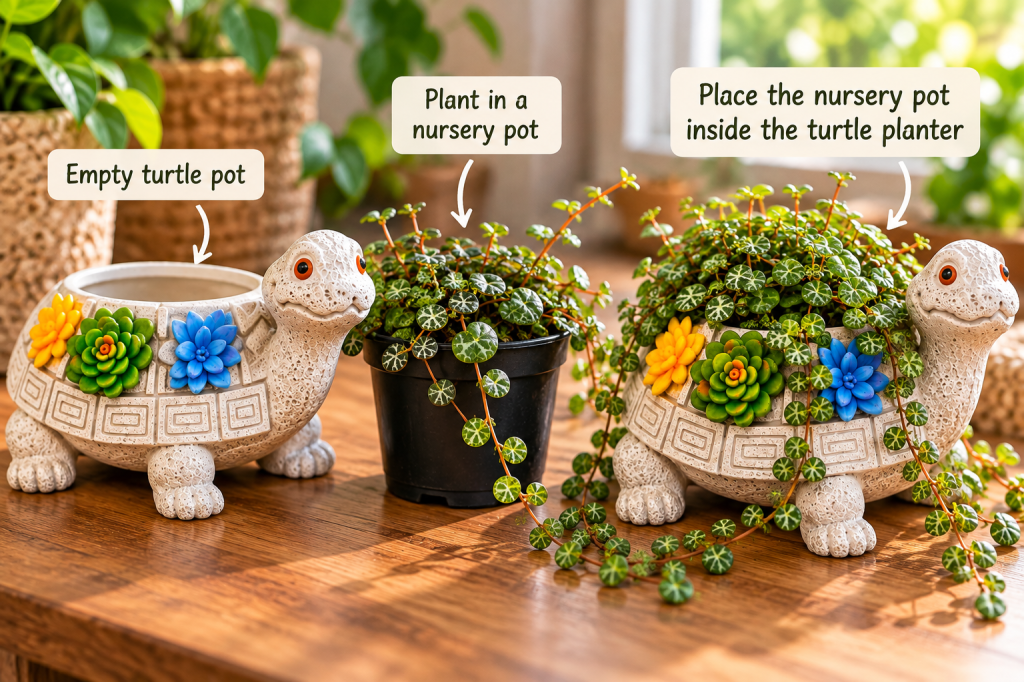
If your perfect turtle doesn’t have drainage, another option is to keep the plant inside a small nursery pot that fits inside the decorative planter. You can remove the inner pot when you water and allow it to drain completely before putting it back.
The Soil I Use for String of Turtles
These little plants have delicate roots, so I prefer a light, airy potting mix that holds a little moisture while allowing excess water to drain away.
My DIY String of Turtles Soil Mix
If you’d like to make your own, here’s a simple combination:
- 50% indoor potting mix or coco coir for a little moisture retention
- 30% perlite or pumice to improve drainage and airflow
- 20% fine orchid bark (rather than large chunks) to keep the mix loose and airy
Mix everything together before planting.
Prefer a Ready-Made Mix?
I usually mix my own soil for String of Turtles, but I know not everyone wants to buy several different ingredients for one little plant!
If you’d rather use a premixed option, this chunky houseplant mix contains coco coir, pumice, and fir bark to help provide drainage and airflow.
How to Plant a String of Turtles Turtle
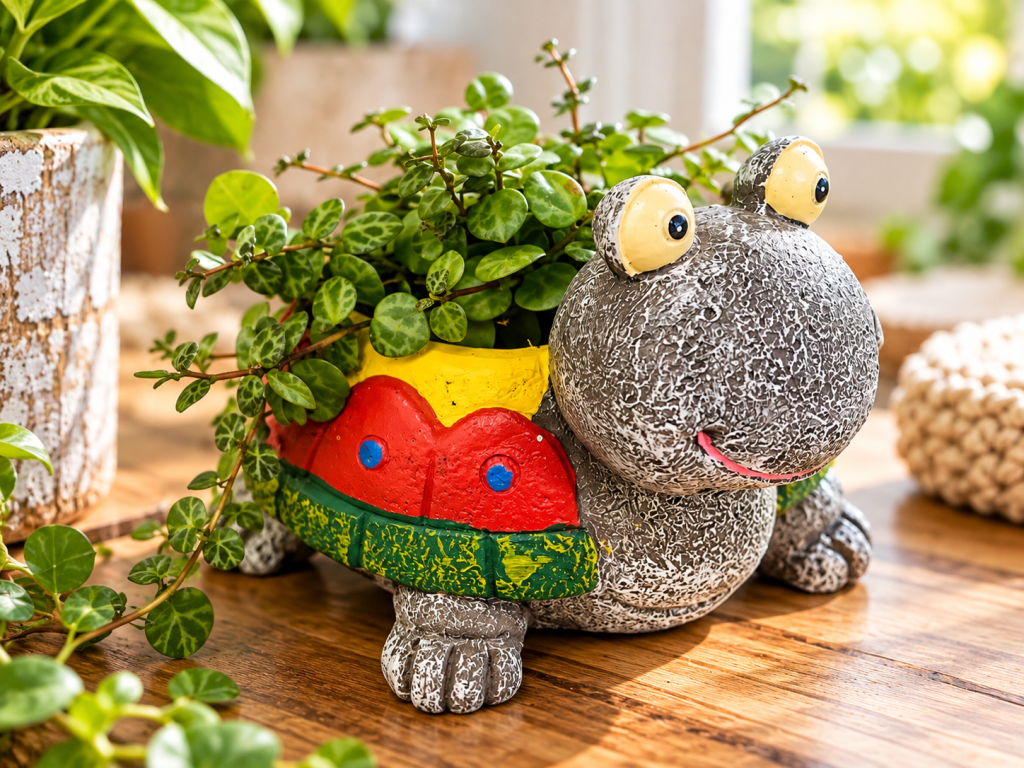
Once you’ve found your turtle, it’s a pretty simple project.
Start with a healthy String of Turtles plant or rooted cuttings and a small turtle planter with good drainage.
Add your potting mix, leaving enough room for the plant’s existing roots.
Gently position the plant in the planter and fill around the roots with additional soil. Avoid burying the little leaves or packing the soil down too firmly.
Then comes the fun part.
Arrange some of the vines so they begin trailing over the sides of the turtle’s shell.
Give Your Turtle Plenty of Light
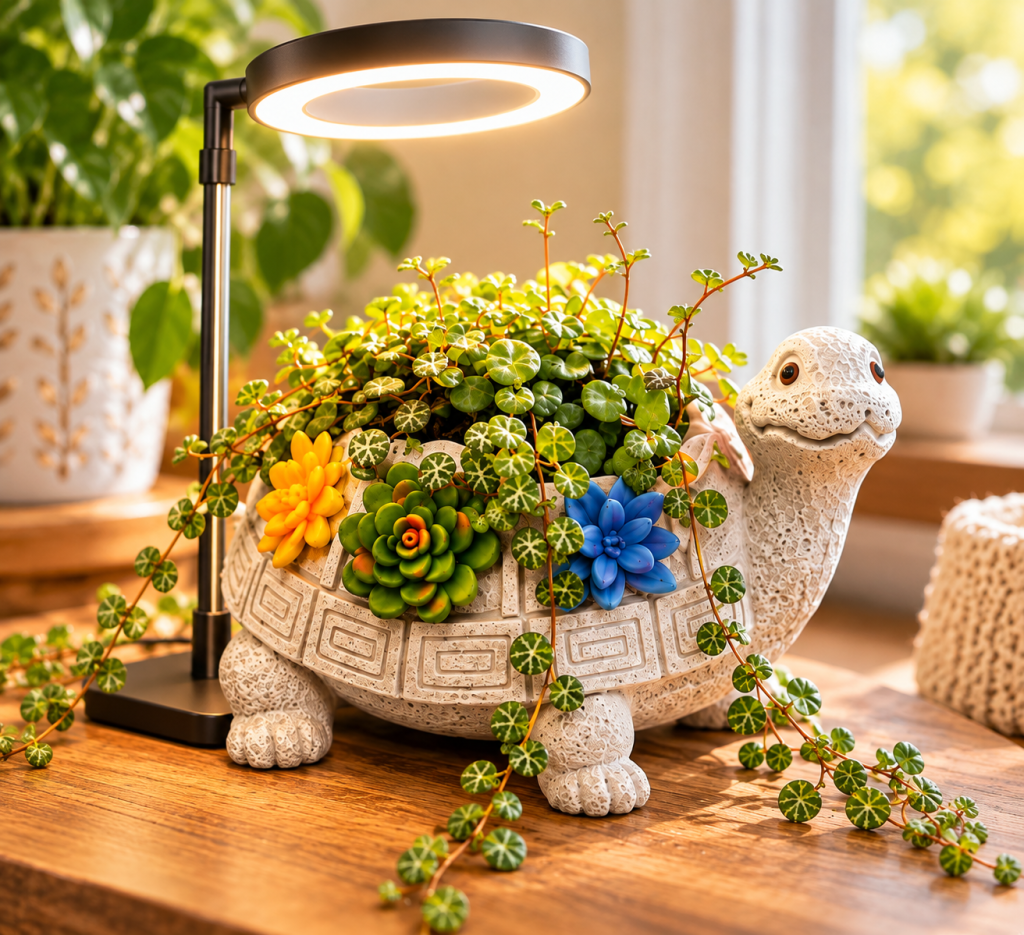
String of Turtles generally does best with plenty of bright, indirect light.
Good light helps maintain compact growth and those beautiful markings on the leaves.
One thing worth watching is the top of the planter. With trailing plants, it’s easy to admire all those long vines while forgetting that the crown of the plant needs light too.
If your String of Turtles isn’t getting enough bright, indirect light, a small LED grow light can be a helpful option.
I especially love the idea of a little turtle planter sitting beneath its own miniature grow light. How cute would that be?!
How I Water String of Turtles
This is another place where I’d rather teach you how to read the plant and soil than tell you to water every Tuesday.
Conditions inside our homes vary far too much for a rigid schedule.
Before watering, check the soil. I allow the potting mix to dry considerably rather than keeping it constantly damp.
Then I water thoroughly and allow the excess to drain away.
Tiny planters can be deceptive because they hold relatively little soil. Depending on the conditions in your home, they may dry faster than larger houseplants—but that doesn’t mean they need constant little sips of water.
Turn One Turtle Into More Turtles
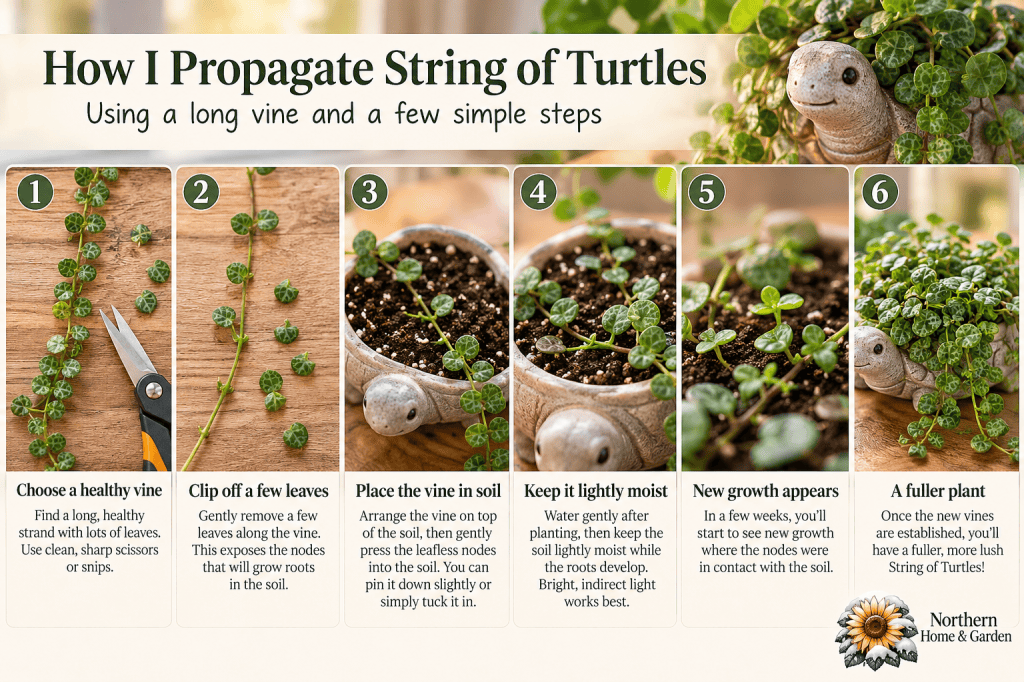
String of Turtles can be propagated from healthy vines. Here’s the method I’ve used with mine.
- Choose a healthy, longer strand of String of Turtles.
- Carefully remove a few leaves along the section of vine you want to plant. This exposes the little nodes where new roots can develop.
- Gently tuck that bare section of vine into lightly moist, airy potting soil, keeping the remaining leaves above the surface.
- Make sure the nodes have good contact with the soil. You can use a small plant pin to hold the vine in place if needed.
- Place your planter somewhere warm with bright, indirect light and keep the soil lightly moist, not soggy, while roots develop.
You can leave the vine attached to the mother plant while it roots, or use a cutting with several healthy nodes.
And before you know it, you might have the beginnings of another little turtle plant! 🐢
Sometimes Houseplants Should Just Be Fun
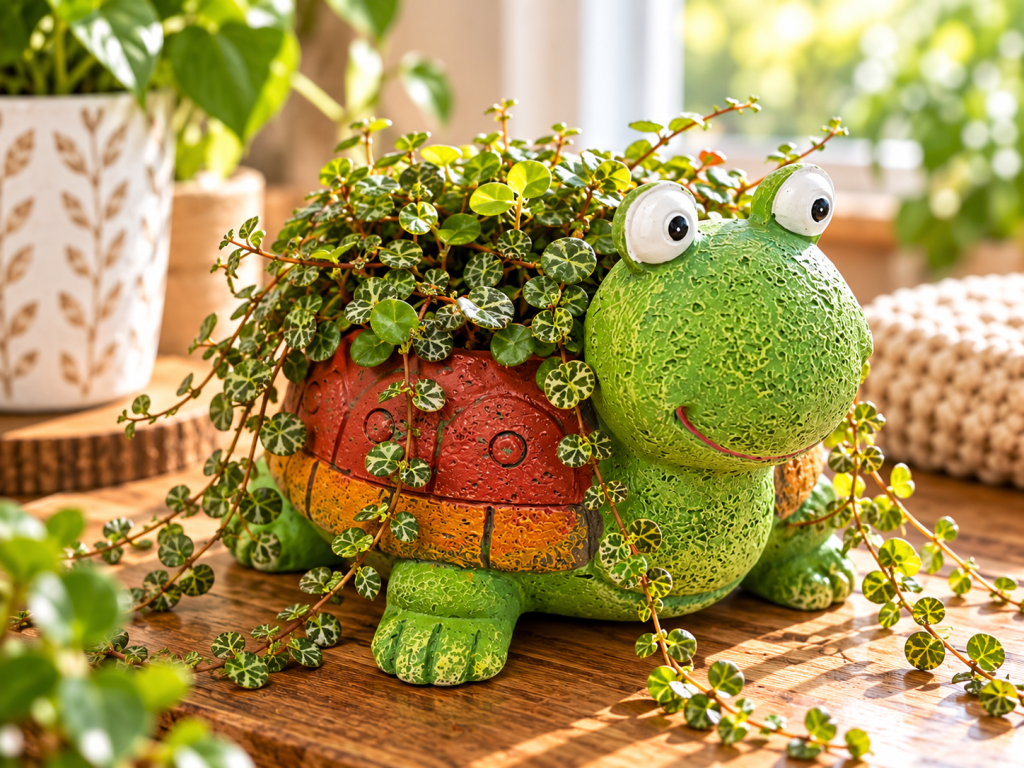
I love learning about plants.
I love figuring out what makes them grow well, experimenting with propagation, and watching a tiny cutting eventually become a full plant.
But I also think we can get so wrapped up in doing everything “right” that we forget one of the best things about growing houseplants:
They’re supposed to bring us joy.
Sometimes that means growing a beautiful specimen plant.
Sometimes it’s propagating something that belonged to someone you love.
And sometimes…
it’s putting String of Turtles inside a turtle because you absolutely cannot resist. 🐢🌿

