Winter driving can turn serious quickly.
A dead battery, a slide into a snowbank or a road closure might only be inconvenient in mild weather. In extreme cold, the same situation can become dangerous.
You don’t need to carry half your house in the trunk. But a well-stocked winter emergency kit can help keep you warm, visible and reasonably comfortable while you wait for help.
Affiliate Disclosure: This post contains affiliate links. As an Amazon Associate, Northern Home & Garden earns from qualifying purchases at no additional cost to you.
The Quick Checklist
At minimum, consider keeping these in your vehicle during winter:
- Warm blanket or sleeping bag
- Extra hat, gloves and warm layers
- Flashlight or headlamp with spare batteries
- Fully charged phone and backup power bank
- First-aid kit and essential medications
- Bottled water
- Nonperishable snacks
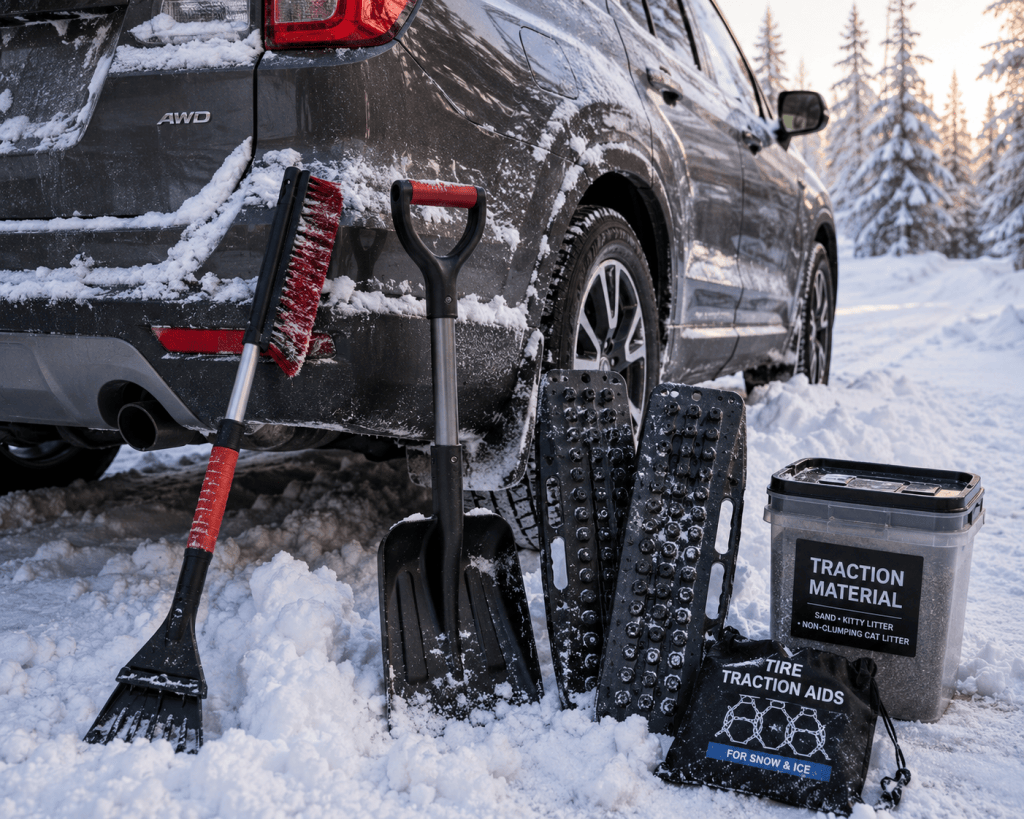
- Ice scraper and snow brush
- Compact shovel
- Traction material or traction aids
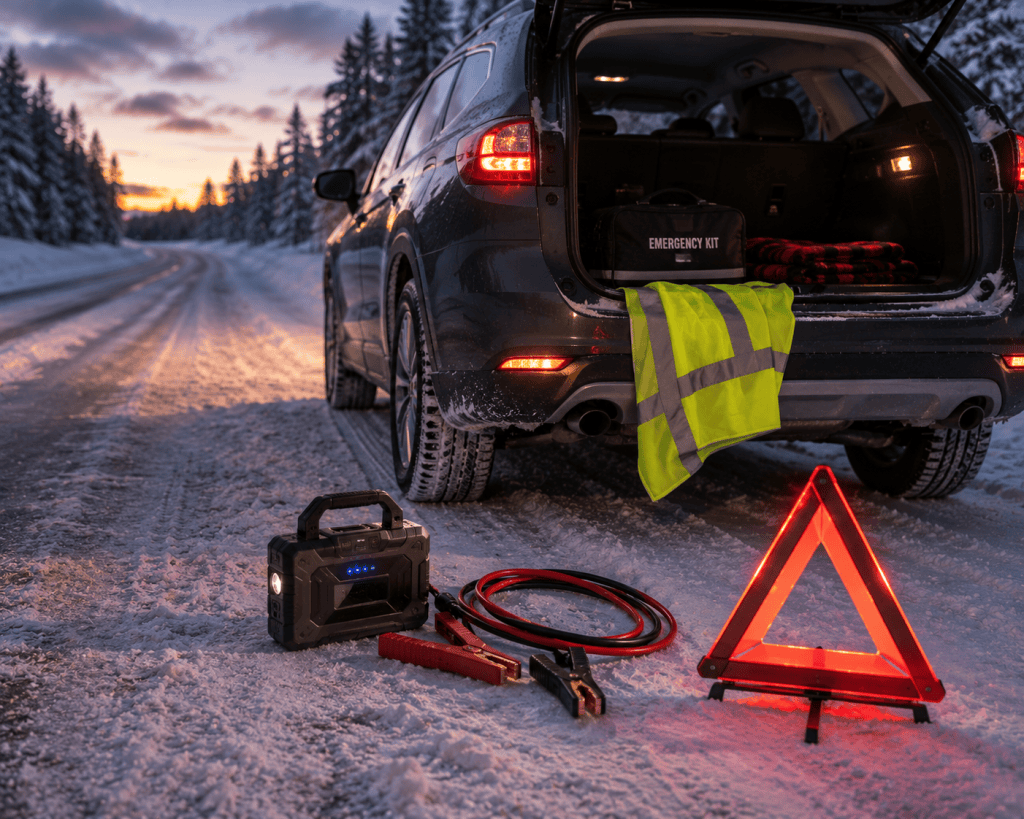
- Jumper cables or a portable jump starter
- Reflective triangles, flares or other signaling gear
Depending on where and how far you travel, you may want to carry more.
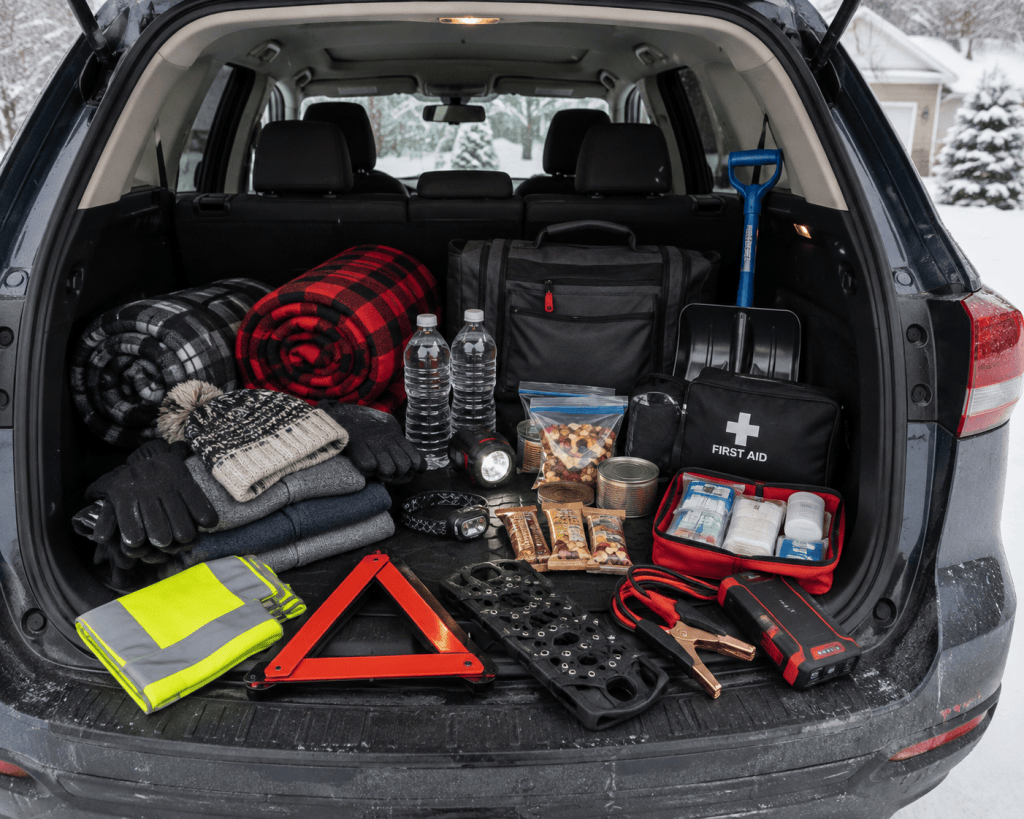
1. A Warm Blanket or Sleeping Bag
If your vehicle becomes disabled in cold weather, warmth becomes one of your first concerns.
Keep at least one substantial blanket in the vehicle.
For colder climates or longer drives, a winter-rated sleeping bag may provide better insulation.
❄️ Northern Tip
Don’t count on the lightweight decorative throw that happens to live in the back seat.
For an emergency kit, choose something you would actually trust if the vehicle couldn’t provide heat for an extended period.
For a vehicle emergency kit, a cold-weather sleeping bag like the TETON Sports Celsius 0°F Sleeping Bag is a practical option to keep stored with your winter gear.
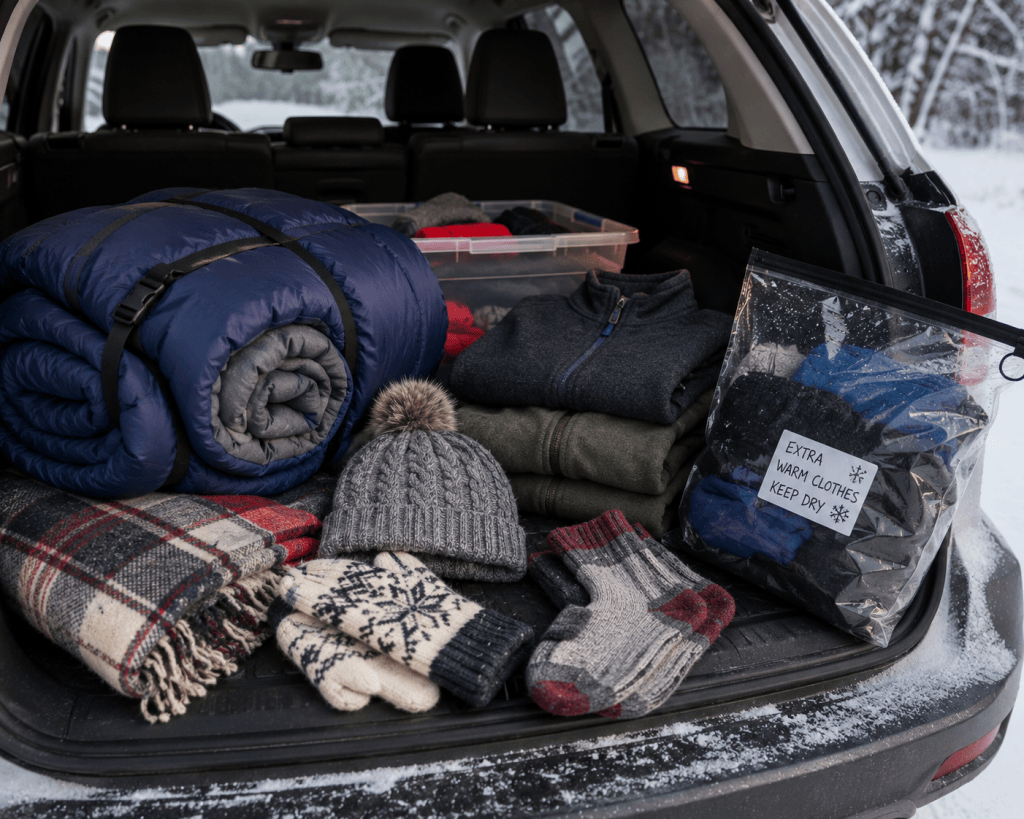
2. Extra Warm Clothing
Even if everyone leaves home dressed appropriately, winter travel doesn’t always go according to plan.
Keep extra:
- Mittens or gloves
- Warm hat
- Wool or synthetic socks
- Insulating layers
- Waterproof outerwear when appropriate
An extra pair of dry socks can be especially useful if someone’s feet become wet.
❄️ Northern Tip
Pack clothing in a waterproof bag or sealed container so the emergency clothes stay dry.
Warm clothing isn’t much help if melted snow has soaked through it.
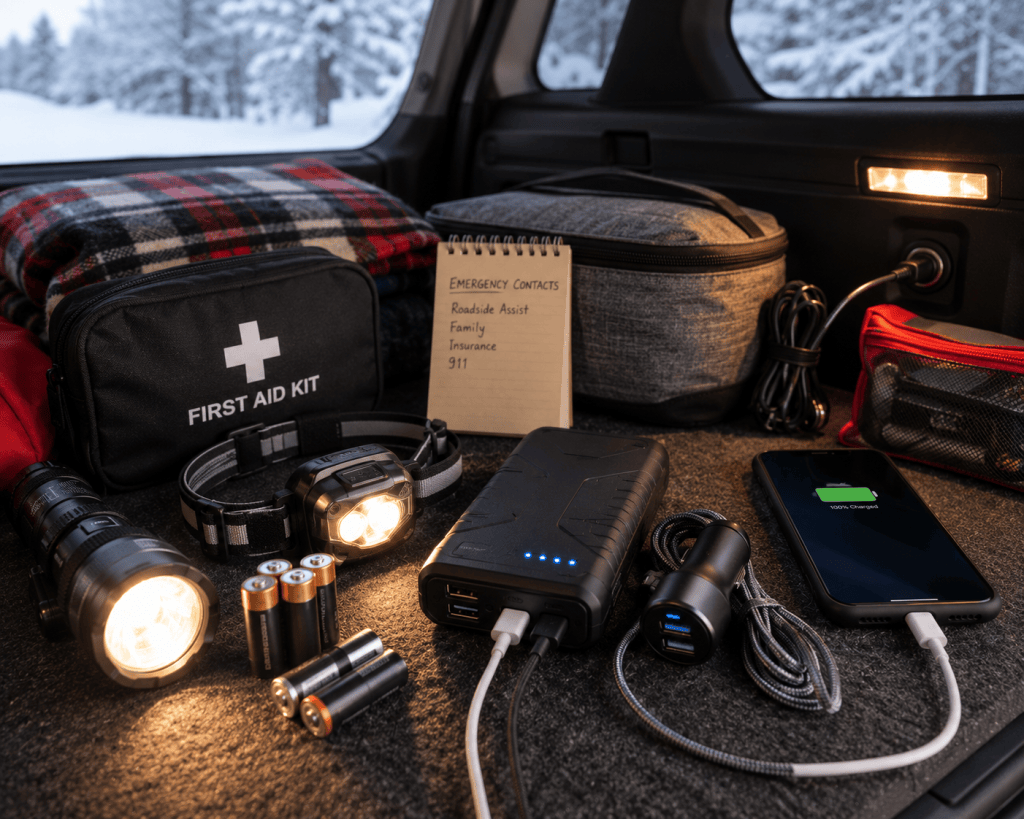
3. Flashlight or Headlamp
Winter emergencies often happen in darkness—or become darker very quickly.
A flashlight helps you:
- See inside the vehicle
- Inspect something safely
- Signal for attention
- Find supplies
- Avoid draining your phone battery for light
For a hands-free option, the Black Diamond Spot 400-R Rechargeable Headlamp is a practical choice for a vehicle emergency kit, especially when you may need both hands free outside the vehicle.
4. A Charged Phone and Backup Power
Your phone may be your fastest way to call for help, share your location or receive emergency information.
Start winter trips with a charged phone.
Keep a vehicle charger available, and consider carrying a charged portable power bank as backup.
Cold temperatures can reduce battery performance, so conserve power if you’re stranded.
❄️ Northern Tip
Don’t keep a power bank forgotten in the vehicle for months and assume it’s still fully charged.
Add it to your seasonal emergency-kit check and recharge it regularly.
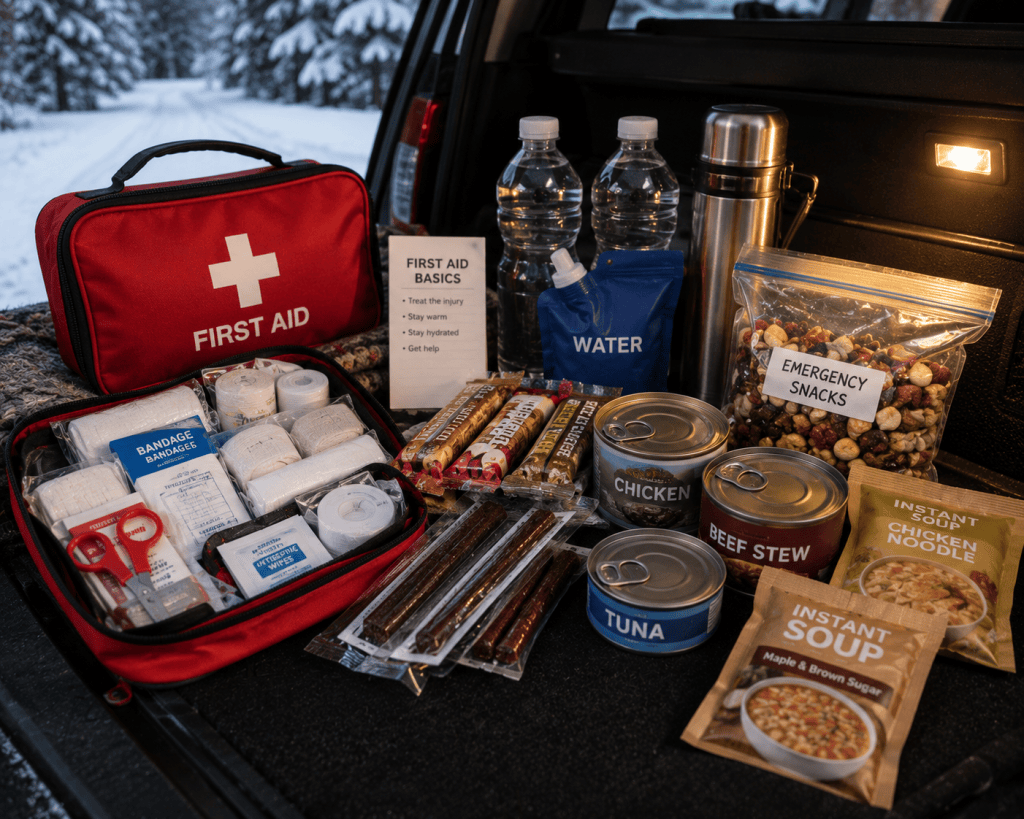
5. First-Aid Supplies and Essential Medication
A small vehicle first-aid kit can handle minor injuries while you’re waiting for assistance. For basic supplies, a compact option like this 150-Piece Mini First Aid Kit is easy to keep organized and stored in a vehicle without taking up much space.
Basic supplies might include:
- Adhesive bandages
- Gauze
- Medical tape
- Antiseptic wipes
- Disposable gloves
- Basic first-aid instructions
If anyone traveling with you depends on medication, think about what would happen if a short drive unexpectedly became a several-hour delay.
Don’t leave medications in the car if freezing temperatures or heat could damage them. Carry necessary medicines with you when appropriate.
6. Water
Keep drinking water available.
Winter air is dry, and being stranded can last longer than expected.
The challenge in very cold climates is that bottled water may freeze solid.
That doesn’t mean you shouldn’t carry it—but it does mean you may need to think realistically about how you store and rotate it.
❄️ Northern Tip
If you live somewhere where the inside of a parked vehicle regularly reaches extreme subzero temperatures, check your emergency water frequently and plan around freezing.
For longer trips, bringing fresh water with you may be more practical than relying entirely on bottles that have lived in the vehicle all winter.
7. Nonperishable Snacks
Choose food that is:
- Shelf stable
- Easy to open
- Calorie dense
- Reasonably edible when cold
Options might include:
- Granola or cereal bars
- Nuts
- Dried fruit
- Crackers
- Shelf-stable snack packs
Avoid anything that requires cooking.
And if you pack canned food, remember that a can without a can opener is mostly a paperweight. 😂
❄️ Northern Tip
Rotate your food periodically.
Emergency snacks aren’t very useful if you discover they’ve been riding around in the trunk since three winters ago.
8. Ice Scraper and Snow Brush
This one should probably already live in every northern vehicle.
Clear snow and ice completely enough to maintain visibility before driving. An extendable option like the Snow MOOver 39″ Snow Brush and Ice Scraper gives you extra reach for clearing windshields, roofs and larger vehicles without taking up too much room in the car.
If you become stranded during snowfall, a brush and scraper may also help keep important areas of the vehicle accessible.
Don’t drive with only a tiny peephole scraped through the windshield.
Winter visibility matters too much.
9. A Compact Shovel
A sturdy compact shovel can help if snow builds up around the vehicle or if you’re lightly stuck.
Choose something strong enough to move packed snow. A lightweight, collapsible option like the KAMINUO Portable Aluminum Snow Shovel is easy to keep in a trunk without taking up much space.
A tiny novelty shovel may fit beautifully in the trunk.
It may also accomplish approximately nothing. 😂
❄️ Northern Tip
If your vehicle becomes stranded and you run the engine for warmth, keeping the exhaust pipe clear of snow is critical because blocked exhaust can allow carbon monoxide to build up around or inside the vehicle.
10. Traction Material or Traction Aids
If your tires are spinning on packed snow or ice, extra traction can sometimes help.
Depending on local conditions, people may carry:
- Sand
- Non-clumping cat litter
- Commercial traction material
- Portable traction boards
For drivers who regularly deal with deep snow or unplowed roads, a set of recovery boards like the BUNKER INDUST Traction Boards can provide extra traction when tires are spinning in snow or other loose terrain.
These aren’t substitutes for appropriate winter tires or safe driving. They’re simply tools that may help in certain situations.
11. Jumper Cables or a Portable Jump Starter
Cold weather is hard on vehicle batteries.
A set of jumper cables is inexpensive and useful—but requires another vehicle.
A portable jump starter gives you another option when no second vehicle is available.
Whichever you carry, learn how to use it before you’re standing outside in bitter cold trying to read the tiny instruction booklet.
❄️ Northern Tip
Portable jump starters contain batteries too.
Recharge and inspect yours according to the manufacturer’s recommendations rather than leaving it forgotten in the trunk indefinitely.
12. Something That Makes You Visible
If you’re stranded, rescuers and other drivers need to see you.
Consider keeping:
- Reflective warning triangles
- Road flares where appropriate
- Reflective vest
- Brightly colored cloth
- Whistle
Use signaling devices carefully and follow product instructions.
In poor visibility, never place yourself in traffic simply to set up equipment.
Your first priority is staying safe.
Other Useful Items to Consider
Your needs may be different depending on where you drive.
Other useful supplies can include:
- Basic tool kit
- Tire-pressure gauge
- Tow strap, if you know how to use one safely
- Paper road map
- Small roll of duct tape
- Work gloves
- Hand warmers
- Paper towels or tissues
- Trash bags
- Extra windshield-washer fluid rated for winter temperatures
- Personal hygiene supplies
Families may also need:
- Diapers and wipes
- Extra children’s clothing
- Formula or age-appropriate food
- Comfort items
And if your pets travel with you:
- Leash
- Collapsible bowl
- Food
- Extra insulation
Your emergency kit should reflect the people—and animals—who actually ride in your vehicle.
Don’t Forget the Vehicle Itself
An emergency kit is backup.
It isn’t a substitute for keeping the vehicle winter-ready.
Before winter travel, pay attention to:
- Battery condition
- Tires and tire pressure
- Windshield wipers
- Washer fluid
- Lights
- Brakes
- Antifreeze/cooling system
- Fuel or charge level
During extreme cold, keeping adequate fuel available is especially important if you need the engine for intermittent heat while stranded.
❄️ Northern Tip
During periods of extreme cold, consider keeping at least half a tank of fuel rather than routinely driving nearly empty.
Before a Longer Winter Drive
A few minutes of preparation can matter more than another gadget in the trunk.
Before heading out:
Check the weather.
Check road conditions.
Charge your phone.
Tell someone where you’re going if you’re traveling in remote or hazardous conditions.
Make sure your emergency kit is actually in the vehicle.
And if officials recommend staying off the roads because conditions are dangerous, reconsider whether the trip needs to happen at all.
What Should You Do If You Become Stranded?
If you’re stranded during a winter storm, your vehicle is generally your safest shelter.
Don’t leave it and attempt to walk for help unless remaining with the vehicle poses an immediate danger.
A vehicle is easier for rescuers to find than a person walking through blowing snow.
Call for help if you have service and give your location as accurately as possible.
Make yourself visible.
Conserve your phone battery.
And focus on staying warm.
If You Run the Engine for Heat
Be extremely cautious about carbon monoxide.
Keep the exhaust pipe clear of snow.
Never assume that because the engine is running normally, carbon monoxide can’t become a problem.
Follow official emergency guidance for your situation.
❄️ Northern Tip
NWS guidance commonly recommends running the engine only periodically for heat rather than continuously while stranded, while ensuring the exhaust remains clear and allowing some fresh air into the vehicle.
Stay With the Vehicle
One of the most important winter-survival rules is also one of the simplest:
Stay with the vehicle.
Walking away in blowing snow, extreme cold or poor visibility can become dangerous very quickly.
Your vehicle provides shelter from wind and gives rescuers a much larger target to locate.
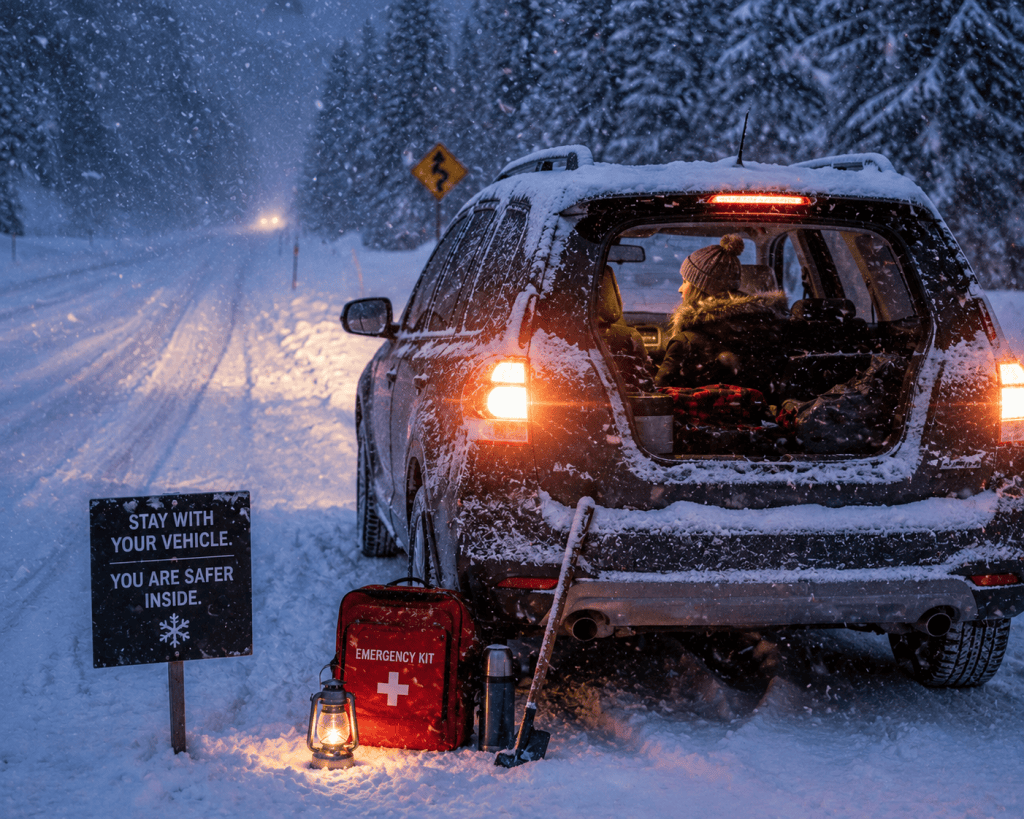
If you need to signal distress, use hazard lights, a bright cloth or other visible signaling method while avoiding unnecessary exposure.
Check Your Kit Twice a Year
Emergency kits aren’t something you build once and forget forever.
Things expire.
Batteries discharge.
Clothing gets borrowed.
Children grow.
Food gets eaten.
Someone takes the flashlight inside and never returns it.
Not naming names. 😂
Make a habit of checking the kit at least at the beginning and end of winter.
Replace anything missing, expired, damaged or no longer appropriate for your household.
Preparation Buys You Time
The point of a winter emergency kit isn’t to prepare for every possible disaster.
It’s to give yourself time.
Time to stay warm.
Time to wait for help.
Time to keep everyone reasonably comfortable.
Time to deal with a minor problem before it becomes a bigger one.
Most winter drives will end exactly where they’re supposed to.
But if one doesn’t, you’ll be very glad you spent a few minutes preparing beforehand.
Northern Home & Garden
Beauty That Grows Through the Cold

