There’s a point every fall in Alaska when winter stops feeling like something that’s coming and starts feeling like something that’s already here. The frost has come, the snow has started, and getting the car ready suddenly jumps to the top of the to-do list.
Cold is hard on batteries, tires, fluids, and just about everything under the hood. A little prep now can save you from discovering a problem on a dark, freezing morning when you’re already running late. Here are the 10 things we check every fall.
Affiliate Disclosure: This post contains affiliate links. As an Amazon Associate I earn from qualifying purchases.
1. Have Your Battery Checked
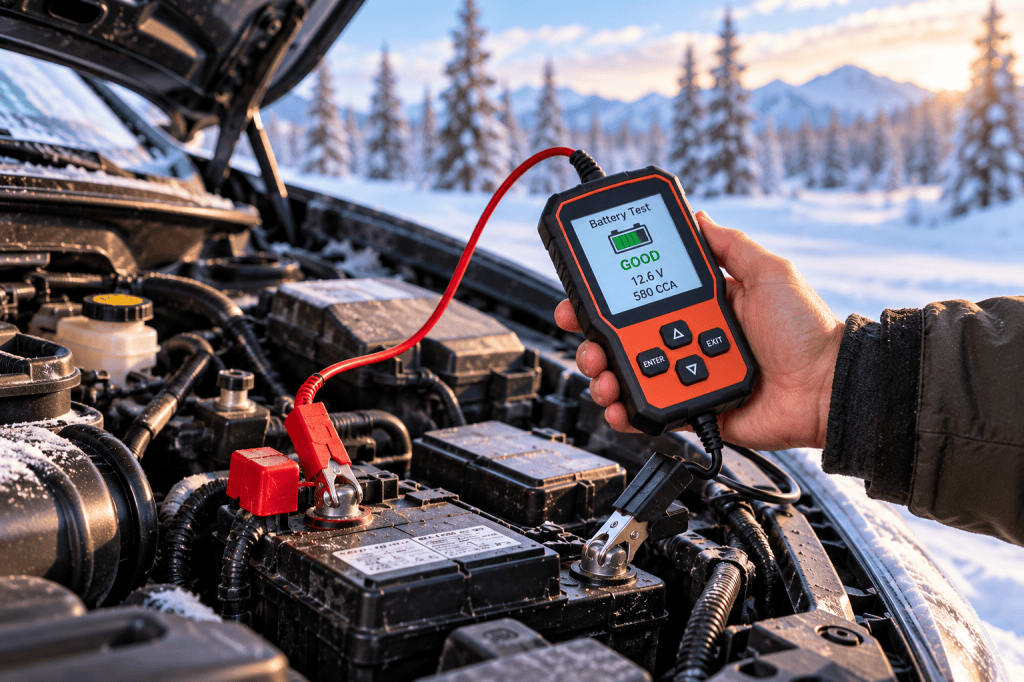
Cold weather drains a battery’s power at the same time your engine needs more of it to start. Not a great combination! Have your battery tested before the serious cold arrives, especially if it’s a few years old or starting slowly, and make sure the terminals are clean and tight.
❄️ Northern Tip:
A battery that seems fine in September may tell a very different story at -20°F. A digital battery tester lets you check it yourself at home.
2. Put On Your Winter Tires
Once temperatures are consistently dropping, it’s time to get the winter tires on. Their rubber stays flexible in the cold, and their tread is made for snow and ice. If you’re reusing last year’s set, check for damage and worn tread (and don’t forget the spare).
3. Check Your Tire Pressure
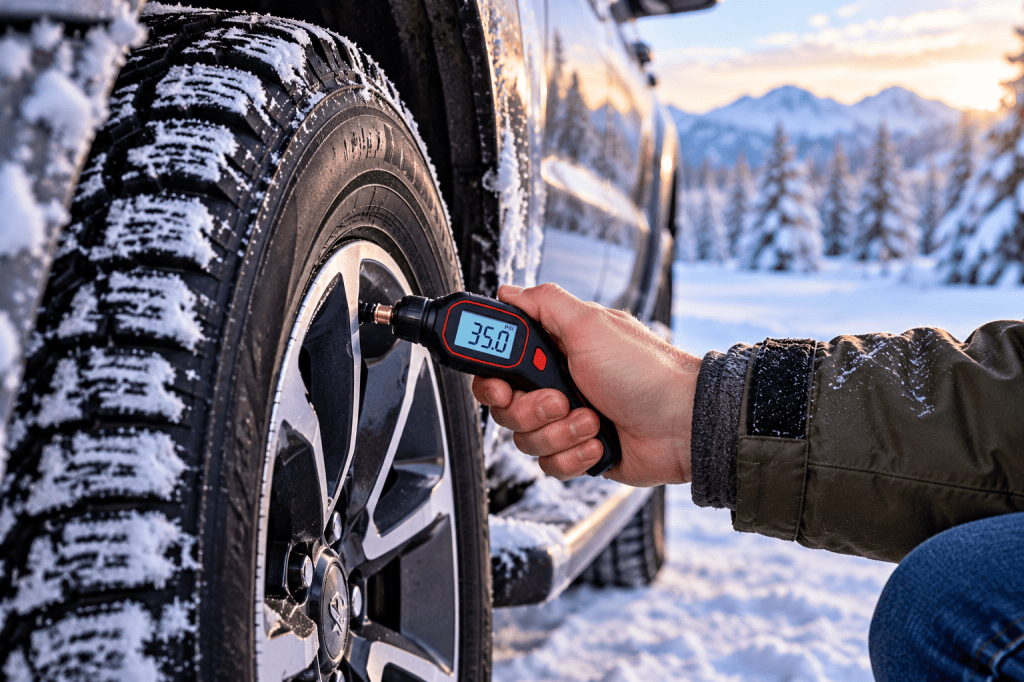
Tire pressure drops as the temperature drops, so tires that were fine in August may be low by November. Inflate them to the pressure on the sticker inside the driver’s door, not the maximum printed on the tire.
❄️ Northern Tip:
Recheck after big temperature swings. A small digital tire pressure gauge makes it a two-minute job.
4. Check Your Coolant and Antifreeze
Coolant protects your engine from overheating and freezing. Make sure the level is right and the mix is rated for your coldest temperatures. If you’re not sure how old or strong it is, have a mechanic check it.
In Alaska, “probably good enough” isn’t my favorite strategy for anything that’s supposed to stay liquid in January. 😂
5. Switch to Winter Windshield Washer Fluid
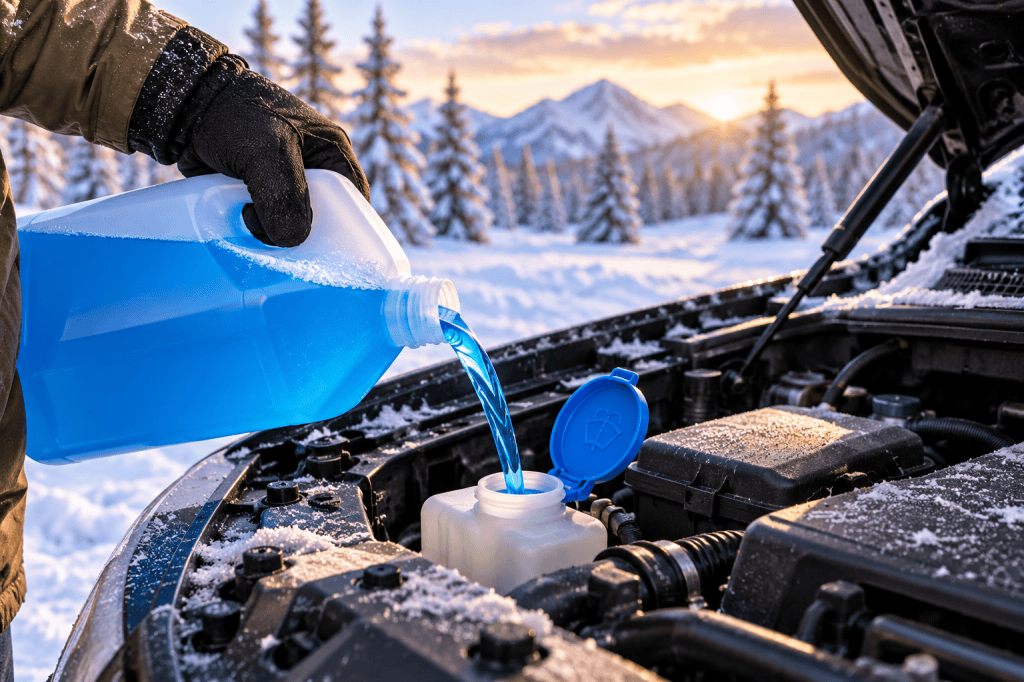
Not all washer fluid is rated for real cold, so check the freeze rating on the bottle. And if summer fluid is still in the tank, topping it off with winter fluid won’t give you the full protection on the label. A frozen washer system is no fun when the road is coating your windshield in slush.
6. Inspect Your Windshield Wipers
If your wipers are streaking, skipping, or cracked, replace them before winter. Some drivers prefer winter blades built to shed snow and ice. Good visibility matters when you’re driving through snow, darkness, and road spray, often all at once!
7. Check Your Block Heater and Cord
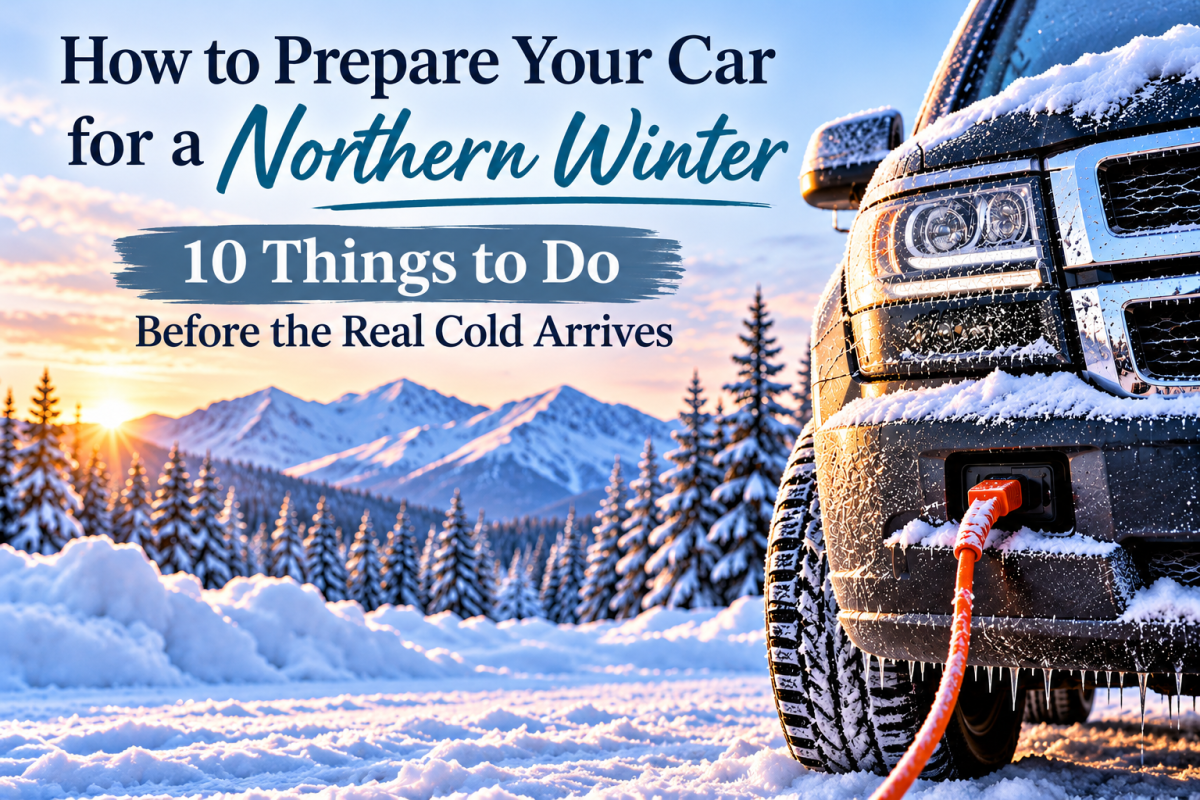
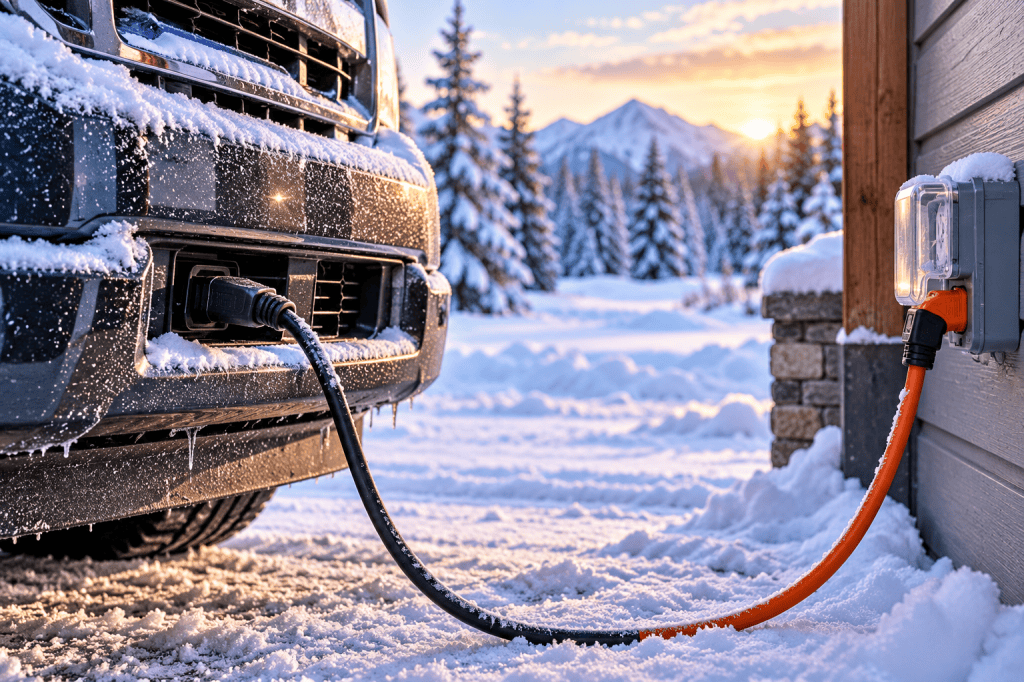
This one matters most where real cold happens. Check the block heater cord and plug for damage now, not on the first brutally cold night. If you also use an oil-pan heater or battery warmer, follow the manufacturers’ directions for when and how long to plug in.
❄️ Northern Tip:
Check your outdoor extension cord too. We use a heavy-duty cold-weather extension cord rated for outdoor use and temperatures well below zero. Make sure yours is rated for the load.
8. Check Your Lights
Winter means a lot more driving in the dark up here. Walk around the car and check your headlights, high beams, brake lights, tail lights, turn signals, hazards, and license plate lights. Then clean the lenses, since road grime and snow can block more light than you’d think.
9. Keep More Fuel in the Tank
In winter, I don’t let the tank get very low. Weather, road closures, or getting stuck can turn a normal drive into a long wait. More fuel means more options, including running the engine for heat if you’re stranded (only with the exhaust pipe clear of snow, to avoid carbon monoxide). This matters even more outside town, where gas stations can be few and far between.
10. Pack a Winter Emergency Kit
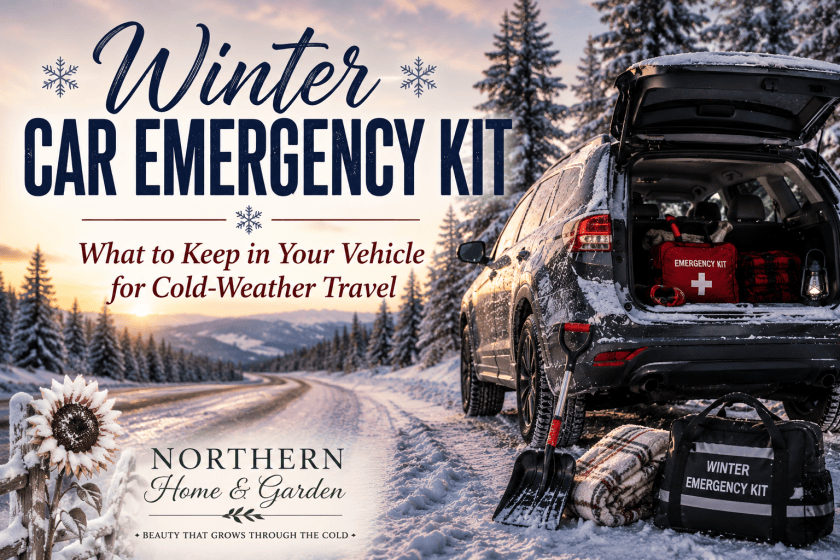
Once the car is ready, think about the people inside it. We keep a winter emergency kit with blankets, extra gloves and hats, hand warmers, a flashlight, first-aid supplies, a scraper and brush, a small shovel, traction aids, a jump starter, a power bank, and food and water.
Our Winter Car Emergency Kit post explains exactly what we keep in ours, and you’ll find many of these items on our Winter Car Essentials page.
A Little Preparation Goes a Long Way
Winter driving is just part of life in Alaska. We can’t control the weather, but we can make sure our vehicles are ready for it. None of these jobs is exciting, but neither is standing beside a car that won’t start at 30 below!
Do a little at a time while the weather is still cooperating, and you’ll be glad you did when winter decides it’s done being polite.
Getting the house ready too? See How to Get Your Home Ready for a Long Northern Winter.
🌻 Northern Home & Garden
More Northern Tips, Straight to Your Inbox 🌻
Get practical gardening advice, seasonal ideas and new posts from Northern Home & Garden delivered to your inbox.