Raspberries are one of those plants that make cold-climate gardening feel a little more rewarding. With the right varieties and a little care, they can handle surprisingly cold winters and come back year after year.
The good news? Raspberries don’t need a perfectly manicured garden to thrive. Give them plenty of sun, good soil, consistent moisture, and a little support, and they’ll do much of the growing on their own.
Here are some simple ways to help a raspberry patch thrive in a northern garden.
Affiliate Disclosure: This post contains affiliate links. As an Amazon Associate, Northern Home & Garden earns from qualifying purchases at no additional cost to you.
1. Choose Raspberry Varieties That Can Handle the Cold
Before planting raspberries, start with varieties rated for your growing zone.
Not every raspberry that looks beautiful at the garden center is prepared for a long northern winter. In very cold climates, look for varieties known for excellent winter hardiness.
You’ll generally find two types:
Summer-bearing raspberries produce berries on canes that grew the previous year.
Fall-bearing raspberries, sometimes called everbearing raspberries, can produce berries on new growth later in the season.
For areas with very short summers, summer-bearing varieties are often a dependable choice because some fall crops may not have enough time to fully ripen before the first hard frost.
Whenever possible, buy plants from a nursery familiar with your local climate. A variety already proven in your area is usually a better bet than one chosen simply because the tag says “raspberry.”
2. Pick a Sunny, Well-Drained Location
Raspberries grow and produce best with plenty of sunlight.
Aim for a location that receives at least 6 hours of direct sun each day, although more is even better.
Good drainage is just as important.
Raspberry roots don’t like sitting in soggy soil, especially during spring snowmelt. If your yard tends to hold water, consider slightly raised rows or adding organic matter to improve the soil.
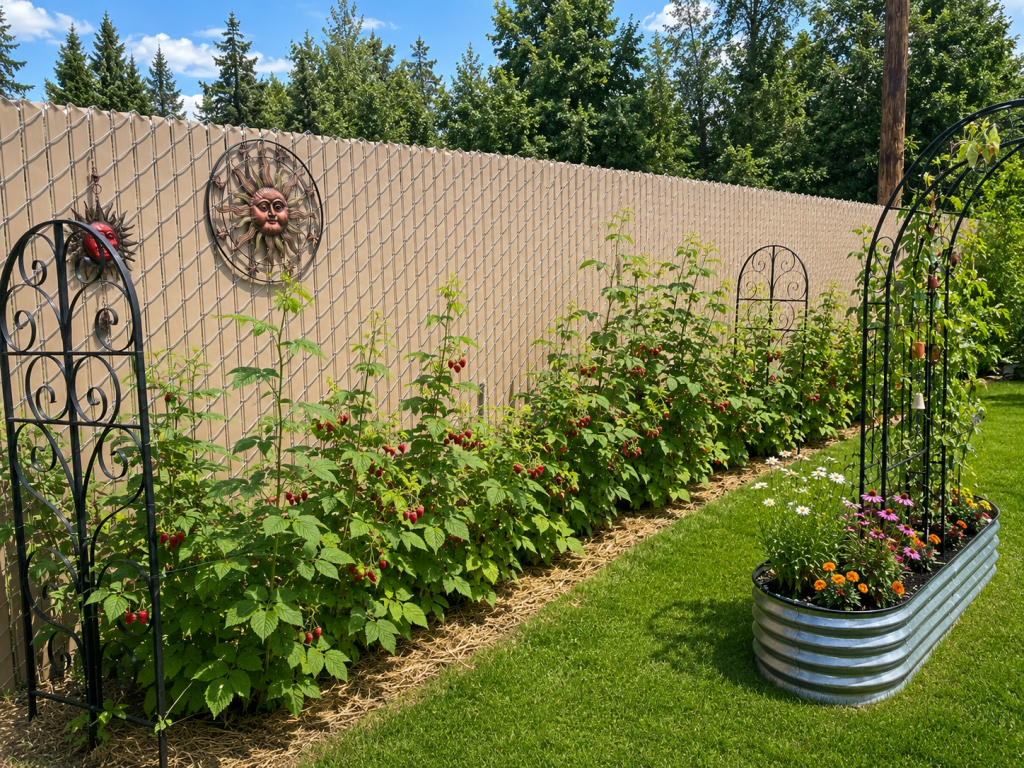
❄️ Northern Tip:
A spot that naturally collects some snow can also be helpful in very cold climates. Snow acts like insulation and can help protect plants from extreme winter temperatures.
3. Give Raspberries Room to Spread
That small raspberry plant you bring home may not stay small for long.
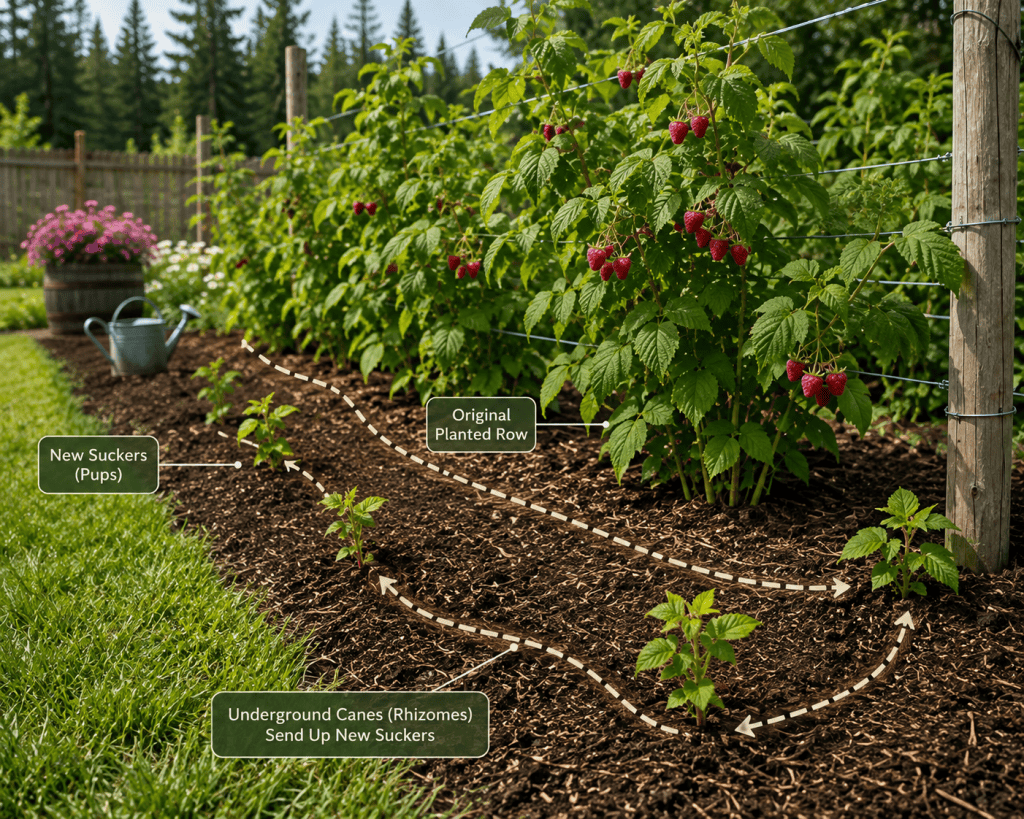
Raspberries naturally spread through underground roots and send up new shoots called suckers. That’s wonderful when you’re trying to establish a productive patch — but it can quickly become messy if the plants aren’t given some boundaries.
Keep raspberry rows fairly narrow and remove shoots that wander too far outside the area you’ve chosen for them.
A little maintenance throughout the growing season is much easier than trying to reclaim an overgrown raspberry patch several years later.
4. Support the Canes Before They Get Wild
Raspberry canes can become surprisingly tall and unruly.
Once they’re loaded with leaves and berries, unsupported canes may bend toward the ground, lean into walkways, or become tangled with neighboring plants.
A simple support system makes a huge difference.
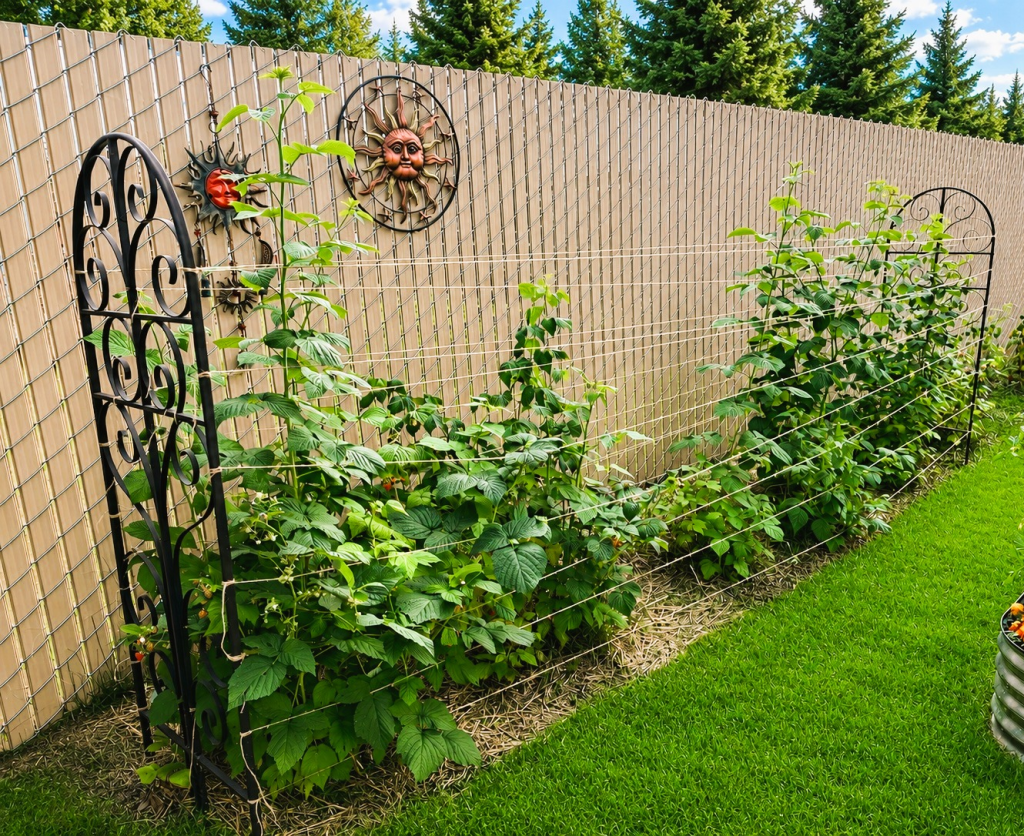
Posts with horizontal wires, twine, or sturdy garden supports can keep the canes upright while still allowing plenty of airflow and sunlight.
As the patch matures, a sturdy raspberry trellis can make pruning, harvesting, and maintaining the plants much easier.
❄️Northern Tip:
It doesn’t have to be fancy. Expensive garden twine tied between sturdy supports can be a simple way to keep sprawling canes upright and contained.
5. Water Deeply — But Don’t Keep Them Soggy
Raspberries prefer consistently moist soil, especially while they’re flowering and developing fruit.
Rather than giving them frequent shallow watering, water deeply enough to reach the root zone.
A soaker hose can make slow, deep watering easier by delivering water directly along the raspberry row.
A layer of organic mulch can help tremendously in northern gardens. Straw, shredded leaves, or other suitable organic mulch can help:
- Hold moisture in the soil
- Reduce weeds
- Protect shallow roots
- Moderate soil temperatures
Just avoid piling mulch directly against the raspberry canes.
6. Feed Them Without Overdoing It
Raspberries appreciate fertile soil, but more fertilizer isn’t always better.
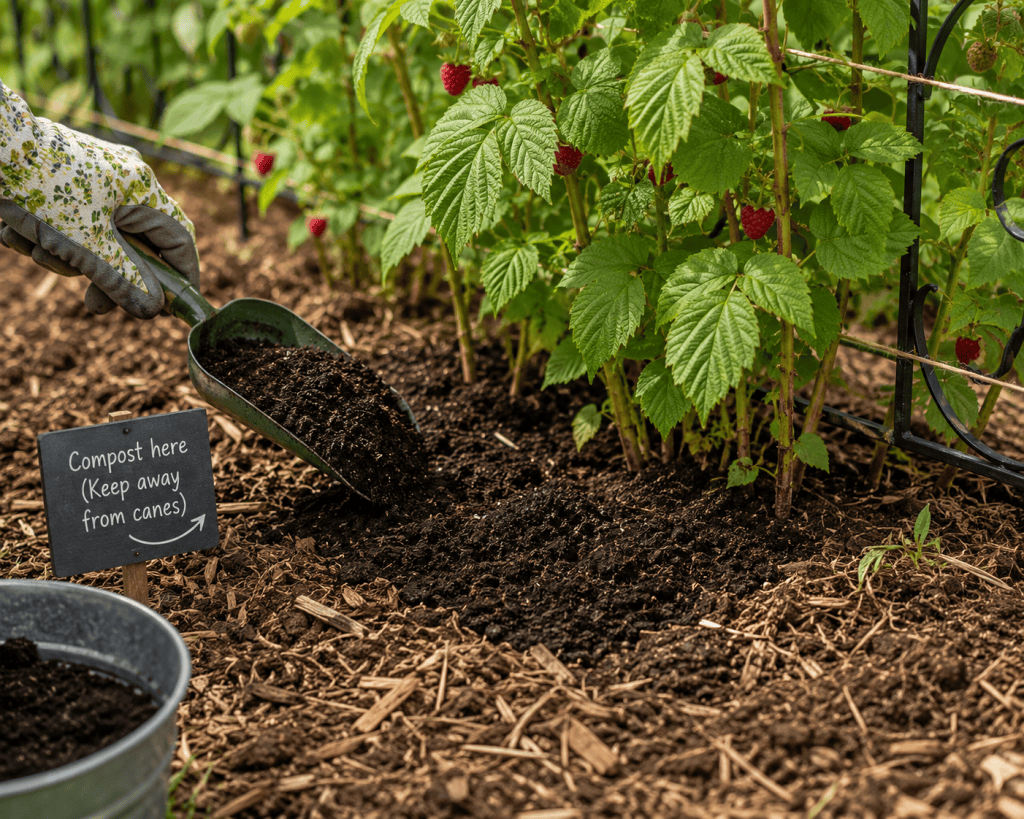
Adding compost around the plants can improve the soil while slowly providing nutrients.
If additional fertilizer is needed, it’s generally best applied early in the growing season when the plants are actively beginning to grow.
Too much nitrogen can encourage lots of lush green foliage and vigorous cane growth without necessarily giving you more berries.
In a northern climate, avoid pushing lots of tender new growth late in the summer. Those new shoots may not have enough time to harden before freezing temperatures arrive.
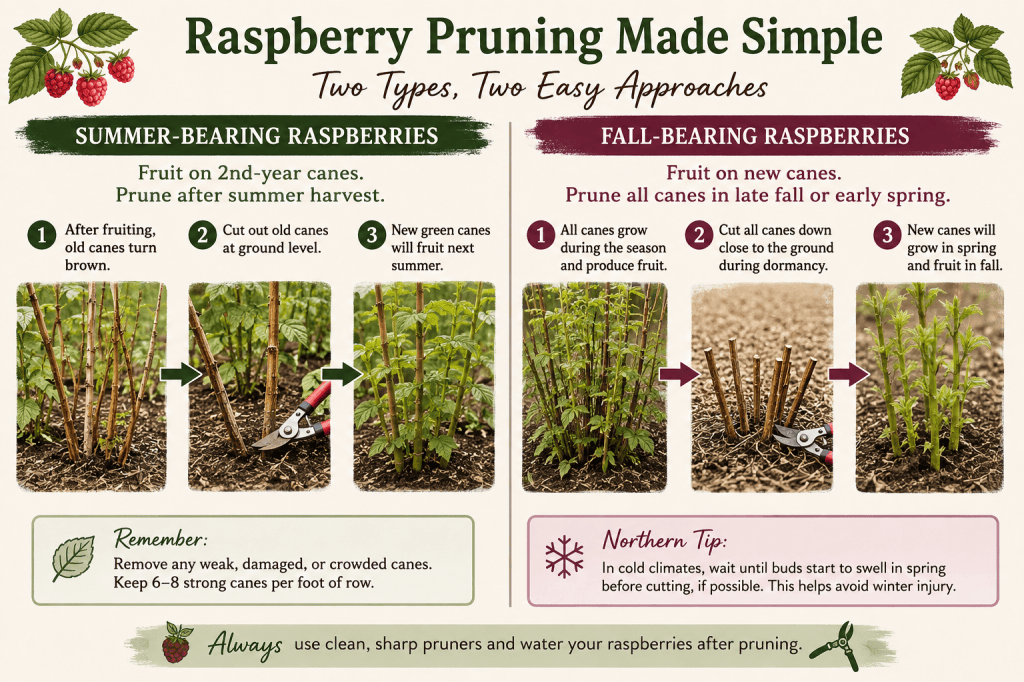
7. Know When and How to Prune
Pruning is one of the most important parts of raspberry care — and one of the easiest things to overcomplicate.
A clean pair of pruning shears makes it much easier to remove old, damaged, or overcrowded canes without tearing the surrounding growth.
The first step is knowing which type of raspberry you’re growing.
Summer-Bearing Raspberries
Summer-bearing raspberries produce fruit on second-year canes.
After a cane finishes producing berries, it won’t fruit again. Those old canes can be removed near ground level after harvest or during the dormant season.
Leave the healthy new canes, because those are the ones that will produce next year’s berries.
Fall-Bearing Raspberries
Fall-bearing raspberries can be managed in different ways depending on whether you want one crop or potentially two.
One of the simplest methods is cutting all the canes down while the plants are dormant. New canes emerge in spring and produce a fall crop.
However, gardeners with very short growing seasons should make sure their chosen variety has enough time to ripen a fall crop before frost.
Whatever type you grow, removing dead, damaged, weak, and overcrowded canes helps improve airflow and keeps the patch manageable.
8. Keep Grass and Weeds Out of the Patch
Raspberries don’t appreciate competition around their shallow root systems.
Grass and weeds steal water and nutrients and can make an already vigorous raspberry patch difficult to maintain.
Try to keep the area around the plants as weed-free as possible.
For stubborn weeds, a small hand weeder can help remove roots while keeping disturbance around your raspberry plants to a minimum.
Mulch can help, but hand-pulling weeds is often still necessary — especially while the raspberry plants are young.
And if the patch gets a little wild during a busy summer?
Don’t panic.
Gardens aren’t ruined because they got away from us for a season. Clear what you can, prune what needs pruning, and keep improving the patch one step at a time.
9. Prepare Raspberries for a Northern Winter
Once temperatures begin dropping, the goal changes from encouraging growth to helping the plants settle in for winter.
Stop fertilizing early enough that the plants aren’t producing tender new growth heading into fall.
After the plants become dormant, remove dead or damaged growth as appropriate for the type of raspberry you’re growing.
Maintaining a layer of organic mulch over the root zone can provide additional protection as temperatures drop.
❄️ Northern Tip:
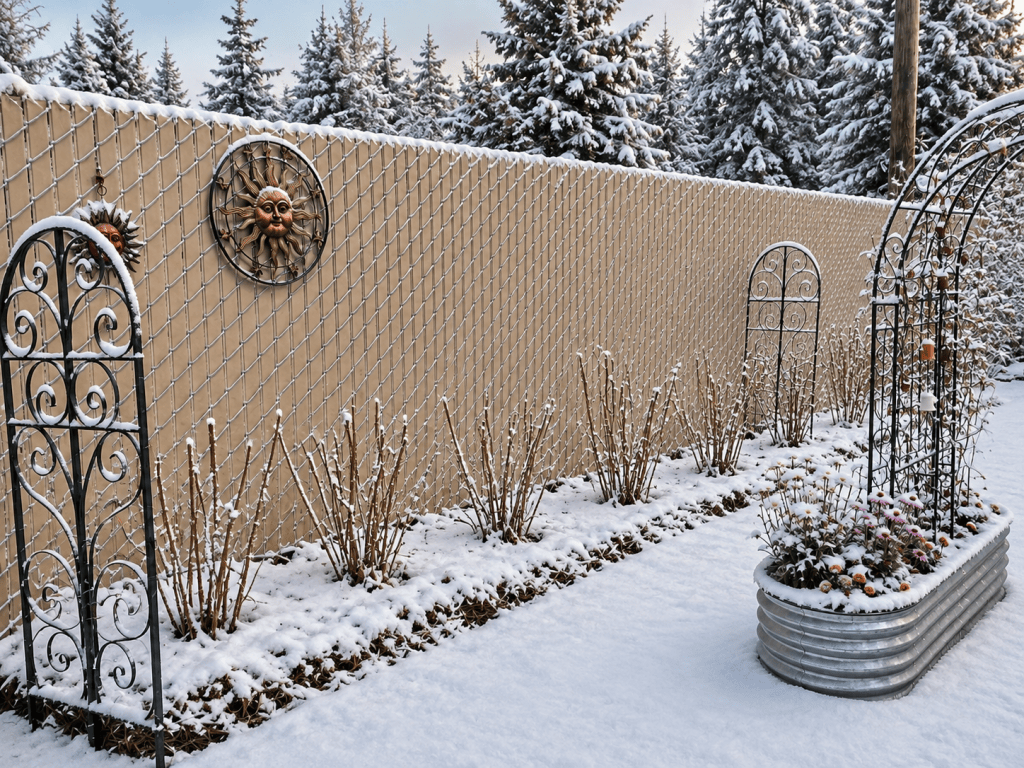
There’s one winter protection northern gardeners often have plenty of: Snow! Don’t be too quick to clear snow away from your raspberry patch. A consistent blanket of snow can provide valuable insulation around raspberry plants and help protect them from extreme temperature swings.
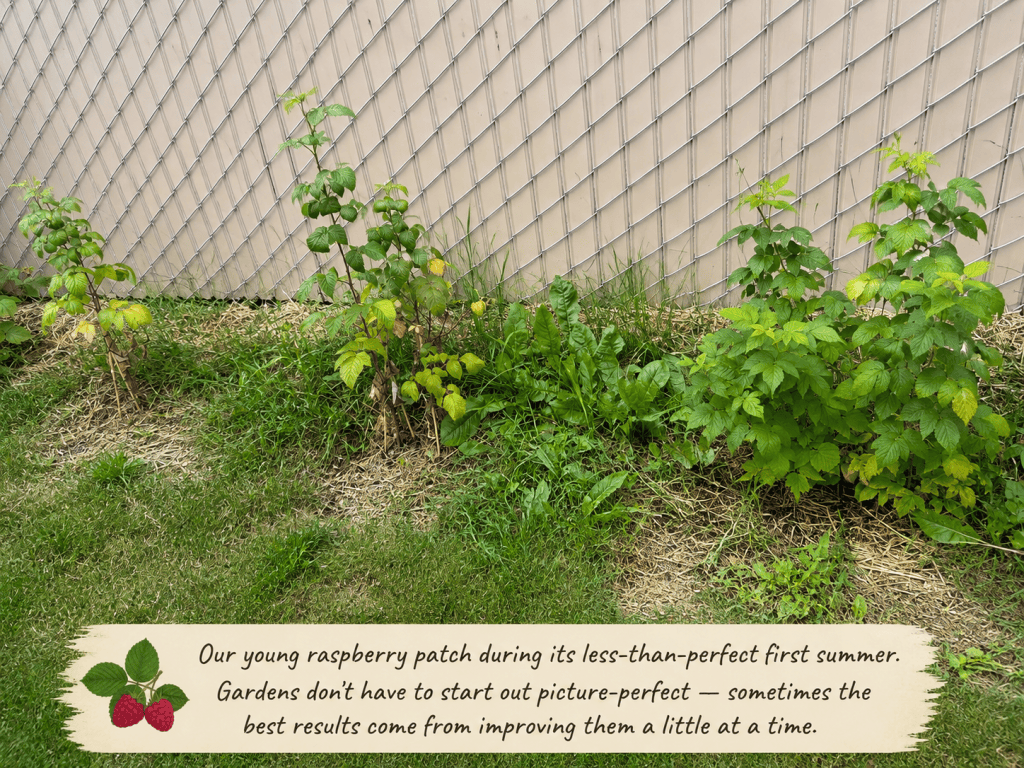
10. Don’t Expect a Perfect Raspberry Garden the First Year
A raspberry patch gets better with time.
During the first few seasons, you’ll learn where the plants want to spread, which canes need support, how quickly the patch fills in, and what kind of trellis works best for your space.
You may move supports.
You may change the mulch.
You may discover that your neat little row of raspberries has very different ideas about where it would like to grow.
That’s okay.
Gardening — especially in a challenging northern climate — is rarely about getting everything perfect the first time.
Start with healthy, cold-hardy plants, give them the basics they need, and improve the patch as it grows.
A Raspberry Patch Worth Waiting For
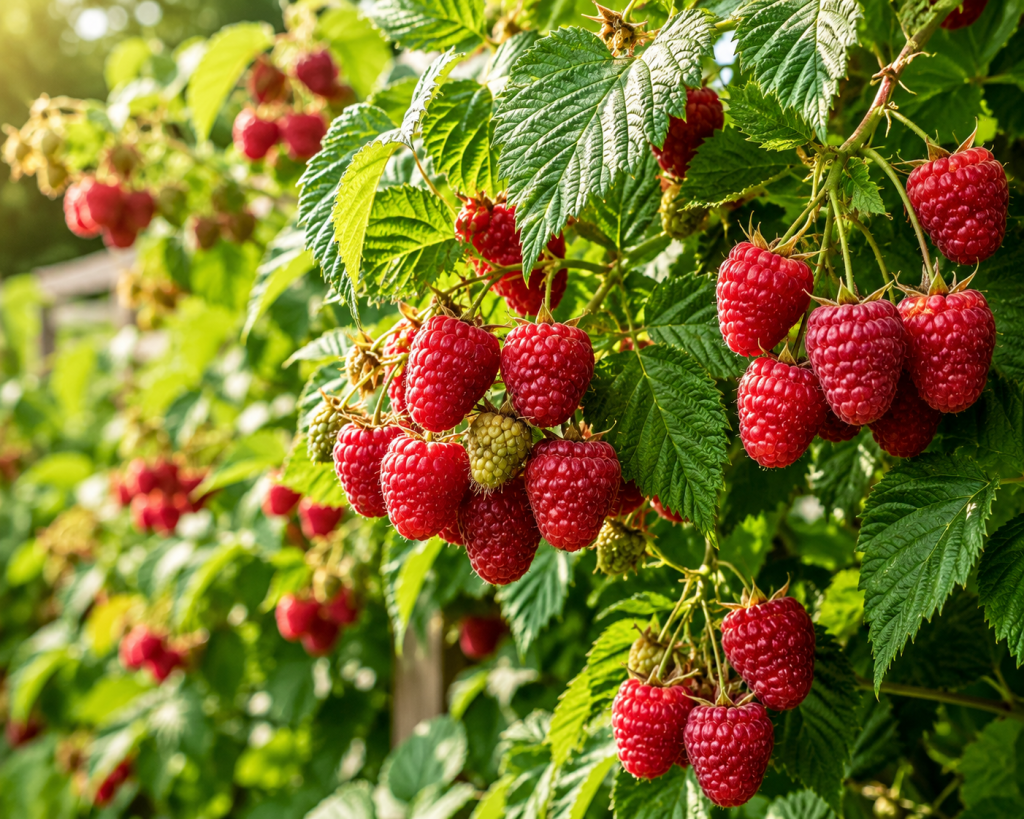
Growing raspberries in a cold climate takes a little planning, but they’re one of the most rewarding perennial fruits you can add to a northern garden.
Choose hardy varieties, give them plenty of sunshine, control their wandering tendencies, support the canes, and prepare them properly for winter.
Then give them time.
A small raspberry planting can eventually become a productive patch that returns every summer — which makes all that pruning, weeding, and untangling well worth the effort.
Northern Home & Garden
Beauty That Grows Through the Cold

