When winter temperatures really start dropping, the easiest way to make the house warmer is obvious:
Turn up the thermostat.
Unfortunately, your heating bill is also aware of this strategy. 😂
The good news is that there are plenty of simple ways to make your home feel warmer without automatically reaching for the thermostat.
Some help keep warm air inside. Others make individual rooms more comfortable. And a few are simply about embracing the fact that when it’s freezing outside, there’s absolutely nothing wrong with owning an unreasonable number of blankets.
Here are some easy ways to make your home feel warmer during a long northern winter.
Affiliate Disclosure: This post contains affiliate links. As an Amazon Associate, Northern Home & Garden earns from qualifying purchases at no additional cost to you.
1. Stop Cold Air From Sneaking In
Before trying to make a room warmer, make sure you’re not constantly letting cold air into it.
Check around exterior doors and windows for noticeable drafts.
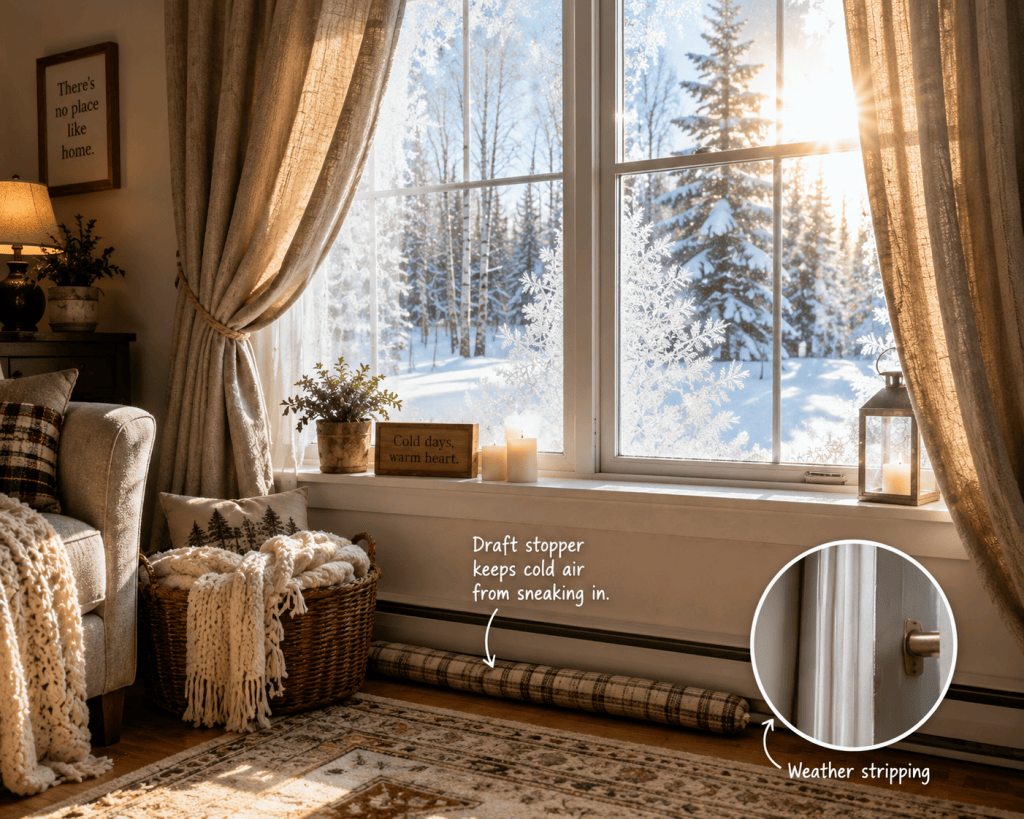
Worn weather stripping can often be replaced, and appropriate caulk can help seal certain gaps around windows and frames. Self-adhesive weather stripping is an inexpensive option for many small gaps around doors and windows.
Door draft stoppers can also help with drafts along the bottom of doors.
❄️Northern Tip:
Check for drafts on a windy day. Slowly move your hand around the edges of exterior doors and windows and you’ll often feel exactly where cold air is entering.
A tiny draft in October can become very noticeable when temperatures really drop.
Winter has a way of finding every little gap you ignored all summer.
2. Let the Sunshine In
Even during a cold northern winter, sunlight coming through the windows can provide a little free warmth.
On sunny days, open curtains or blinds on windows receiving direct sunlight and let that solar heat enter the room.
Once the sun moves away or evening arrives, close them again to help reduce heat loss through the glass.
It’s a simple habit that costs absolutely nothing.
And when winter days are short, we’ll happily accept every little bit of sunshine we can get.
3. Close Curtains at Night
Windows can be one of the coldest surfaces in a room.
Closing curtains or insulated window coverings at night can add another barrier between your warm room and cold glass.
Blackout curtains can add another layer at the window and may help a room feel more comfortable during cold winter nights.
Just be careful not to trap excessive moisture against windows. Condensation can become an issue during cold weather, so keep an eye on moisture levels and make adjustments when needed.
❄️Northern Tip:
Don’t let curtains block heating registers or radiators. We’re trying to keep heat inside the room—not trap it behind the curtains. 😂
4. Put Rugs on Cold Floors
Hard flooring can feel very cold in winter.
Adding an area rug won’t actually increase the room temperature, but it can make the space feel much warmer and more comfortable underfoot.
Rugs work especially well in bedrooms, living rooms, hallways, and anywhere you’re frequently walking around without shoes. A washable area rug can be an especially practical choice in busy homes, giving hard floors a softer, cozier feel without adding something that’s difficult to clean.
And if your feet are warm, somehow the rest of you immediately feels about 30% less offended by winter.
That’s not a scientific measurement.
But I’m standing by it. 😂
5. Reverse Your Ceiling Fans
Warm air rises.
If your ceiling fan has a reverse setting, running it slowly in the appropriate winter direction can help circulate warm air that collects near the ceiling back into the living space.
You shouldn’t feel a strong cooling breeze underneath the fan.
This can be especially helpful in rooms with high or vaulted ceilings.
Check your fan manufacturer’s instructions if you’re unsure which direction it should run.
❄️Northern Tip:
Use the lowest practical fan speed. The goal is gentle air circulation—not recreating July in your living room.
6. Move Furniture Away From Heat Sources
Take a quick look around your rooms.
Is the couch sitting directly in front of a heating vent?
Is a big chair blocking a register?
Are curtains covering a radiator?
Furniture and other objects can interfere with airflow and prevent heat from circulating effectively through the room.
Even moving furniture a few inches may help.
It also means you’re no longer paying to keep the back of the couch exceptionally warm.
Although I’m sure the couch appreciates it.
7. Keep Interior Doors Open — or Closed — Strategically
Whether interior doors should stay open or closed depends on how your particular heating system works.
In many homes, keeping doors open helps heated air circulate more evenly.
In other situations, closing off an unused space may make sense—but doing so can affect airflow, plumbing temperatures, or HVAC performance.
Don’t close vents or shut rooms off without understanding how your heating system is designed to operate.
The goal is to distribute heat efficiently without accidentally creating another problem.
❄️Northern Tip:
Pay attention to naturally colder areas of the house before extreme weather arrives. Rooms with exterior plumbing deserve particular attention during very cold temperatures.
8. Add Warm Layers to the Furniture
This one requires absolutely no home-improvement skills.
Bring out the blankets.
Add soft throw blankets to couches and chairs.
Use warmer bedding.
Swap lightweight summer textiles for heavier winter ones.
A blanket doesn’t make the room warmer, but it makes you warmer—and sometimes that’s all you really need.
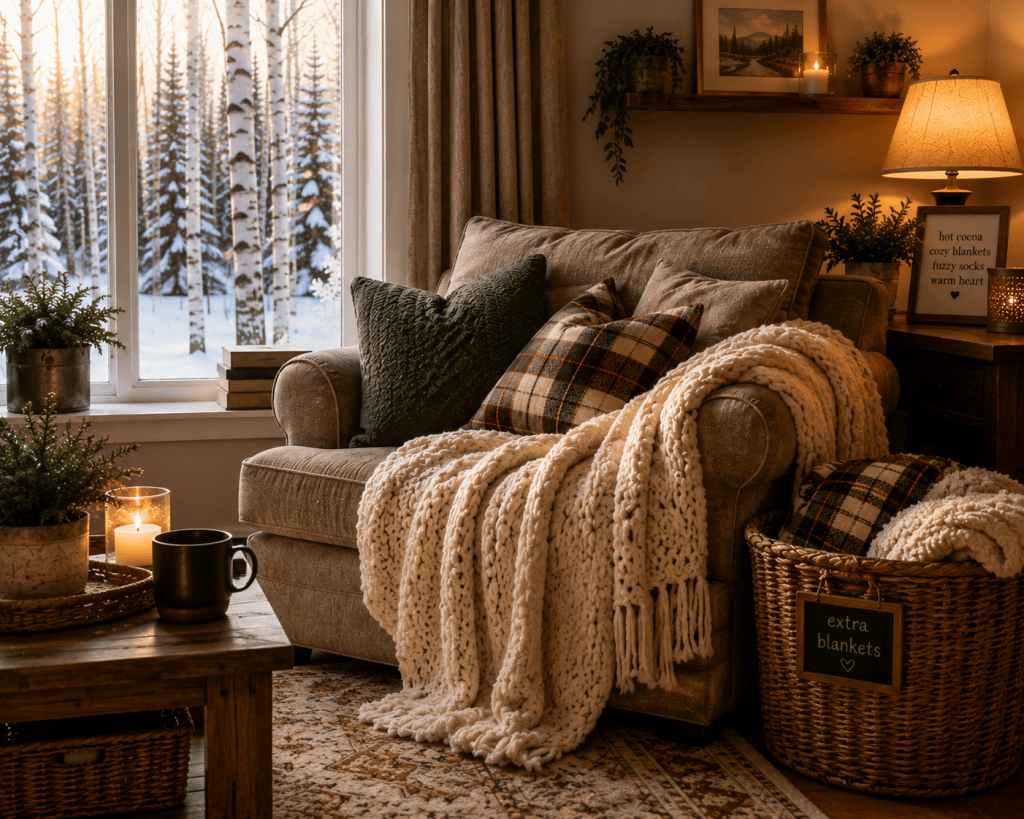
Keep baskets of blankets in the rooms where your family actually spends time.
That way they’re easy to grab when someone gets cold.
Or when someone wants the blanket you’re already using.
Which apparently makes it the best blanket in the entire house. 😂
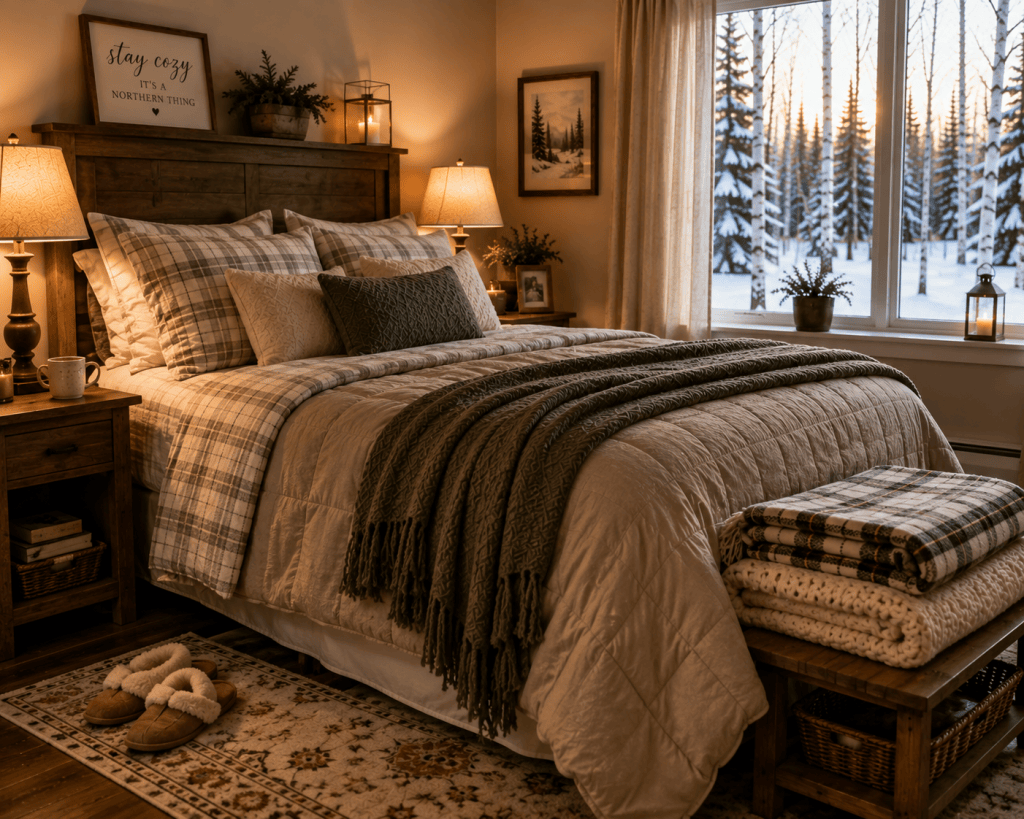
9. Make Your Bed Winter-Ready
Few things make a cold night better than climbing into a warm bed.
Switch lightweight summer bedding for warmer winter layers as needed.
Flannel sheets, heavier blankets, quilts, and appropriate comforters can make a huge difference in how comfortable you feel overnight.
Layering bedding also makes it easier to adjust throughout the season.
If you tend to have cold feet, warm socks may be all you need.
And yes, there comes a point in winter when going to bed wearing socks becomes completely acceptable.
We don’t make the rules.
10. Manage Indoor Humidity
Very dry indoor air can make winter less comfortable.
Heating cold outside air often lowers the relative humidity indoors, which can contribute to dry skin, static electricity, and that unmistakable dry-house feeling.
A properly used humidifier may make your home feel more comfortable.
However, too much indoor humidity during very cold weather can cause condensation on windows and other cold surfaces.
Monitor your home and adjust accordingly.
❄️Northern Tip:
If water is regularly collecting on your windows, don’t assume more humidity is better. Northern homes sometimes need lower indoor humidity as outdoor temperatures become extremely cold.
Comfort matters—but so does preventing moisture problems.
11. Warm the Person Instead of the Entire House
Sometimes you’re not actually cold because the whole house is cold.
You’re cold because you’ve been sitting still for two hours.
Before turning up the thermostat, try adding a sweater, warm socks, slippers, or a blanket.
Make a hot drink.
Move around for a few minutes.
Use safe warming products according to their instructions if they’re appropriate for your household.
There’s no reason to heat every cubic foot of the house another few degrees because one person sitting on the couch has cold toes.
Especially when that person has refused to put on socks.
You know who you are. 😂
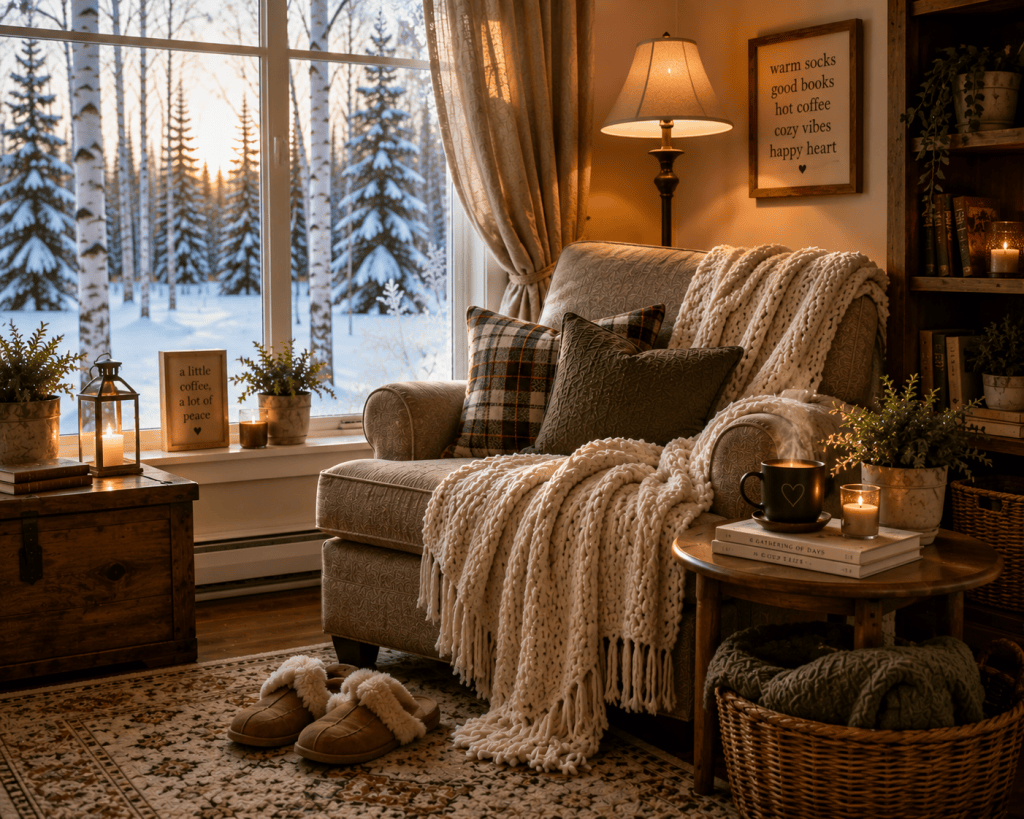
12. Make Your Favorite Rooms Feel Cozy
There’s a psychological side to warmth, too.
Soft lighting, warm textures, blankets, rugs, pillows, candles used safely, and cozy spaces can make winter rooms feel much more inviting.
You don’t need to redecorate your entire house.
Focus on the places where your family spends the most time.
A reading chair with a blanket.
A cozy couch.
A warm kitchen.
A comfortable spot for morning coffee.
When winter lasts for months, these little things matter.
❄️Northern Tip:
Think about where your family naturally gathers during winter and make those spaces comfortable first.
Your house doesn’t have to look like a magazine.
It has to feel good to live in.
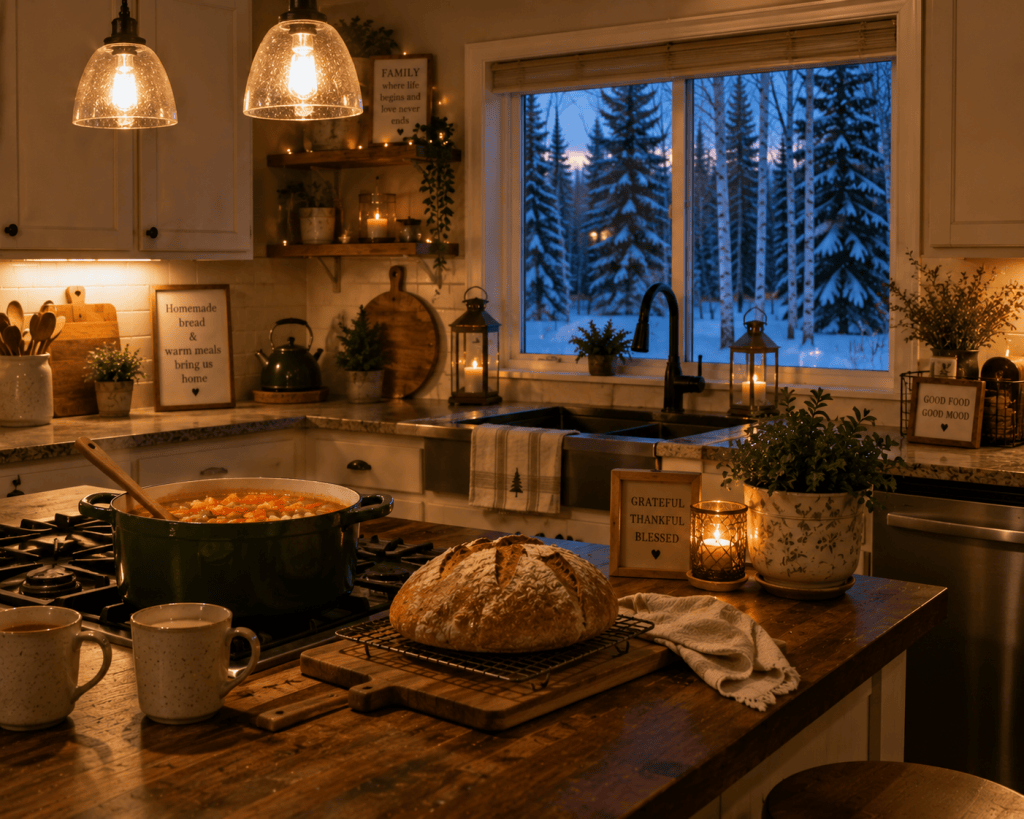
13. Use Cooking Heat — Safely
Winter is a wonderful time for soups, stews, casseroles, breads, and other foods that spend time simmering or baking.
Cooking naturally adds some heat to the kitchen while you’re preparing dinner.
But never use an oven, stove, grill, or other cooking appliance as a substitute for your home’s heating system.
Use appliances only as intended.
That said, there’s something especially nice about walking into a warm kitchen on a freezing evening and smelling dinner cooking.
Bonus points if there’s bread involved.
Actually, forget the points.
Just make the bread. 😂
14. Pay Attention to the Rooms That Always Feel Cold
Most homes seem to have that room.
You know the one.
The room that’s somehow five degrees colder than everywhere else.
Instead of automatically increasing the temperature throughout the entire house, try figuring out why that particular room feels cold.
Check for:
- Drafty windows
- Exterior doors
- Blocked heating vents
- Poor airflow
- Large areas of hard flooring
- Uninsulated or poorly insulated areas
- Rooms above garages or crawl spaces
- Large exterior-facing walls
Some issues may have simple solutions.
Others may point to insulation, air-sealing, or heating-system concerns that deserve professional attention.
Finding the actual problem is usually better than trying to overpower it with the thermostat.
15. Know When It’s Not a DIY Problem
Simple comfort tricks are wonderful.
But if your heating system can’t maintain a safe indoor temperature, certain rooms are dramatically colder than others, pipes are at risk of freezing, or you suspect significant insulation or heating-system problems, it’s time to investigate further.
Some problems need a qualified professional.
This article is about making a properly heated home more comfortable—not seeing how low you can make the thermostat.
❄️Northern Tip:
During extreme cold, protecting your home and plumbing comes first. Don’t sacrifice safe indoor temperatures just to save a few dollars on heating.
Sometimes the thermostat needs to go up.
That’s what it’s there for.
A Simple Keep-the-House-Warmer Checklist
When winter settles in:
- Check windows and exterior doors for drafts
- Replace worn weather stripping as needed
- Use appropriate curtains or window coverings
- Open curtains for direct sunlight during the day
- Close them again after sunset
- Add rugs to cold floors
- Reverse ceiling fans where appropriate
- Keep heating vents and registers clear
- Move furniture away from heat sources
- Add warm blankets and throws
- Switch to winter bedding
- Monitor indoor humidity
- Wear warm indoor layers
- Make frequently used rooms extra cozy
- Investigate unusually cold areas of the house
- Keep your home at a safe temperature
None of these things individually transforms a house.
But together, small changes can make winter living noticeably more comfortable.
Warmth Is About More Than the Thermostat
Living somewhere with a long winter changes the way you think about home.
For months, home becomes the place you come back to after shoveling snow, scraping windshields, carrying groceries across an icy driveway, and spending the day bundled in layers.
It should feel good when you walk through the door.
Keeping that home comfortable doesn’t always mean turning the thermostat higher.
Sometimes it’s sealing a draft.
Sometimes it’s closing the curtains.
Sometimes it’s adding another blanket to the couch.
And sometimes it’s sitting somewhere warm on a quiet winter morning with a hot cup of coffee while everyone else in the house is still asleep.
That might not raise the temperature at all.
But somehow, it makes winter feel a whole lot warmer. ☕❄️🌻
Northern Home & Garden
Beauty That Grows Through the Cold

