Coleus is one of those plants that’s really hard to say goodbye to at the end of summer.
You spend months watching it grow into this gorgeous, colorful plant—and then the forecast starts mentioning frost.
Excuse me? We’re just supposed to let it die now? 😂
Thankfully, you don’t necessarily have to.
Coleus is usually grown as an annual outdoors in colder climates, but it can also make a surprisingly easy houseplant. With the right light, watering, and a little pruning, you can keep coleus growing indoors through winter.
And if you don’t have room for a giant plant that spent all summer living its best life outside?
Take cuttings instead.
I’ve done both, and coleus is one of my favorite plants to experiment with because it is incredibly forgiving—and one plant can turn into a whole collection before you know it.
So if frost is coming and you’re not quite ready to say goodbye to your coleus, here’s what you can do.
Affiliate Disclosure: This post contains affiliate links. As an Amazon Associate, Northern Home & Garden earns from qualifying purchases at no additional cost to you.
Can Coleus Really Grow Indoors?
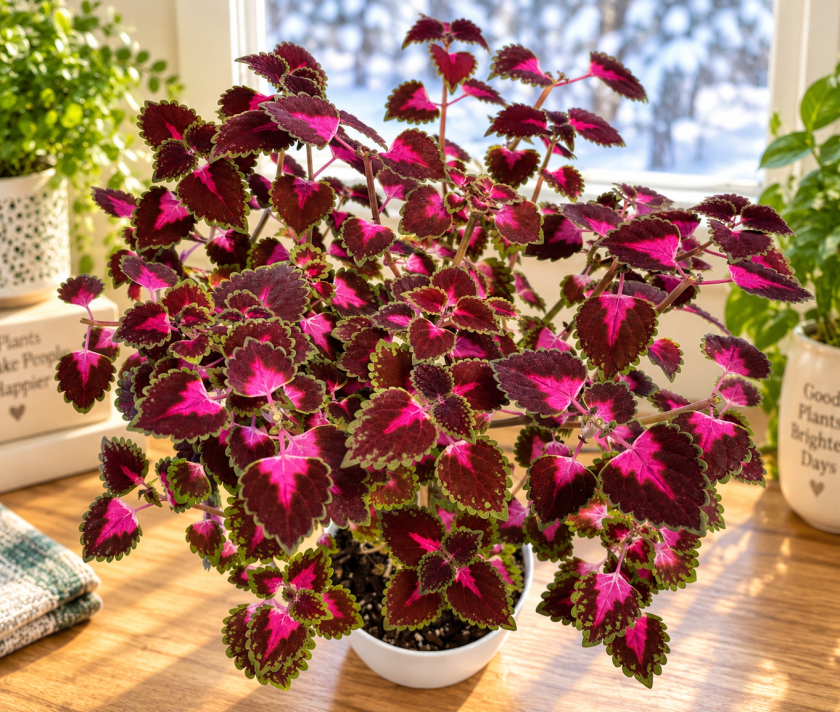
Absolutely.
Coleus is technically a tender perennial in warm climates, which means cold—not the end of summer itself—is what brings its outdoor season to an end for many of us.
Here in a cold northern climate, leaving coleus outside through winter obviously isn’t an option.
Indoors, though?
That’s a completely different story.
Give it plenty of light, keep it away from cold drafts, adjust your watering, and coleus can continue growing as a houseplant long after the outdoor gardening season is over.
It may not grow quite as vigorously as it did during those long, bright summer days, and that’s okay.
The goal isn’t necessarily to recreate July in your living room.
We’re just keeping our pretty girl going until spring. 🌱
You Have Two Good Options
When it’s time to save your coleus from the cold, you don’t necessarily have to haul the entire plant indoors.
You have two choices:
- Bring the whole plant indoors.
- Take cuttings and grow smaller plants inside.
I’ve become a big fan of the second option.
A coleus that has been growing outside all summer can get BIG. Bringing the entire thing indoors means finding room for it—and making sure you haven’t invited half the backyard inside with it.
A few cuttings take up very little space.
And coleus happens to be ridiculously easy to propagate.
Option 1: Bringing the Whole Coleus Plant Inside
If your coleus is a manageable size and you love the shape of the plant, there’s nothing wrong with bringing the whole thing indoors.
But don’t carry it straight from the patio to the windowsill.
Outdoor plants can hide aphids, spider mites, fungus gnats, and other tiny hitchhikers that you really don’t want moving into your houseplant collection.
Inspect the tops and undersides of the leaves, stems, soil surface, drainage holes, and outside of the pot.
Remove dead or damaged foliage and give the plant a general cleanup.
You can also prune an overgrown coleus before bringing it indoors. Coleus responds very well to pruning, and cutting it back can make it much easier to accommodate inside.

That article walks through the entire process of inspecting, cleaning, quarantining, and transitioning outdoor plants into your home.
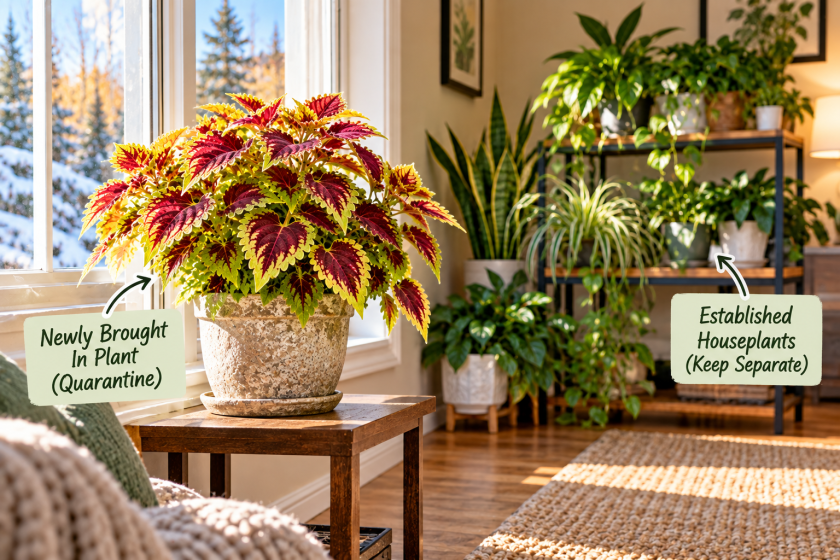
Give Your Coleus a Little Quarantine Time
Even after you’ve inspected the plant carefully, don’t immediately tuck it between your favorite houseplants.
Keep it separated for a little while and continue watching for pests.
Check underneath the leaves and along the stems every few days.
If something managed to sneak inside, it’s much easier to deal with one coleus than an entire houseplant collection.
Option 2: Take Coleus Cuttings Instead
This is probably my favorite way to save coleus.
Instead of bringing in one large outdoor plant, you can take a handful of cuttings and start fresh indoors.
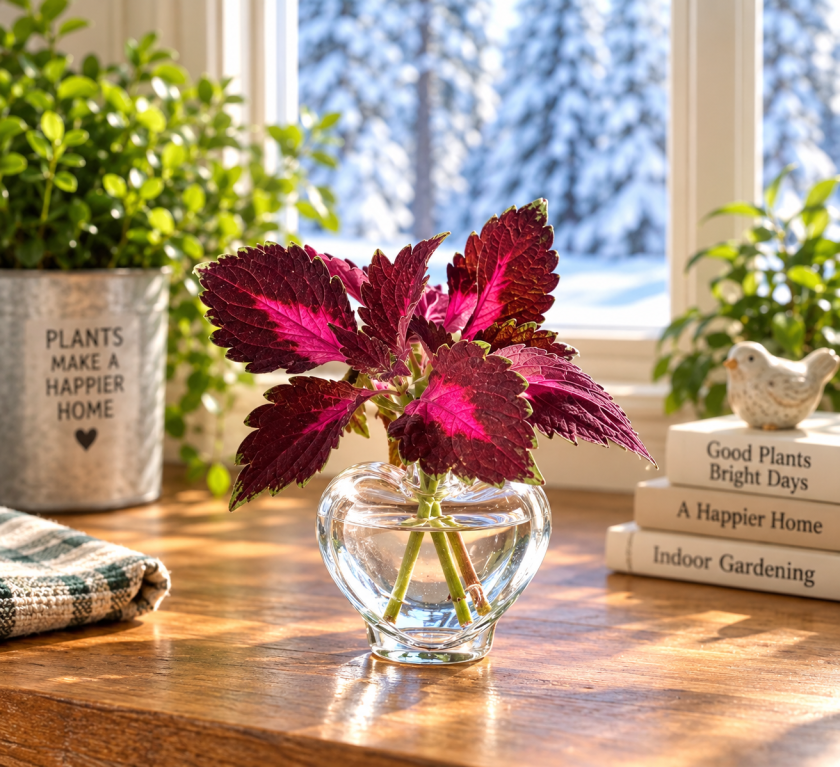
Choose healthy stems and cut just below a leaf node.
Remove the leaves from the lower portion of the stem so you have a bare section that can go into water.
Then place the cuttings in a small glass or propagation container with the lower nodes submerged. You don’t need anything fancy to root coleus—a small glass of water works just fine. But if you propagate plants often, a little glass propagation station makes it easy to watch the roots develop (and looks pretty sitting in a sunny window, too).
Keep the leaves above the water.
That’s pretty much it.
Coleus doesn’t require a complicated propagation setup, which is one of the reasons it’s such a fun plant to experiment with.
❄️ Northern Tip
Take More Than One Cutting
Even if you only want one coleus plant next year, take several cuttings.
Propagation isn’t guaranteed, and having a few extras gives you some insurance.
Coleus Roots Surprisingly Fast
This is the fun part.
Under good conditions, you may start seeing little white roots developing from the nodes fairly quickly.
Keep the container somewhere bright but protected from harsh direct sun while the cutting is establishing roots, and replace or top up the water as needed.
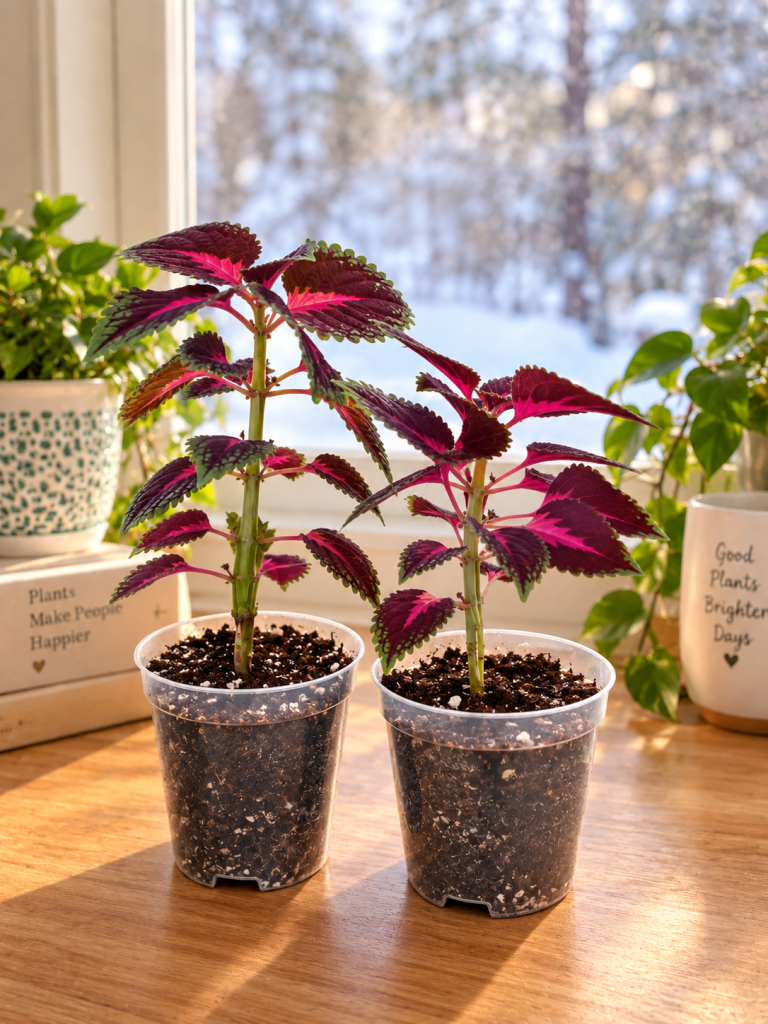
Once the roots have developed enough to support the plant, you can move your cutting into potting soil.
Don’t worry if the cutting looks slightly dramatic while it adjusts.
When Should You Move Coleus Cuttings Into Soil?
You don’t need to wait until your propagation container contains an underwater jungle of roots.
Once several healthy roots have formed and are around an inch or two long, the cutting is generally ready to transition to soil.
Use a container with drainage holes and a well-draining potting mix.
Water the newly potted cutting thoroughly and keep the soil slightly more consistently moist during the initial transition.
Remember: those roots have been living in water.
Moving into soil is an adjustment.
Once the plant is established, you can gradually settle into a more normal watering routine.
Light Is Probably Your Biggest Winter Challenge
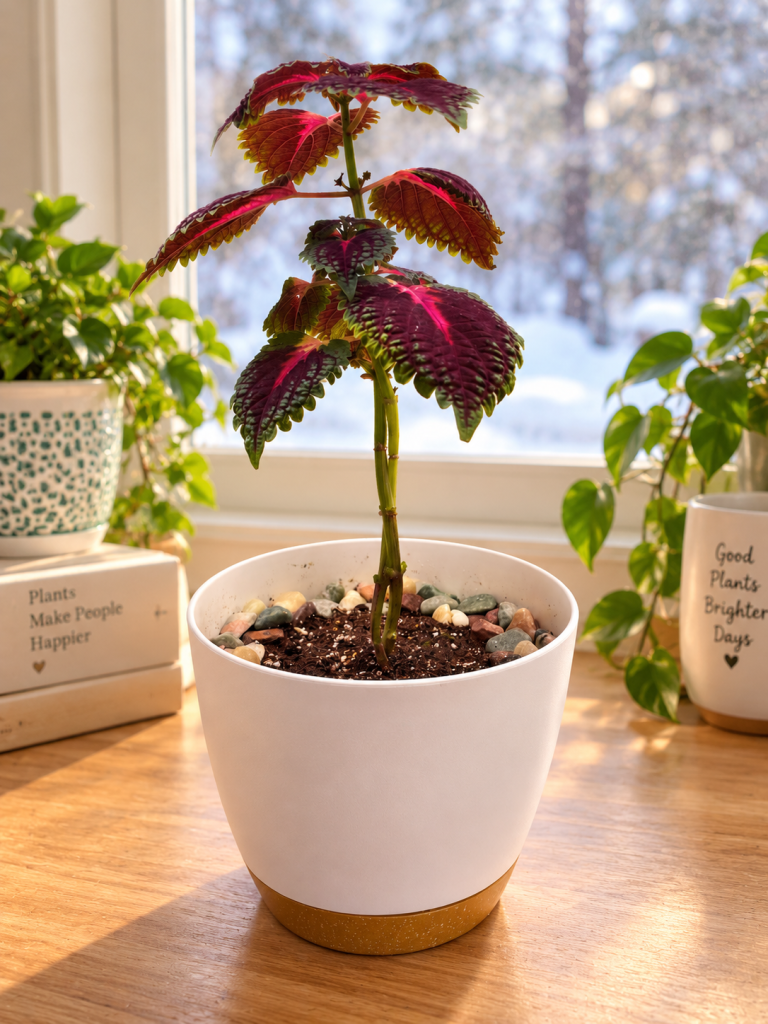
Coleus LOVES light.
And this can be where growing it indoors during winter gets interesting—especially if you live somewhere with very short winter days.
Put your coleus near one of the brightest windows you have.
If the plant isn’t getting enough light, you’ll probably notice.
It may:
- Stretch toward the window
- Develop longer spaces between leaves
- Produce smaller leaves
- Lose some of its vibrant coloring
- Become thin or leggy
Rotate the pot periodically so the plant doesn’t spend the entire winter leaning dramatically toward one window.
If natural light isn’t enough, a grow light can be very helpful. A simple clip-on full-spectrum grow light with an automatic timer can be especially handy in winter. I like this style because you can position it over the plant, adjust the brightness, and set the timer so you don’t have to remember to turn it on and off every day.
And up here in the North, sometimes Mother Nature simply isn’t giving us much to work with in December. 😂
Change the Way You Water
This is important.
A coleus growing outside during summer may drink a surprising amount of water.
Indoors during winter, it will generally dry out much more slowly.
Don’t continue watering on the same schedule simply because that’s what worked outside.
Check the soil instead.
Let the top portion begin to dry before watering again, while avoiding letting the plant become severely dry and wilted for long periods.
And make sure excess water can drain freely from the pot.
Winter growth is slower, which means constantly wet soil can create problems quickly.
❄️ Northern Tip
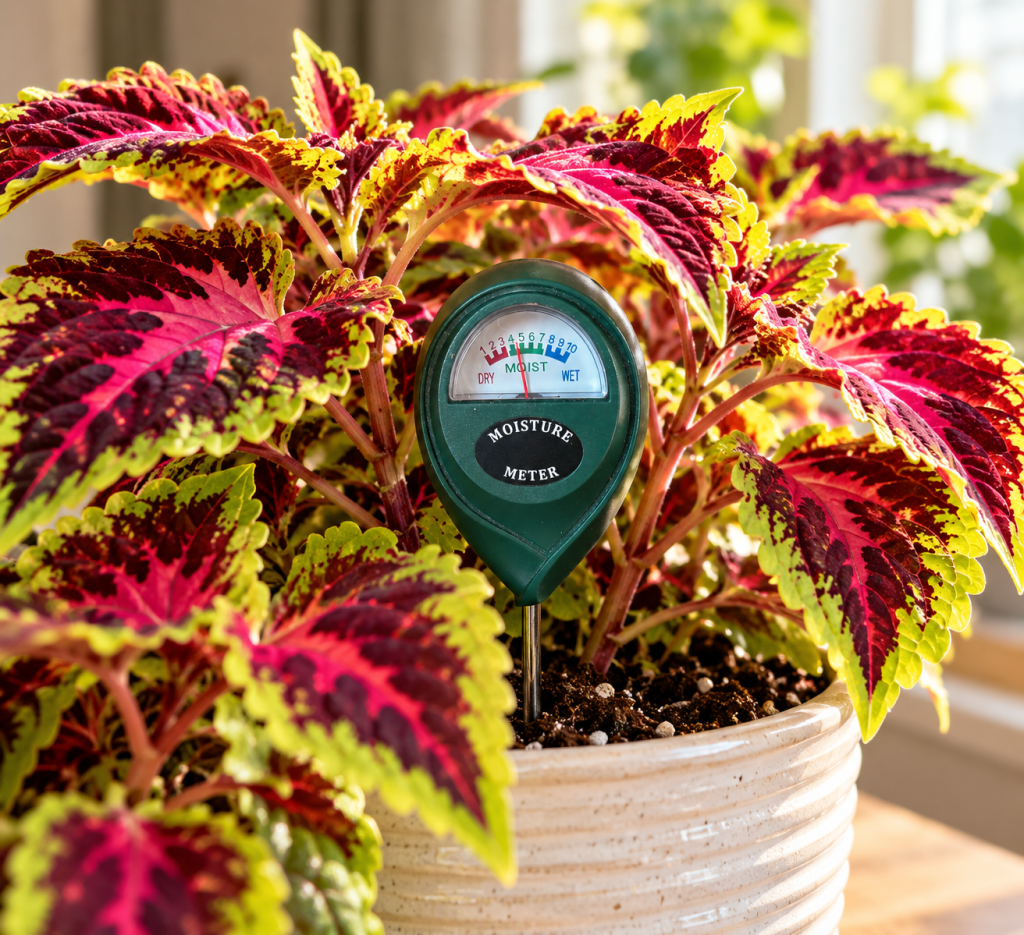
If you’re never quite sure whether the soil is actually dry below the surface, a simple moisture meter can be really helpful. I’ve had this little meter for years, and I still use it to take the guesswork out of watering my houseplants.
Pinching and Pruning Keeps Coleus Bushy
If you let coleus grow without pruning, some varieties can get tall and lanky surprisingly fast.
Fortunately, coleus generally responds beautifully to being pinched back.
Removing the growing tip encourages branching farther down the stem. For clean cuts on soft coleus stems, a small pair of sharp pruning snips works beautifully. Micro-tip snips are especially handy when you’re trying to cut just above a node without damaging the surrounding leaves.
More branches = a fuller plant.
And here’s the fun part:
Those pieces you prune off can become more plants.
Instead of tossing healthy cuttings, stick them in water.
Congratulations.
You were trying to make one plant smaller and somehow ended up with six plants.
Welcome to propagation. 😂
Want to Try Something REALLY Fun?
This is where my coleus experiments took an unexpected turn.
You can actually train coleus into a little tree—And yes, it is every bit as cute as it sounds.
I’ve grown mine by working with upright stems, gradually removing lower growth and pruning the top to encourage a fuller canopy.
I even experimented with twisting two stems together to form the trunk.
The result looks like a miniature colorful tree.
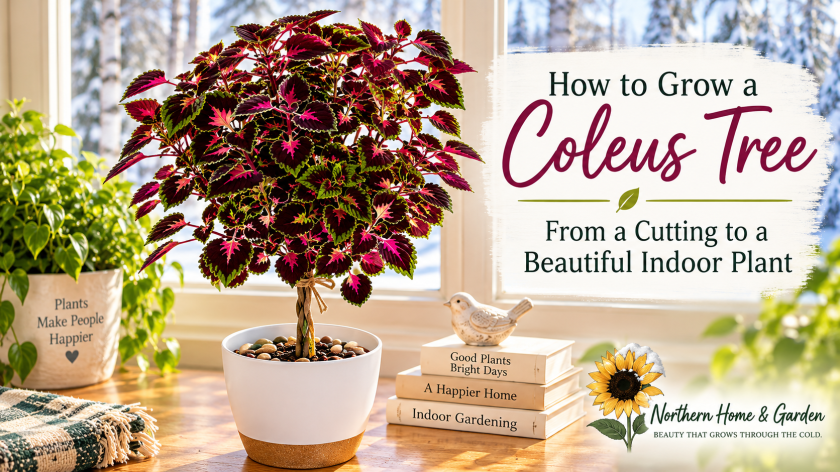
This is one of those gardening projects that looks complicated when it’s finished but is surprisingly approachable once you understand the process.
And winter is a perfect time to play around with it indoors.
One Coleus Can Become a Whole Collection
This may be my favorite thing about coleus.
You really don’t need many plants to get started.
One healthy plant can provide cutting after cutting.
Those cuttings can become new plants.
Those plants can provide more cuttings.
And suddenly you’re looking around wondering exactly when your house became a coleus nursery.
I wouldn’t know anything about that. 😇😂
Can You Put Your Coleus Back Outside in Spring?
Absolutely—but don’t rush it.
Coleus is very sensitive to cold.
Wait until the danger of frost has passed and nighttime temperatures are reliably warm before moving it outside.
And don’t take a plant that has spent months indoors and immediately place it in strong outdoor sun.
Introduce it gradually.
Start in a protected, shaded location and slowly increase its outdoor exposure over several days.
Indoor leaves haven’t been exposed to the same intensity of sunlight as outdoor foliage, and moving too quickly can cause sunburn.
Essentially, you’re reversing the acclimation process you went through in fall.
Final Thoughts
If you love your coleus, the first frost doesn’t necessarily have to be the end of it.
Bring the whole plant inside if you have the room.
Or snip a few cuttings and start smaller.
Give them plenty of light, adjust your watering for indoor conditions, keep pinching them back when they get leggy, and watch for pests.
By the time spring rolls around, you may have something even better than the coleus you started with.
You might have an entire collection.
And considering how my own coleus experiments have gone…
I should probably warn you that this is how it starts. 😂🌱❤️

