By the end of a short northern growing season, the garden can look a little… tired.
Plants are past their prime, weeds have somehow found one last burst of energy, and after spending all summer watering, weeding, harvesting, and trying to keep everything alive, it’s tempting to simply walk away and let the snow take care of it.
And technically, the snow will cover everything eventually. 😂
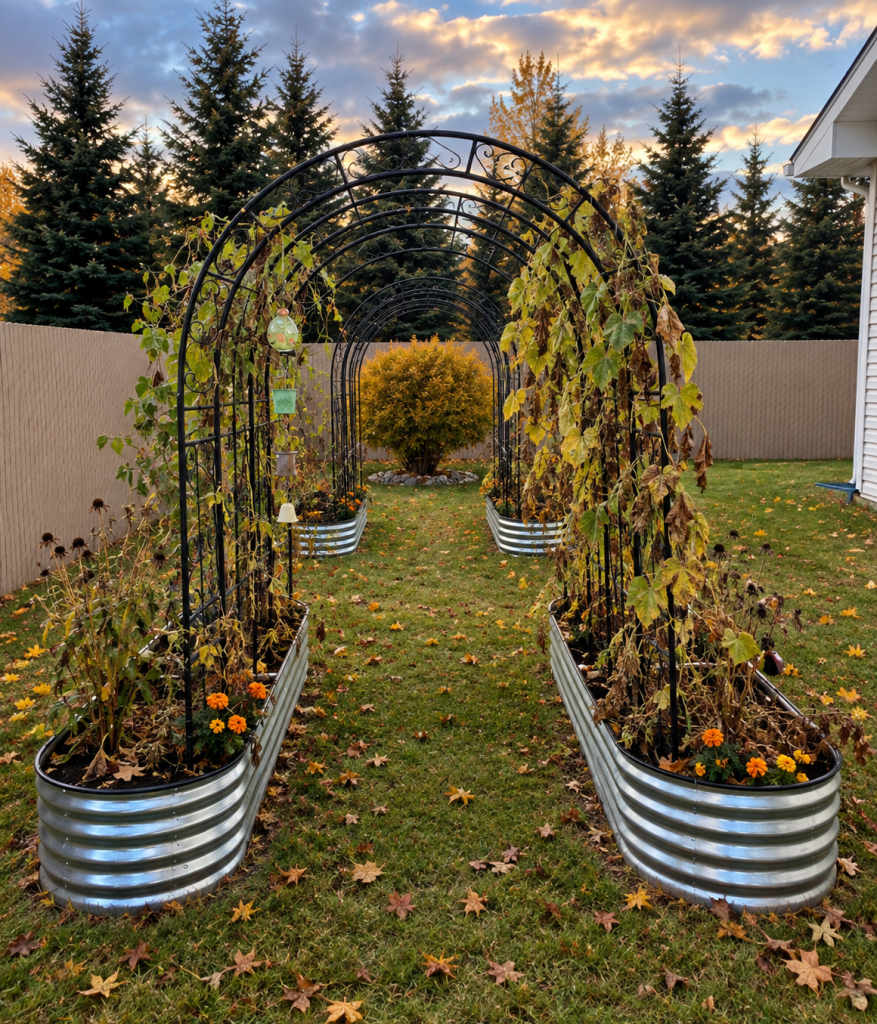
But spending a little time preparing your raised beds for winter can protect your soil, make spring cleanup easier, and give next year’s garden a much better start.
Here’s a simple way to put your raised garden beds to bed for a long, cold winter.
Affiliate Disclosure: This post contains affiliate links. As an Amazon Associate, Northern Home & Garden earns from qualifying purchases at no additional cost to you.
1. Remove Finished Annual Plants
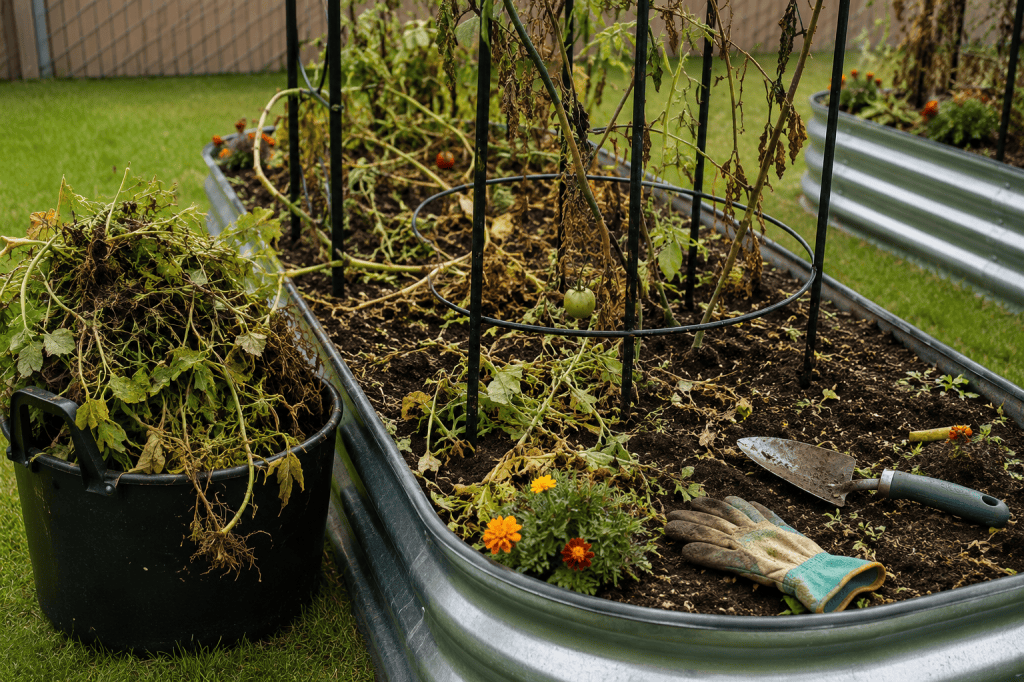
Start by pulling out annual vegetables and flowers that have finished for the season.
Tomatoes, peas, beans, squash, lettuce, and other annual crops can be removed once they’re done producing or have been killed by frost.
Garden pruners can make quick work of thicker stems and tougher plant material.
Healthy plant material can usually go into the compost pile. However, plants showing signs of disease or a serious pest problem are better disposed of rather than composted.
There’s no reason to give next year’s garden problems a cozy place to spend the winter.
❄️Northern Tip:
Don’t feel like you have to clean up every single plant the moment temperatures cool down. Hardy vegetables such as kale and some root crops can tolerate light frost and may continue producing well into fall.
2. Pull the Weeds — Yes, Even Those Last Few
This might be the least exciting part of fall garden cleanup.
Unfortunately, weeds don’t seem particularly concerned that gardening season is supposed to be over.
Pull as many weeds as possible before the ground freezes, especially anything that has gone to seed.
A sturdy pair of garden gloves makes this job a little easier, especially when you’re dealing with prickly stems, damp soil, or stubborn weeds.
Removing them now means fewer weeds waiting for you when the soil warms next spring.
Pay special attention to perennial weeds. Try to remove as much of the root system as possible rather than simply snapping off the tops.
Future-you will be very grateful.
3. Leave Healthy Roots in the Soil When It Makes Sense
Not everything needs to be ripped out by the roots.
If an annual plant is healthy and disease-free, you can cut the plant off at soil level and leave its roots behind.
As those roots slowly decompose, they add organic matter to the soil and leave tiny pathways that can help improve soil structure.
This works especially well for smaller, healthy plants.
If you’re dealing with thick woody roots, diseased plants, or something you simply don’t want growing there again, go ahead and remove the whole thing.
❄️Northern Tip:
In a cold climate, decomposition happens much more slowly once the ground freezes. That’s okay. Those roots can continue breaking down when the soil warms again.
4. Add Compost or Organic Matter
Fall is a great time to give raised-bed soil a little attention.
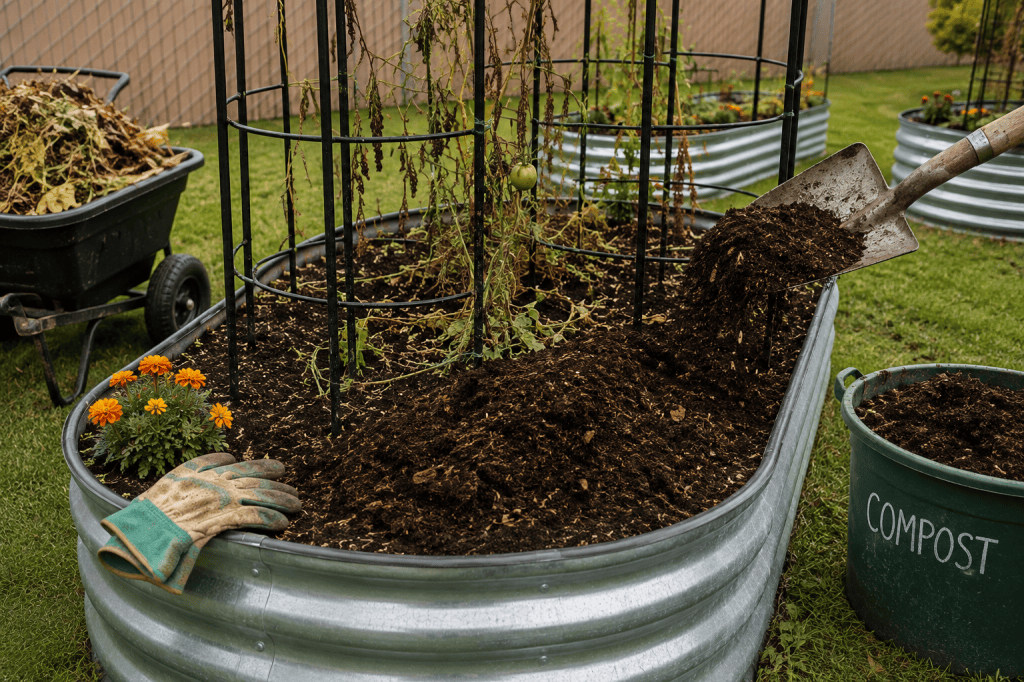
Spread a layer of finished compost over the surface of the bed. You can also use well-aged manure or other fully composted organic material.
You don’t need to completely turn over the bed.
In fact, simply adding organic matter to the surface allows weather and soil organisms to gradually incorporate it into the upper soil layers.
Raised beds can lose volume over time as organic material decomposes, so don’t be surprised if your once-full beds suddenly look like they’re missing a few inches of soil.
The soil didn’t sneak away during the night. It’s normal. 😂
Adding compost in fall helps replenish some of that lost organic matter.
5. Protect the Soil Through Winter
Bare soil is exposed to wind, erosion, and repeated freezing and thawing.
After adding compost, consider covering the soil with a light protective layer.
Good options include:
- Shredded leaves
- Clean straw
- Pine needles
- Other disease-free organic mulch
You don’t need an enormous layer. The goal is simply to protect the soil surface through winter.
In snowy northern climates, snow itself eventually becomes one of the best insulating blankets we have.
Once winter really settles in, Mother Nature usually handles the mulching for us — sometimes a little too enthusiastically.
❄️Northern Tip:
If your area gets strong winter winds, make sure lightweight leaves or straw won’t immediately blow into your neighbor’s yard. Lightly wetting the material or placing a breathable cover over it can help keep it in place until snow arrives.
6. Decide What to Do With Trellises and Supports
Fall is also a good time to inspect trellises, tomato cages, stakes, and other garden supports.
Remove old vines and plant material and check everything for damage.
Portable supports can be cleaned and stored somewhere protected for winter.
Sturdy trellises that are securely attached can often remain outside, but make sure they’re strong enough to handle winter wind and snow.
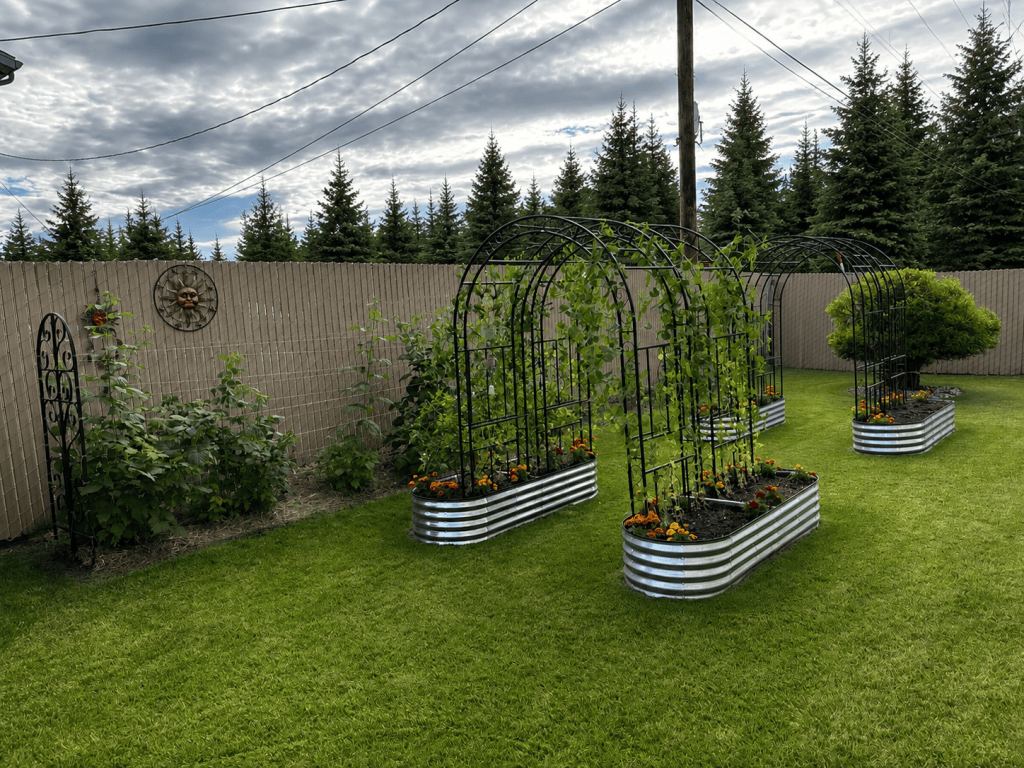
This is especially important in northern gardens, where “a little snow” can turn into “where did my garden go?” surprisingly quickly.
If a structure could bend or collapse under heavy snow, storing it for winter may save you a repair project next spring.
7. Don’t Make the Garden Too Clean
A perfectly spotless fall garden isn’t necessarily the goal.
Some stems, leaves, and plant debris can provide winter shelter for beneficial insects and other garden wildlife.
If the material is healthy and isn’t harboring disease or pests, consider leaving a few areas of the garden a little less tidy.
Seed heads can also provide food for birds through fall and winter.
There’s a happy middle ground between completely abandoned and perfectly manicured.
And fortunately for those of us whose gardens occasionally lean toward the first option, nature doesn’t mind a little mess. 😂
8. Make Notes While You Still Remember
This might be one of the most useful fall garden jobs — and one of the easiest to skip.
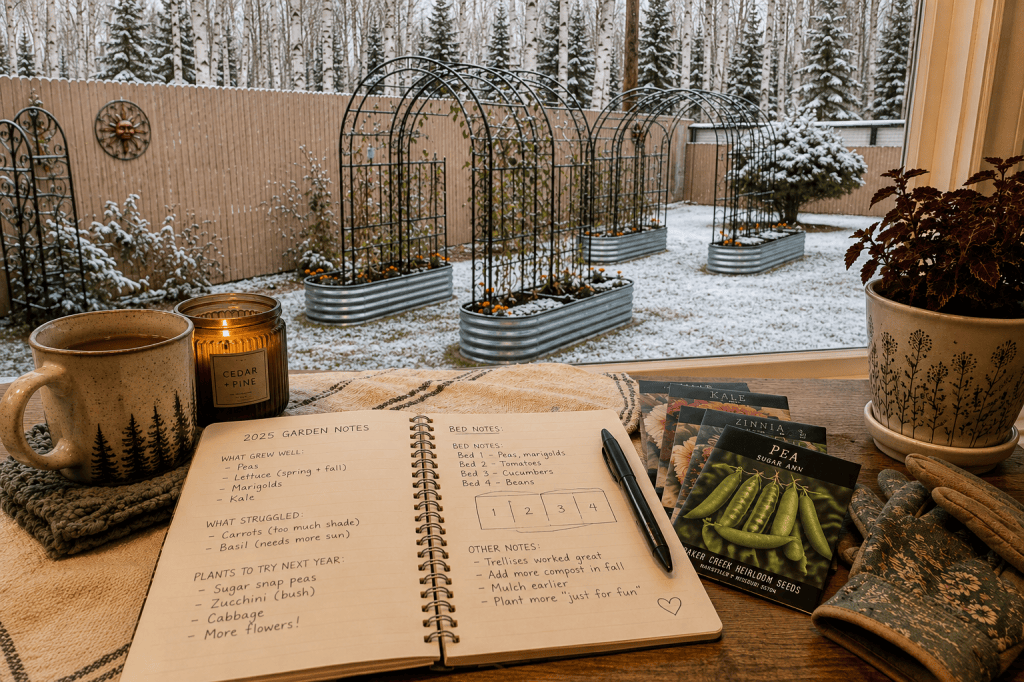
Before everything disappears under snow, take a few pictures and jot down some notes.
A simple garden journal can be especially helpful for keeping those observations together from one growing season to the next.
What grew well?
What struggled?
Which varieties would you plant again?
Did something need a taller trellis?
Was one bed too crowded?
Did you wish you’d planted twice as many peas?
Write it down now.
After several months of winter, it’s surprisingly easy to remember this year’s garden as either an enormous success or a complete disaster.
The truth is usually somewhere in between.
❄️Northern Tip:
Take photos of your raised beds before winter. They’re incredibly helpful when you’re planning next year’s garden from the couch in January while everything outside is frozen solid.
9. Make Spring a Little Easier
The biggest benefit of fall garden cleanup might not show up until next spring.
When the snow finally melts and the soil begins to thaw, you’ll already have:
- Most weeds removed
- Old plants cleaned out
- Compost added
- Soil protected
- Trellises inspected
- Notes from the previous growing season
Instead of spending your first warm gardening days cleaning up last year’s mess, you can start preparing for the new season.
And in a short growing season, every warm spring day counts.
A Simple Raised-Bed Winter Checklist
Before the ground freezes:
- Remove finished and diseased plants
- Pull weeds before they drop more seeds
- Leave healthy roots where appropriate
- Add a layer of finished compost
- Cover bare soil with leaves, straw, or another organic mulch
- Clean and inspect trellises and supports
- Store anything that won’t withstand heavy snow
- Leave some healthy plant material for birds and beneficial insects
- Take photos and make notes for next year
- Put away your garden tools
Then you’re done.
Really.
You have permission to stop gardening for a while. 😂
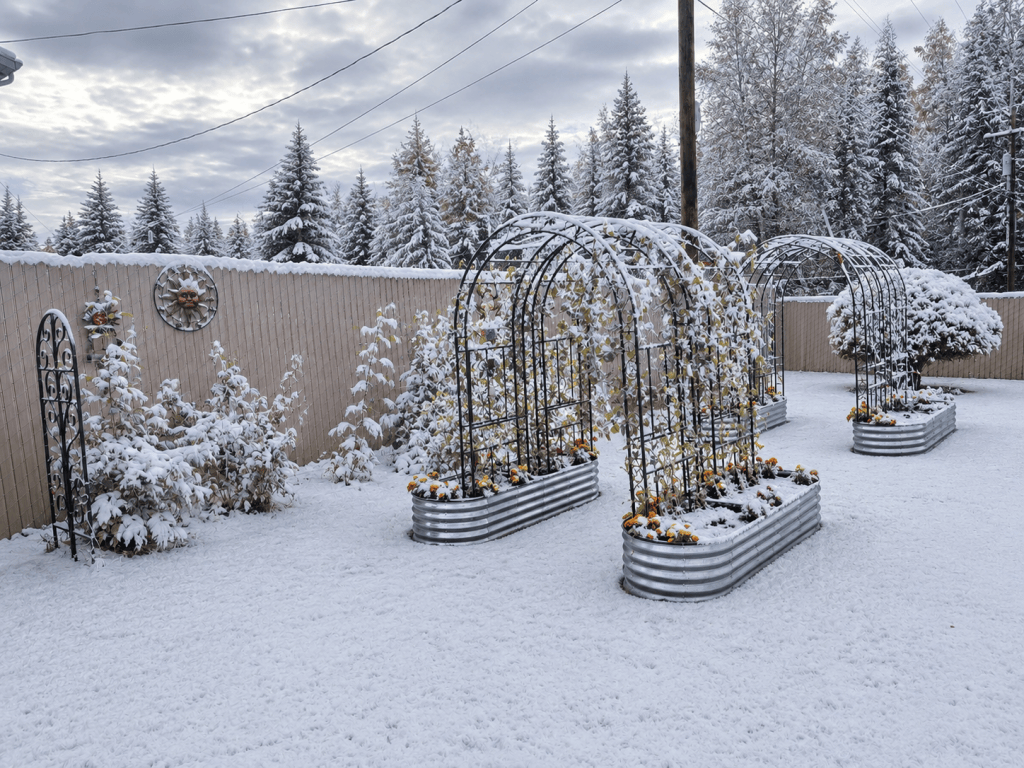
A Little Fall Work for an Easier Spring
Preparing raised garden beds for winter doesn’t need to be complicated.
A little cleanup, fresh organic matter, and some protection for the soil can make a big difference when spring finally returns.
Cold-climate gardening gives us a short window to grow, but that’s part of what makes every new season so exciting.
Once the beds are tucked in and the snow starts falling, there’s only one thing left to do:
Start planning what you’re going to grow next year.
Because northern gardeners may stop gardening for the winter…
…but we never really stop thinking about gardening. 🌱❄️
Northern Home & Garden
Beauty That Grows Through the Cold

