Love Coleus? Here’s How to Keep It Growing Indoors All Winter

Don’t let the first frost take your beautiful coleus! Learn two easy ways to keep it growing indoors all winter, whether you bring the whole plant inside or start fresh with cuttings.

Coleus is one of those plants that’s really hard to say goodbye to at the end of summer.

Thankfully, coleus can grow indoors through winter with the right light, watering, and a little pruning.

Here’s how to keep your coleus growing indoors until spring.

Affiliate Disclosure: This post contains affiliate links. As an Amazon Associate I earn from qualifying purchases.

Can Coleus Really Grow Indoors?
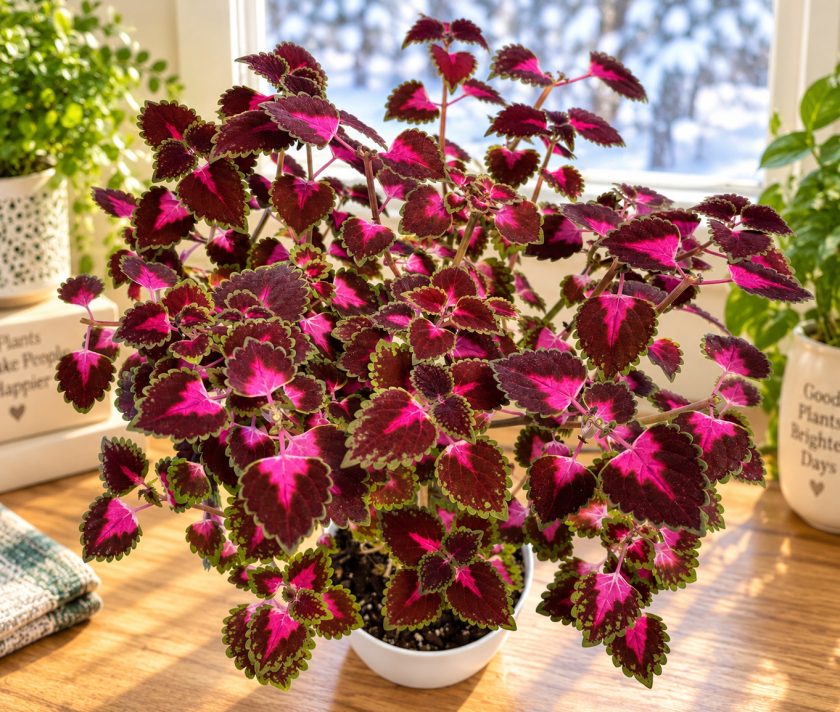
Large colorful coleus plant growing indoors near a sunny window during winter.

Absolutely!

Coleus is a tender perennial that can’t survive our freezing northern winters outdoors, but it can continue growing indoors with the right care.

It may slow down during the shorter winter days, but give it plenty of light, protect it from cold drafts, and adjust your watering to keep it happy until spring.

Two Easy Ways to Save Your Coleus

  • Bring the whole plant indoors. Perfect if your coleus is a manageable size and you have a bright spot for it.
  • Take a few cuttings. My personal favorite! Cuttings take up very little space and are incredibly easy to propagate.

If your coleus has grown into a giant bush over summer, I’d definitely consider the second option.

Option 1: Bringing the Whole Coleus Plant Inside

Just give it a little attention before moving it in!

  1. Inspect for pests. Check the leaves, stems, soil, and pot for aphids, spider mites, fungus gnats, and other unwanted visitors.
  2. Clean it up. Remove dead or damaged leaves and prune back any overgrown stems.
  3. Keep it separate. Quarantine your coleus away from your other houseplants for a couple of weeks, checking regularly for pests.

Nobody wants to bring a beautiful coleus indoors only to discover it brought a few hundred friends along with it.
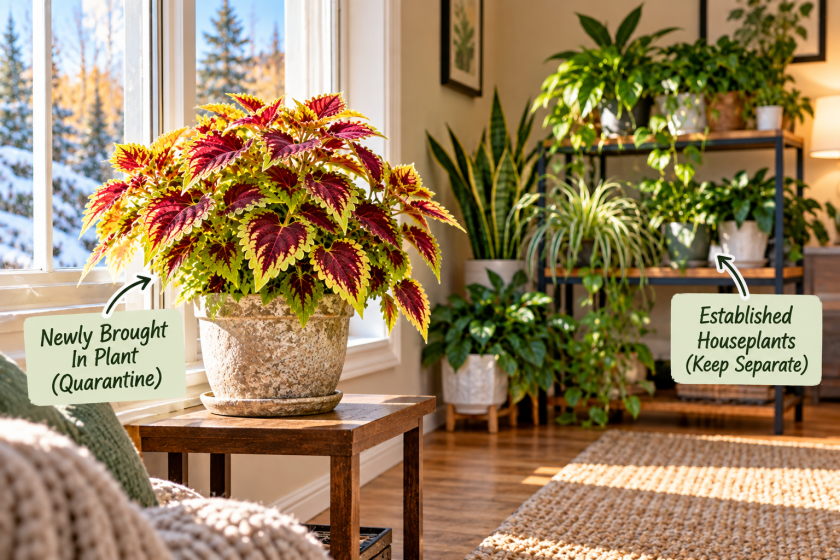
Newly brought indoor coleus plant kept separate from established houseplants during quarantine.

For more tips, check out our How to Bring Outdoor Plants Inside for Winter guide. It covers inspecting, cleaning, and transitioning outdoor plants into your home.

Option 2: Take Coleus Cuttings Instead

Cuttings take up very little space, and they’re incredibly easy to grow indoors.

Here’s how:

  1. Take a cutting. Choose a healthy stem about 4 to 6 inches long and cut just below a leaf node.
  2. Remove the lower leaves. Strip off any leaves that would sit underwater.
  3. Place in water. Put the cutting in a small glass or propagation vase (I love my heart-shaped one!), keeping the lower nodes submerged and the leaves above water.
  4. Find a bright spot. Keep your cutting in bright, indirect light and refresh the water regularly.

Under good conditions, you may see little white roots developing within a week or two.
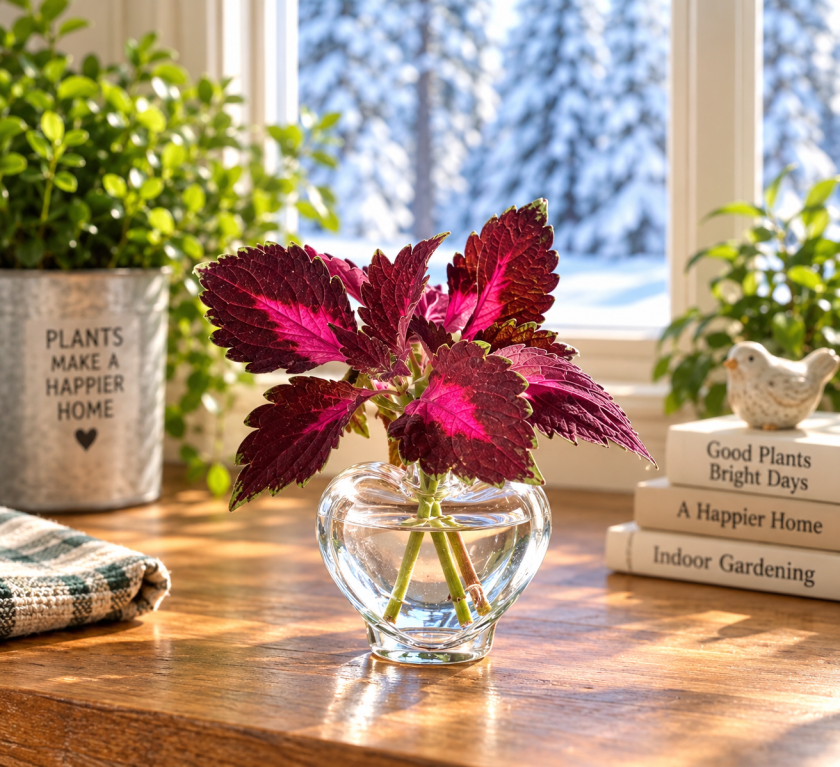
Coleus cuttings rooting in water in a heart-shaped glass vase near a sunny winter window.

When Should You Move Coleus Cuttings Into Soil?

Once your cutting has several healthy roots about 1 to 2 inches long, it’s ready for soil!

  1. Choose a small pot with drainage holes and fill it with well-draining potting mix.
  2. Plant your cutting gently, covering the roots with soil, and water thoroughly.
  3. Keep the soil lightly moist while your coleus adjusts to its new home.

Water-grown roots need a little time to adjust to soil. Once you see healthy new growth, gradually return to a normal watering routine.
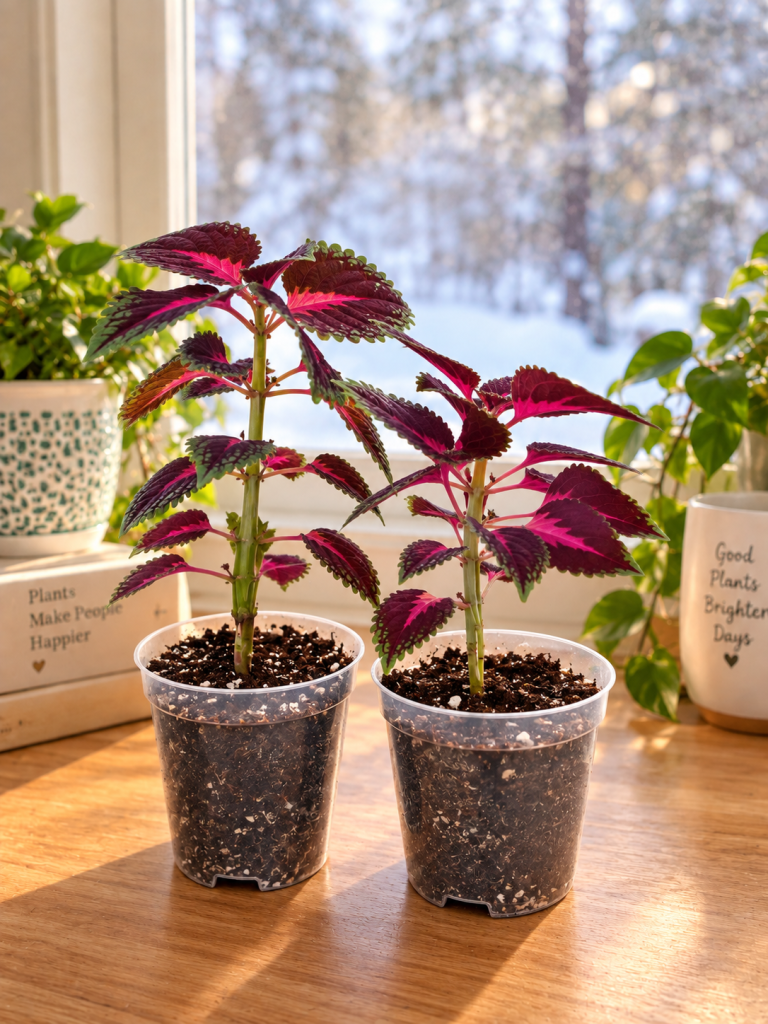
Two rooted coleus cuttings planted in clear pots after being propagated in water.

Light Is Probably Your Biggest Winter Challenge

Coleus LOVES light! And during our short northern winter days, getting enough can be tricky. Up here, a December “day” is shorter than most movies, so your sunniest south-facing window is prime real estate.

Place your coleus near a bright window, away from cold drafts.

Signs your coleus needs more light:

  • Long, leggy stems
  • Smaller leaves
  • Fading colors
  • Growth leaning toward the window

Rotate your pot occasionally to encourage even growth.

If natural light isn’t enough, a simple clip-on full-spectrum grow light with a timer can make a big difference. For help choosing one, see Grow Lights for Northern Winters.
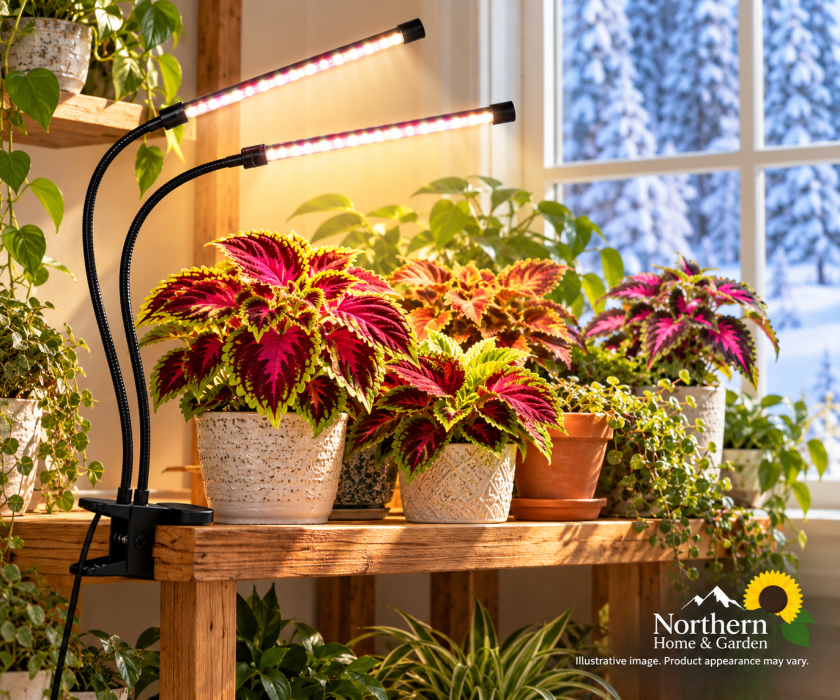
Colorful coleus plants growing indoors beneath a clip-on LED grow light beside a snowy winter window.

Change the Way You Water

Coleus needs less water during winter when growth slows down. Don’t follow the same watering schedule you used outdoors in summer!

  • Check the soil before watering.
  • Let the top inch of soil begin to dry between waterings.
  • Water thoroughly, allowing excess water to drain from the pot.
  • Avoid letting your coleus stay soggy or become severely wilted.

The goal is lightly moist soil, not constantly wet soil.

❄️ Northern Tip

Not sure when to water? A simple moisture meter can help you check below the surface. I use one for all my houseplants!

Find the tools we use to keep our houseplants happy and growing!
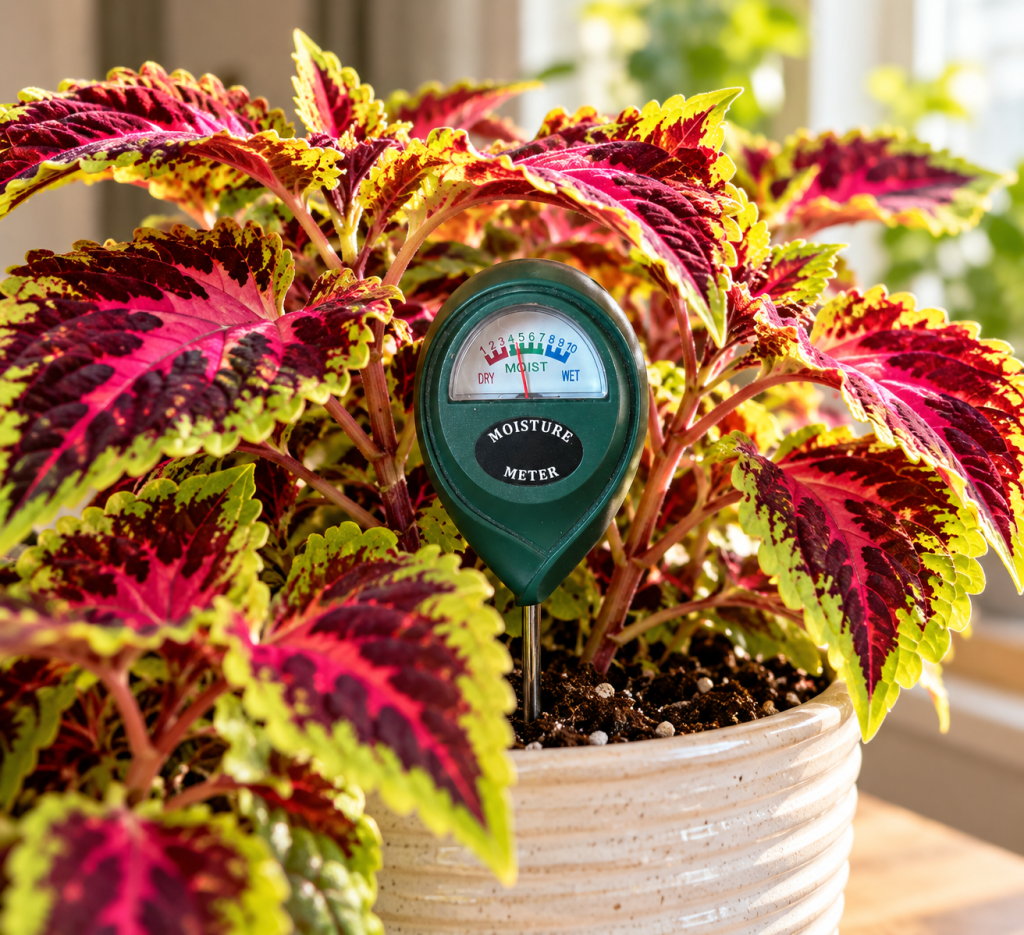
Soil moisture meter checking the moisture level of a potted coleus plant.

Pinching and Pruning Keeps Coleus Bushy

Coleus can get tall and leggy without regular pruning, but a little trimming encourages fuller, bushier growth.

Simply pinch off the growing tips or use a pair of sharp micro-tip snips (my go-to for all my houseplants) to cut just above a leaf node. This encourages new branches to grow below the cut.

Don’t Say Goodbye Just Yet

The first frost doesn’t have to mean goodbye to your favorite coleus!

Bring the whole plant indoors or take a few cuttings to grow through winter. With enough light, careful watering, and occasional pruning, you can enjoy those colorful leaves until spring.

And don’t be surprised if one little cutting turns into an entire collection!

Want to Try Something REALLY Fun?

This is where my coleus experiments took an unexpected turn.

You can actually train coleus into a little tree. And yes, it is every bit as cute as it sounds.
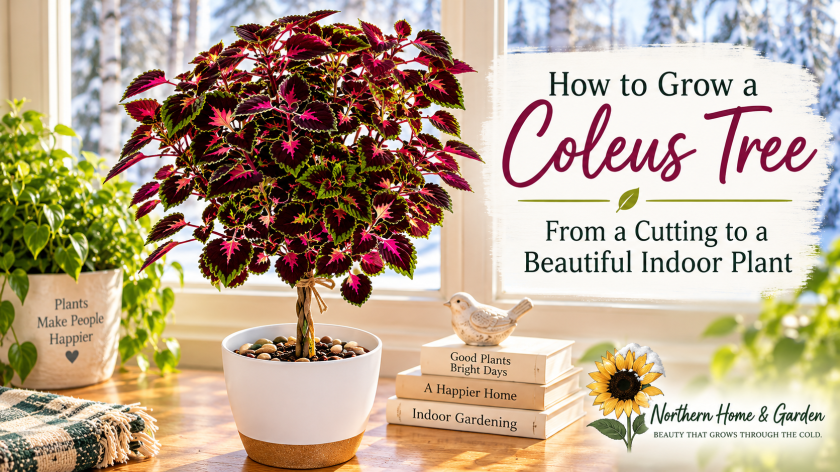
Indoor coleus trained into a small tree shape with a full colorful canopy.

Here’s how: How to Grow a Coleus Tree: From a Cutting to a Beautiful Indoor Plant.

You Might Also Like 🌿
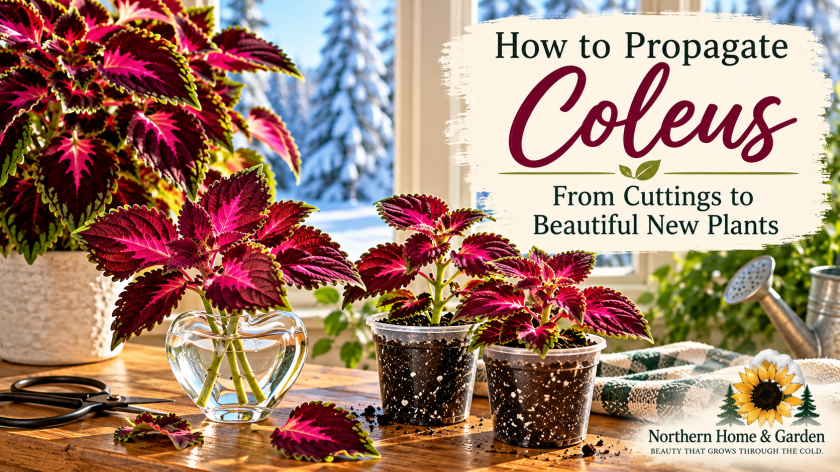
Coleus cuttings rooting in water beside young coleus plants growing in soil on a sunny windowsill with snow outside.

Propagating Coleus: How to Turn One Plant Into a Whole Collection

Shopping for a fellow plant lover? Our gift guide has some fun ideas.

🌻 Northern Home & Garden

More Northern Tips, Straight to Your Inbox 🌻

Get practical gardening advice, seasonal ideas and new posts from Northern Home & Garden delivered to your inbox.
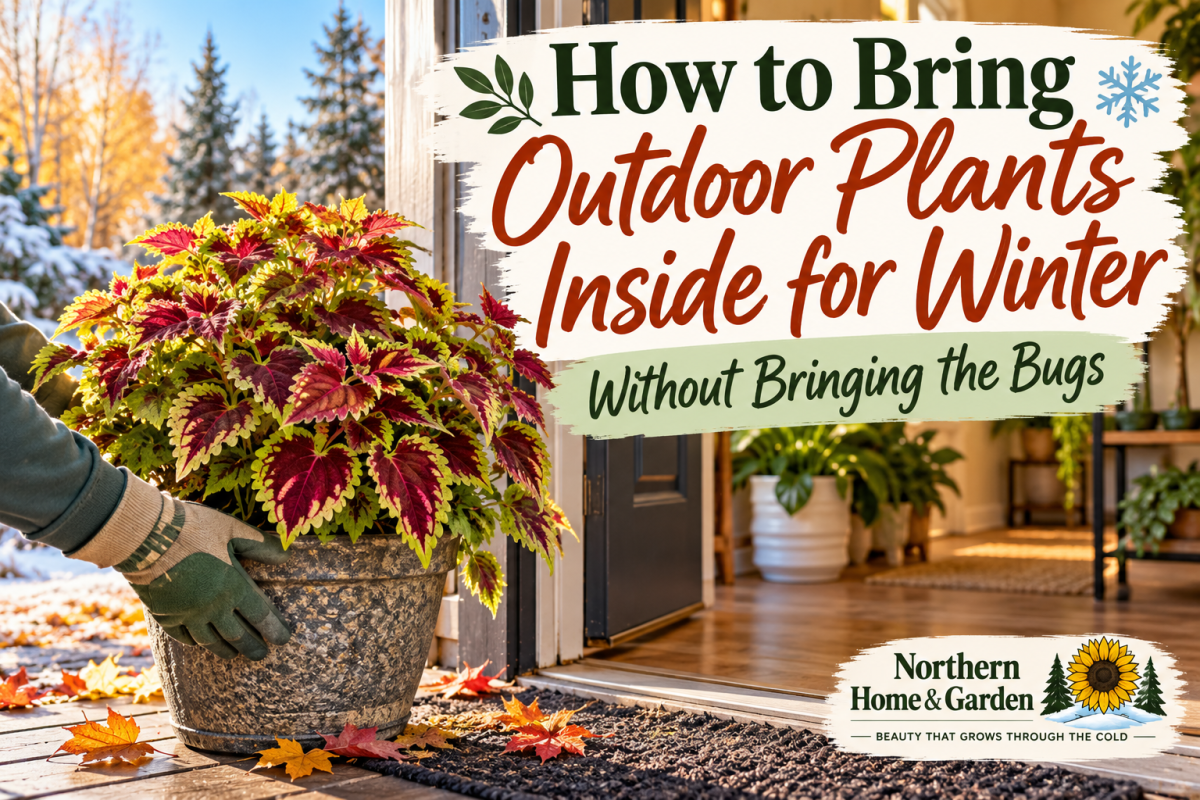
How to Bring Outdoor Plants Inside for Winter (Without Bringing the Bugs)

Want to save a favorite outdoor plant before winter arrives? Here’s how to bring outdoor plants inside safely, check for pests, make the transition easier, and avoid bringing unwanted little hitchhikers into your home.

Every fall, there comes a point when I look around outside and decide which plants I’m willing to let go… and which ones are getting rescued from the cold. Because after spending all summer growing a beautiful plant, I’m supposed to just calmly let the first hard freeze take it? Absolutely not!

Continue reading “How to Bring Outdoor Plants Inside for Winter (Without Bringing the Bugs)”

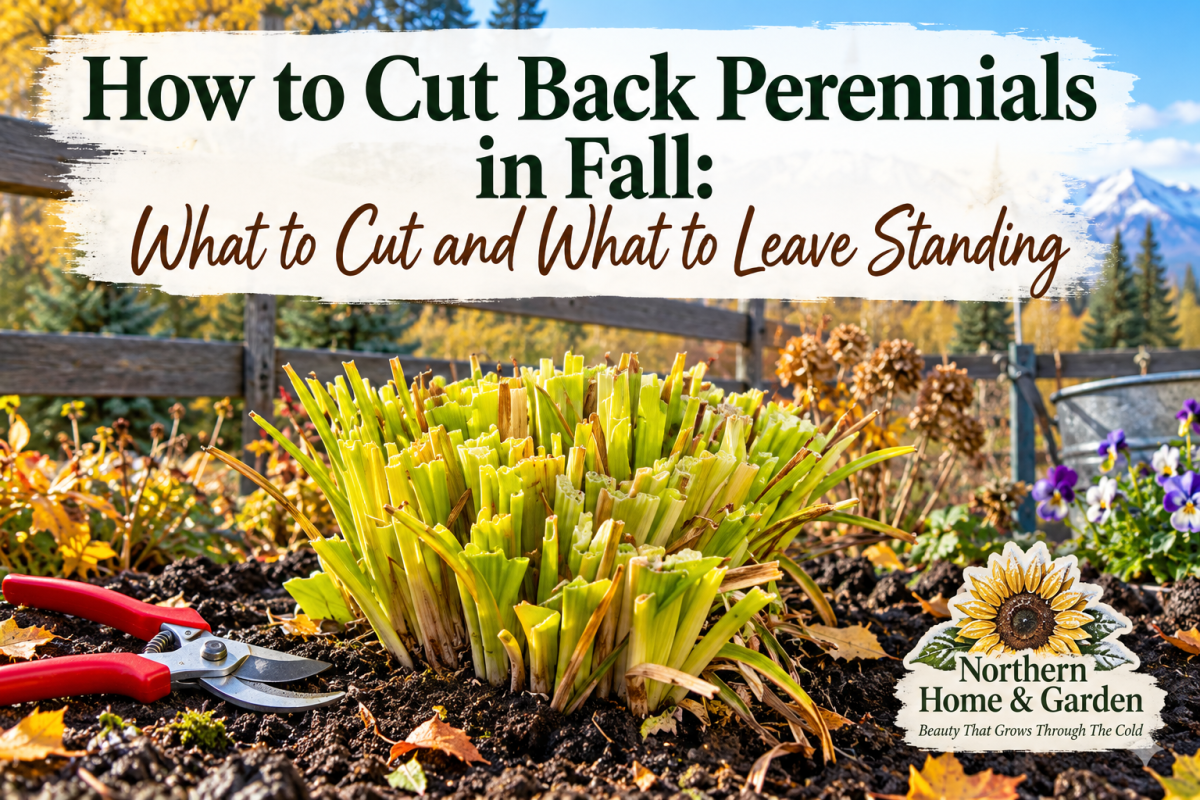
How to Cut Back Perennials in Fall: What to Cut and What to Leave Standing

Wondering which perennials to cut back in fall, and which ones are better left standing? Here’s a practical guide to cleaning up daylilies, hostas, peonies, irises, and more while leaving beneficial winter interest behind.

Once the first few hard frosts arrive, my perennial garden starts looking a little less like the garden I enjoyed all summer and a little more like… well, a garden that has officially given up for the year!

Leaves turn yellow, stems flop over, and suddenly I’m standing outside with pruning shears wondering: Do I cut all of this down?

Continue reading “How to Cut Back Perennials in Fall: What to Cut and What to Leave Standing”

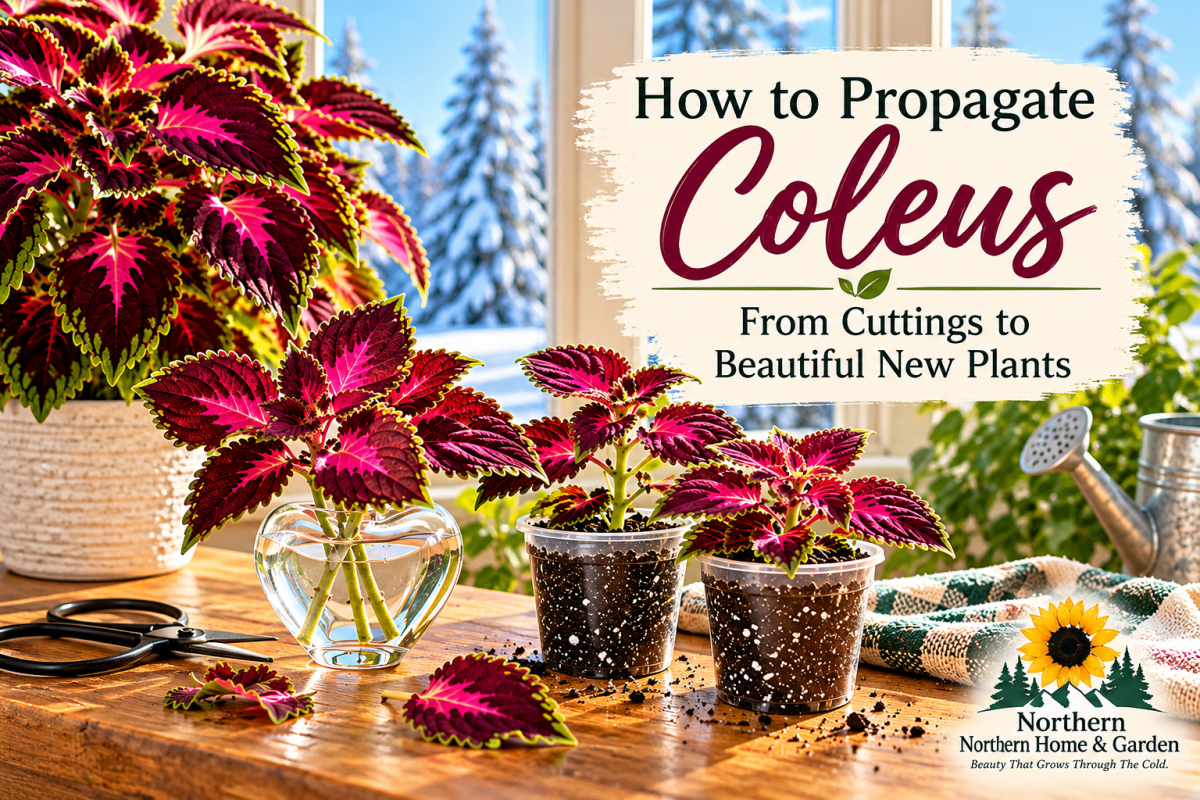
Propagating Coleus: How to Turn One Plant Into a Whole Collection

Learn how to take coleus cuttings, root them in water, transplant them into soil, and keep your new plants growing happily indoors through winter.

Coleus might be one of the most dangerously easy plants to propagate.

You start with one plant. You snip off a little cutting, stick it in a glass of water, and suddenly you’re looking around the house wondering where you’re going to put the other 14 coleus plants you somehow acquired.

Ask me how I know. 😂

Continue reading “Propagating Coleus: How to Turn One Plant Into a Whole Collection”

How to Prepare Raised Garden Beds for Winter in a Cold Climate

Get your raised garden beds ready for a long northern winter with simple tips for fall cleanup, soil protection, and an easier start next spring.

By the end of a short northern growing season, the garden can look a little tired. Plants are past their prime, weeds have found one last burst of energy, and it’s tempting to simply walk away and let the snow take care of everything.

And technically, the snow will cover everything eventually.

Continue reading “How to Prepare Raised Garden Beds for Winter in a Cold Climate”

How to Prepare Your Perennial Garden for Winter in a Cold Climate

Get your perennial garden ready for a long northern winter with simple tips for fall cleanup, watering, mulching, and protecting your plants until spring.

By late fall, the flowers are gone and leaves are turning brown. Plants that were enormous a few weeks ago are suddenly collapsing onto the ground.

Fortunately, hardy perennials are supposed to do this. They’re shutting down for winter, storing energy in their roots, and preparing to survive months of cold before starting all over again in spring.

Continue reading “How to Prepare Your Perennial Garden for Winter in a Cold Climate”

What Actually Grows in Zone 2? A Beginner’s Guide to Cold-Climate Gardening

Wondering what actually grows in Zone 2? From hardy perennials and cool-season vegetables to berries and annual flowers, this beginner-friendly guide covers what thrives in a cold climate, and how to make the most of a short northern growing season.

If you’ve ever looked at a beautiful garden online and immediately wondered…

Yeah, but will that grow HERE?

Welcome to northern gardening!

Gardening in Zone 2 can feel intimidating at first. Winters are long. Temperatures can get extremely cold. The growing season is short, and frost always seems to arrive just when the garden is finally looking its best.

But you can grow an absolutely beautiful garden in Zone 2.

Continue reading “What Actually Grows in Zone 2? A Beginner’s Guide to Cold-Climate Gardening”

First Frost Garden Checklist: What to Do Before the Temperature Drops

First frost can arrive quickly in a northern garden. This practical checklist covers what to harvest, what to protect, what can handle the cold, and a few simple tasks to tackle before temperatures drop.

There comes a point every northern summer when we all start doing the same thing.

Checking the nighttime forecast. Every. Single. Day. Here in Fairbanks, that can start before August is even over.

Continue reading “First Frost Garden Checklist: What to Do Before the Temperature Drops”

How to Grow Raspberries in a Cold Climate: A Simple Guide for Northern Gardens

Growing raspberries in a cold climate is easier than you might think! Learn how to choose hardy varieties, support and prune your plants, keep your patch healthy, and prepare raspberries for a long northern winter.

Raspberries are one of those plants that make cold-climate gardening a little more rewarding. With the right varieties and a little care, they can survive harsh northern winters and return year after year. And honestly, a handful of sun-warm raspberries in July is pretty much the official taste of a northern summer.

Whether you’re planting your first raspberry bushes or trying to tame an established patch, these simple tips will help you grow healthy, productive raspberries in your northern garden.

Continue reading “How to Grow Raspberries in a Cold Climate: A Simple Guide for Northern Gardens”

Seed Starting in a Cold Climate: A Simple Guide for Short Growing Seasons

Starting seeds indoors can make all the difference in a short growing season. Learn what to start, when to start it, and how to grow strong seedlings ready for the garden.

When your summers are short, starting seeds indoors can make the difference between harvesting ripe tomatoes and staring at a beautiful collection of green ones when the first frost arrives.

But starting everything ridiculously early isn’t the answer either!

Continue reading “Seed Starting in a Cold Climate: A Simple Guide for Short Growing Seasons”