By late fall, a northern perennial garden can look a little alarming.
The flowers are gone. Leaves are turning brown. Plants that were enormous a few weeks ago are suddenly collapsing onto the ground.
After spending all summer taking care of them, it’s easy to look at the garden and think:
Well. That doesn’t look promising.
Fortunately, hardy perennials are supposed to do this.
They’re shutting down for winter, storing energy in their roots, and preparing to survive months of cold before starting all over again in spring.
Your job isn’t to make the garden look perfect before winter.
It’s simply to give your plants the best chance of making it through.
Here’s how.
Affiliate Disclosure: This post contains affiliate links. As an Amazon Associate, Northern Home & Garden earns from qualifying purchases at no additional cost to you.
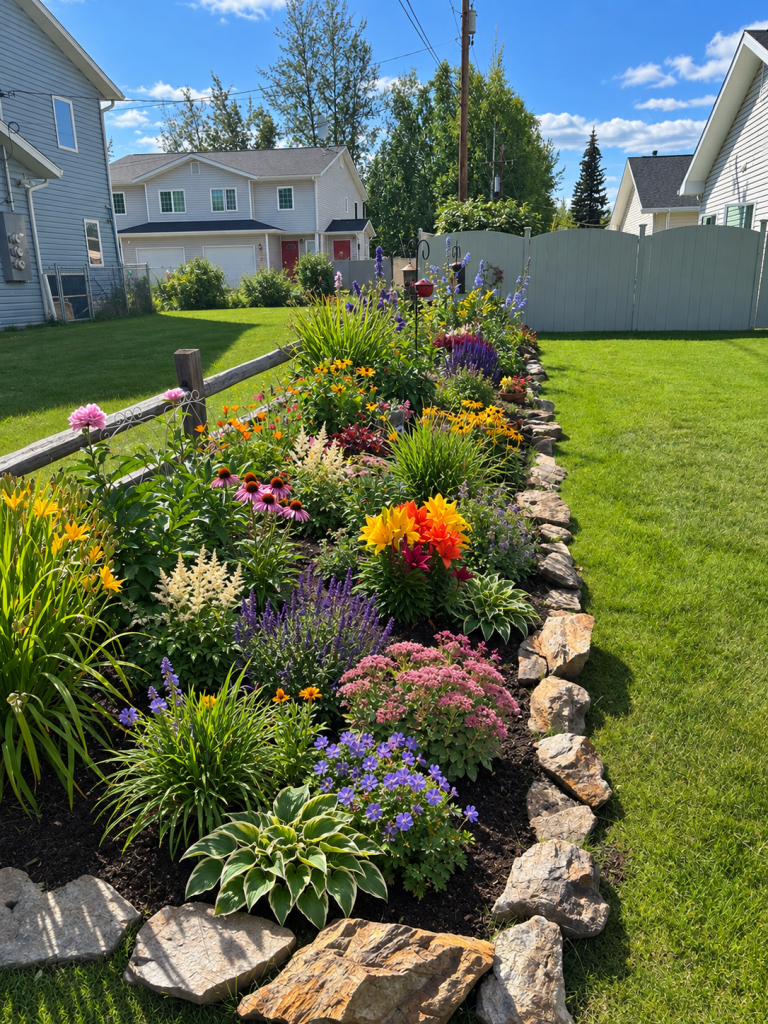
1. Let Your Perennials Wind Down Naturally
As fall approaches, resist the urge to immediately cut everything back.
After flowering, perennial plants continue using their leaves to collect energy and send it back into their roots.
Allow foliage to naturally yellow and die back before removing it.
A few ugly leaves in September aren’t hurting anything.
In fact, they’re doing an important job.
❄️Northern Tip:
In a short growing season, plants need every opportunity they can get to store energy before dormancy. Let healthy foliage remain until it has naturally died back or been killed by frost.
The garden may not look quite as pretty as it did in July.
That’s okay.
July had its turn. 😂
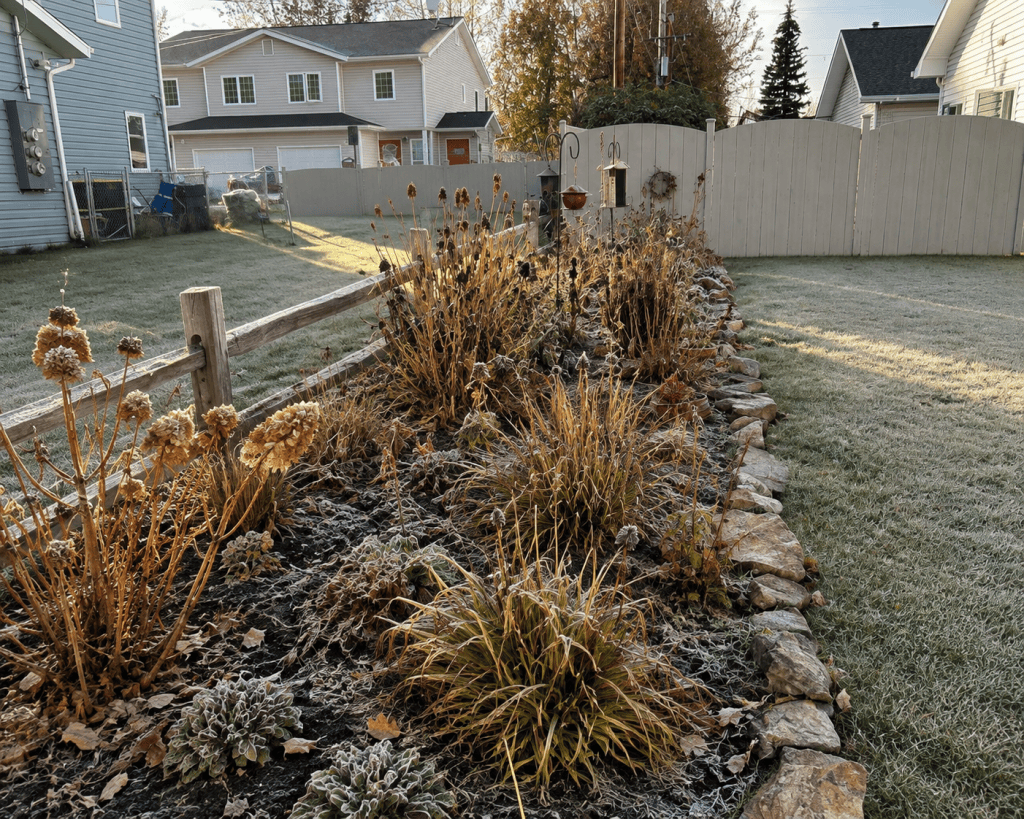
2. Stop Encouraging New Growth
Late in the season, you generally don’t want to encourage a flush of tender new growth just before freezing temperatures arrive.
Avoid applying high-nitrogen fertilizer late in the growing season unless there’s a specific reason your soil or plants require it.
Instead, let your perennials begin their natural transition into dormancy.
Think of fall as bedtime for the garden.
We’re trying to convince the plants to settle down for the night—not hand them an espresso.
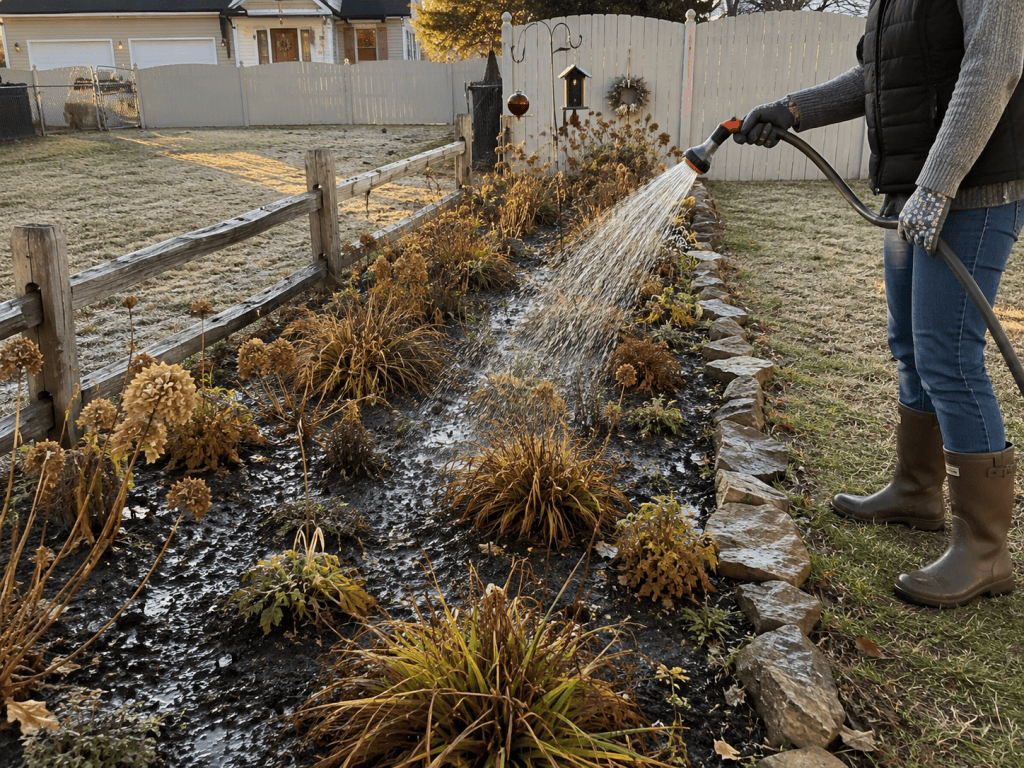
3. Keep Watering If Fall Is Dry
Cooler weather doesn’t necessarily mean plants no longer need water.
If fall is unusually dry, continue watering perennials as needed until the ground begins to freeze, paying particular attention to newly planted perennials, shrubs, and other plants that haven’t had much time to establish strong root systems.
Plants heading into winter severely stressed from drought may have a harder time surviving.
Water deeply rather than giving plants frequent shallow watering.
A watering wand with a gentle shower head can make it easier to soak the soil around perennial roots without blasting the plants or disturbing the soil.
Of course, if Mother Nature is already providing plenty of fall rain, you don’t need to follow her around with a garden hose just to feel productive. 😂
❄️Northern Tip:
Newly planted perennials deserve a little extra attention their first fall. Their roots aren’t as established as plants that have been growing in the garden for several years.
4. Remove Diseased Foliage
While some healthy plant material can stay in the garden over winter, diseased foliage is another story.
Remove leaves and stems that show signs of fungal disease or significant pest problems.
Don’t intentionally leave infected material sitting around the base of the plant all winter.
Depending on the disease, you may also want to dispose of that material rather than putting it into a home compost pile.
A little cleanup now can reduce the amount of troublesome material waiting for you next spring.
Because apparently some garden problems are hardy enough for northern winters too.
How thoughtful of them. 😂
5. Decide What to Cut Back — and What to Leave
You do not have to cut every perennial down to the ground in fall.
Some plants are perfectly fine to cut back once the foliage has died.
Others can be left standing until spring.
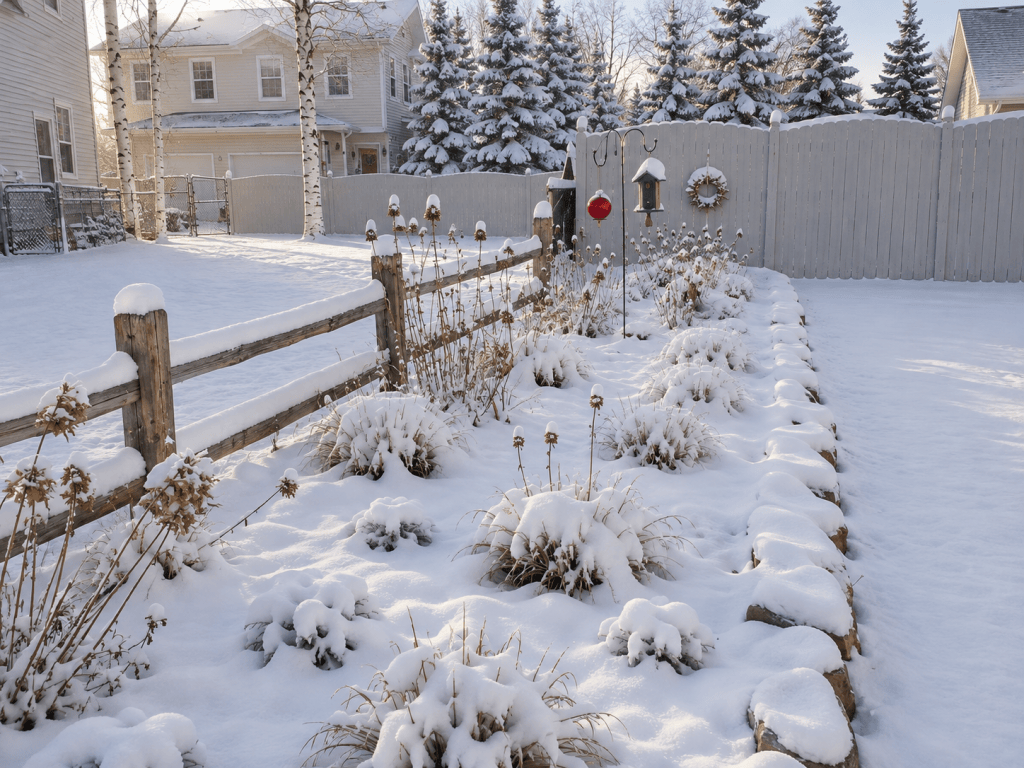
Healthy stems and seed heads can provide winter interest, trap snow around plants, and offer food or shelter for birds and beneficial insects.
Plants with attractive seed heads can actually look beautiful covered in frost or snow.
On the other hand, floppy, slimy, diseased, or badly damaged foliage can usually be removed.
A clean pair of bypass pruning shears makes it easier to remove damaged stems cleanly without tearing or crushing healthy plant tissue.
There’s no prize for having the cleanest perennial bed in the neighborhood.
And fortunately, snow eventually makes everyone’s garden look equally tidy.
6. Give Irises a Little Fall Attention
Hardy irises generally don’t need elaborate winter protection, but fall is a good time for some basic cleanup.
Once foliage begins dying back, remove damaged or diseased leaves.
Depending on the type of iris you’re growing and your local conditions, foliage can be trimmed back after it has naturally begun to decline.
Keep the planting area reasonably clean so dead foliage isn’t creating a damp mat around the rhizomes.
Most importantly, don’t bury iris rhizomes beneath a thick layer of heavy mulch. Bearded iris rhizomes generally prefer to remain close to the soil surface.
❄️Northern Tip:
Snow can provide excellent winter insulation. Hardy, established perennials often need less intervention than we think they do.
Sometimes the best winter gardening technique is simply knowing when to leave a plant alone.
7. Let Hardy Lilies Go Dormant Naturally
Hardy lilies will also begin yellowing and dying back after flowering.
Leave their stems and foliage in place while they’re still green.
Once the stems have yellowed or browned and naturally died back, they can be cut down.
The bulb remains safely underground, storing energy and waiting for spring.
This is one of those plants that can look completely finished above ground while being perfectly healthy underneath.
Cold-climate gardening involves a surprising amount of faith.
You stare at an empty patch of frozen dirt for six months and think:
I’m pretty sure there’s a lily in there.😂
And then one day in spring—there it is.
8. Be Careful With Fall Mulch
Mulch can help moderate soil-temperature swings, retain moisture, and provide winter protection, particularly for newly planted or marginally hardy plants.
But more isn’t automatically better.
Avoid piling heavy mulch directly against plant crowns where it can trap excessive moisture.
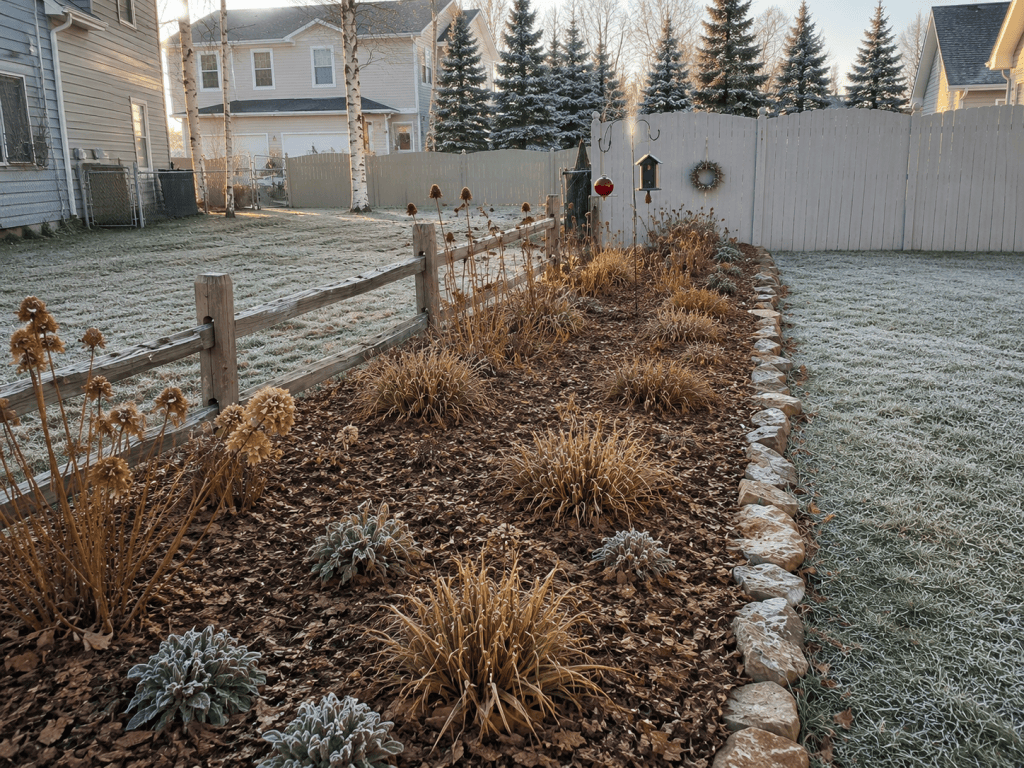
If you’re adding winter mulch specifically for cold protection, it’s often better to wait until the ground has begun freezing rather than piling it on while the soil is still warm.
The goal is to help keep the soil temperature more stable—not keep the garden warm enough to encourage continued growth.
Loose materials such as clean straw, shredded leaves, or evergreen boughs may work well depending on the plant and garden conditions.
❄️Northern Tip:
One of our greatest winter mulches is completely free: snow.
A consistent blanket of snow can insulate the ground and protect hardy plants from extreme temperature fluctuations.
For once, several feet of snow is actually helping us. 😂
9. Give Newly Planted Perennials Extra Protection
Established hardy perennials have had time to develop strong root systems.
New plants haven’t.
If you’ve added perennials late in the season, make sure they’re well watered before freeze-up and consider providing appropriate winter protection once the ground begins to freeze.
A layer of loose mulch can help reduce repeated freezing and thawing around young roots.
The exact amount of protection depends on the plant, your conditions, and how hardy the variety is.
This is also why choosing plants rated for your growing zone—or preferably even colder—is so important in northern gardens.
There is a difference between:
“This plant should survive here.”
and
“I am emotionally prepared to gamble $35 on this plant.”
Choose accordingly. 😂
10. Leave Some Seed Heads for the Birds
Not everything needs to disappear during fall cleanup.
Perennials such as coneflowers and other seed-producing plants can provide food for birds after flowering.
Standing stems also add texture to an otherwise quiet winter landscape.
If they’re healthy, consider leaving some of them until spring.
You can always clean them up once temperatures warm.
A slightly messy garden can actually be a very useful garden.
And frost-covered seed heads poking through fresh snow are beautiful.
11. Mark Plants Before They Disappear
This one is ridiculously simple and surprisingly helpful.
Mark the location of plants that completely disappear underground during winter.
Weatherproof metal plant labels, small stakes, or even a quick garden map can prevent springtime accidents.
Because after months of snow, you may not remember exactly where everything is.
And enthusiastically digging a hole for a new perennial only to discover you’ve planted it directly on top of another perennial is a special kind of gardening disappointment.
❄️Northern Tip:
Take pictures of your perennial beds before everything dies back. Photographs are incredibly useful when you’re planning changes during winter—and when you’re standing outside next spring wondering:
Wasn’t there something planted here?
12. Make Notes About What You Want to Change
Fall is one of the best times to evaluate your perennial garden.
You can still remember what it looked like during summer.
Did something get much taller than expected?
Is a short plant hidden behind a giant one?
Does something need to be divided?
Would a plant look better somewhere else?
Did one area bloom beautifully while another looked empty?
Take pictures and write it down.
Keeping those notes in a garden journal makes it easy to look back at what worked, what didn’t, and what you wanted to change when spring finally rolls around.
Winter is a wonderful time to plan next year’s changes.
You don’t necessarily need to move everything right now.
Sometimes simply knowing what you want to change is enough.
Then when spring arrives, you’ll already have a plan.
Or at least you’ll have a plan.
Gardens have a way of changing those. 😂
A Simple Perennial Garden Winter Checklist
Before winter settles in:
- Let healthy foliage naturally die back
- Avoid encouraging tender new growth late in the season
- Continue watering during dry fall weather as needed
- Give newly planted perennials extra attention
- Remove diseased or pest-damaged foliage
- Cut back plants that benefit from fall cleanup
- Leave healthy stems and seed heads where appropriate
- Clean up iris foliage as needed
- Let lily stems naturally yellow before cutting them back
- Add winter mulch where appropriate
- Avoid piling heavy mulch against plant crowns
- Mark plants that disappear completely underground
- Take pictures of the garden
- Write down plants you want to move or divide next year
And then?
Leave it alone.
Seriously.
You don’t need to stand outside in October looking for one more thing to cut down.
The garden knows what it’s doing.
Let the Garden Rest
Preparing a perennial garden for a northern winter isn’t about making everything perfectly clean.
It’s about helping plants transition naturally into dormancy, removing potential problems, protecting anything that needs a little extra help, and then letting winter take over.
Soon the flowers will disappear.
Then the stems.
Then eventually the entire garden may disappear beneath the snow.
But underneath it, your hardy perennials are waiting.
Their roots are protected in the soil, storing the energy they’ll need when temperatures finally begin to rise again.
And after months of looking at a white yard, there are few things more exciting than spotting that first tiny green shoot pushing through the soil.
That’s when you know:
The garden made it.
And another northern growing season is about to begin. 🌱❄️🌻
Northern Home & Garden
Beauty That Grows Through the Cold

