String of hearts is one of those houseplants that starts out looking sweet and innocent.
A few delicate vines. Tiny heart-shaped leaves. Nothing suspicious happening here.
And then one day you realize those vines have somehow traveled halfway across the room. 😂
Mine had reached that point. It was healthy, growing happily, and apparently determined to see just how far it could go.
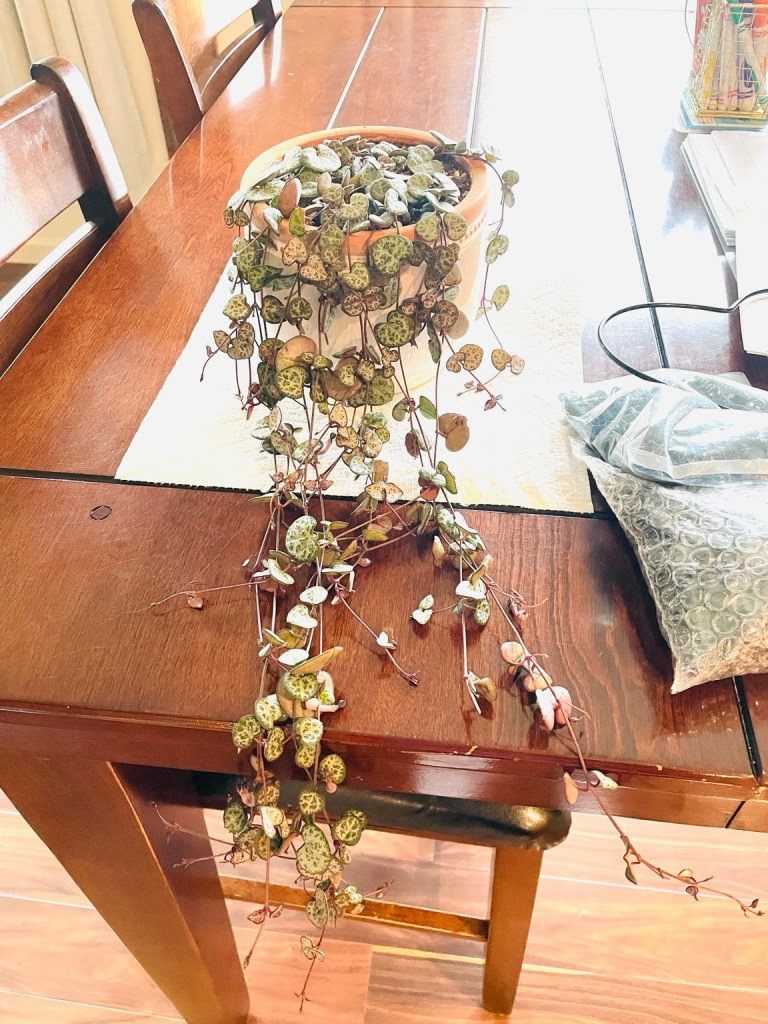
Rather than cutting all those beautiful vines back, I decided to give them somewhere to go — up.
With a simple heart-shaped support and a little patience, I turned my long, trailing string of hearts into a heart-shaped houseplant that looks completely different from where it started.
And the best part? This is an incredibly easy project.
Affiliate Disclosure: This post contains affiliate links. As an Amazon Associate, Northern Home & Garden earns from qualifying purchases at no additional cost to you.
Why Train a String of Hearts?
String of hearts (Ceropegia woodii) naturally grows long, trailing vines, which is part of what makes it such a beautiful houseplant.
You can absolutely let those vines hang freely from a shelf or hanging planter. But once they get very long, they can become tangled, catch on things, or simply take up more space than you want them to.
Training the vines onto a support gives you another option.
Instead of trimming away all that growth, you can use the vines to create a living shape — and with heart-shaped leaves, a heart seemed like the obvious choice. ❤️
For mine, I still wanted some vines trailing naturally from the pot, so I didn’t train every single one. Keeping a few loose gave the finished plant a softer look.
What You’ll Need
This project doesn’t require much:
- A healthy string of hearts with several long vines
- A heart-shaped plant trellis or sturdy wire support
- Small plant clips or soft plant ties
- Clean scissors or pruning snips, if needed
- A little patience with tangled vines — possibly the most important item on this list 😂
Choose clips or ties that won’t pinch the delicate stems. String-of-hearts vines are surprisingly easy to bend, but they can also snap if they’re pulled too hard.
❄️ Northern Tip
If your vines are badly tangled, don’t try to separate everything at once. Work with one vine at a time, starting near the pot and gently following it toward the end.
It takes longer, but you’ll save yourself a lot of broken stems — and possibly some colorful language.
Step 1: Add the Heart-Shaped Support
Place a heart-shaped plant trellis securely into the pot, making sure it’s deep enough that it won’t wobble once the vines are wrapped around it.
Remember that the plant will continue growing, so the support needs to hold more than just what you’re putting on it today.
I positioned mine so the heart sat directly above the center of the pot.
Before wrapping anything, I also made sure I liked the height and angle of the support. It’s much easier to adjust it now than after you’ve wrapped half the plant around it.
Step 2: Choose Your Longest Vines
Next, look for the longest, healthiest vines.
These are going to create the basic outline of the heart.
Starting near the base of the plant, gently guide one vine upward toward the support. Don’t pull it tight. You want the vine to follow its natural movement as much as possible.
Then begin loosely wrapping or guiding it around the heart.
I worked my way around the support rather than trying to make everything perfect immediately.
And trust me — it will not look perfect halfway through.
Keep going. 😂
Step 3: Secure the Vines
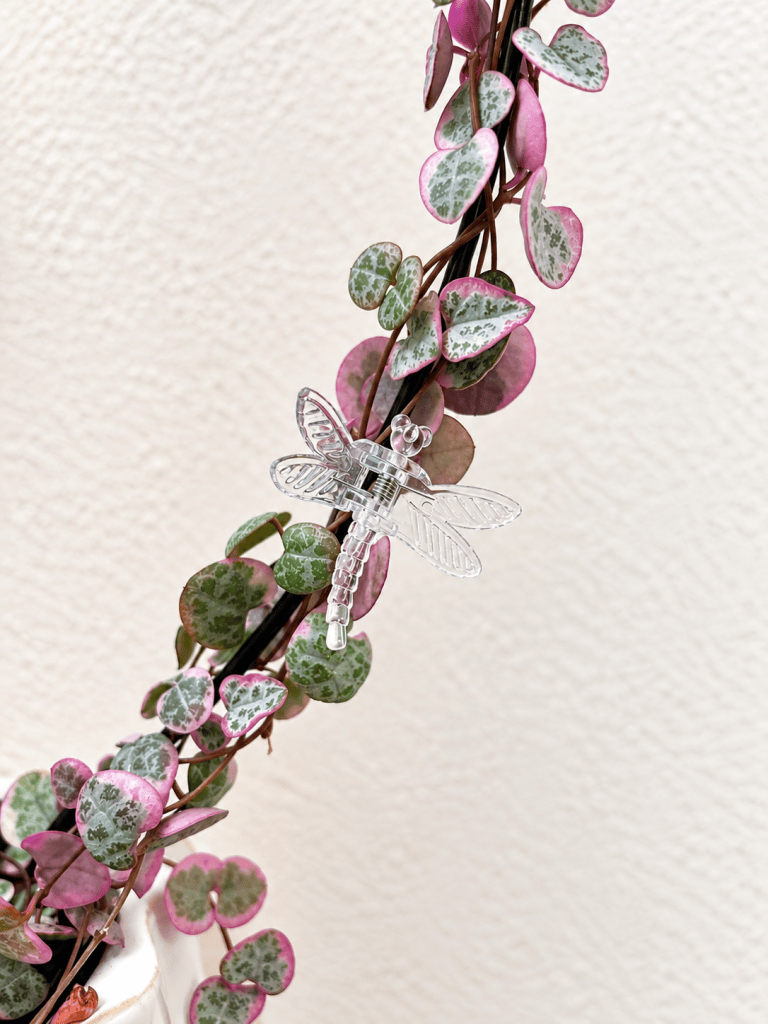
I used small clear dragonfly plant clips to gently hold the vines against the trellis, but soft plant ties work well too.
The goal isn’t to clamp the plant tightly against the support. The clips simply keep the vine from slipping while it begins growing around its new structure.
Pay special attention to curves and the upper center of the heart, where vines are more likely to move out of position.
If you’re using ties, leave a little room around the stem so it isn’t squeezed as the plant grows.
Step 4: Fill In the Heart
Once you’ve established the outline, start adding additional vines.
This is where the transformation really begins.
Instead of stacking every vine directly on top of another, spread them slightly around the support. That creates a fuller, more natural-looking heart.
You don’t have to use every vine.
I deliberately left several hanging over the side of the pot because I still wanted that classic trailing string-of-hearts look.
The combination of the structured heart and loose vines ended up being my favorite part of the finished plant.
Step 5: Trim Only What You Need To
You may discover a few damaged, bare, or awkward vines while you’re working.
Those can be trimmed with clean scissors or pruning snips.
But don’t automatically cut off a perfectly healthy vine just because it doesn’t fit the shape.
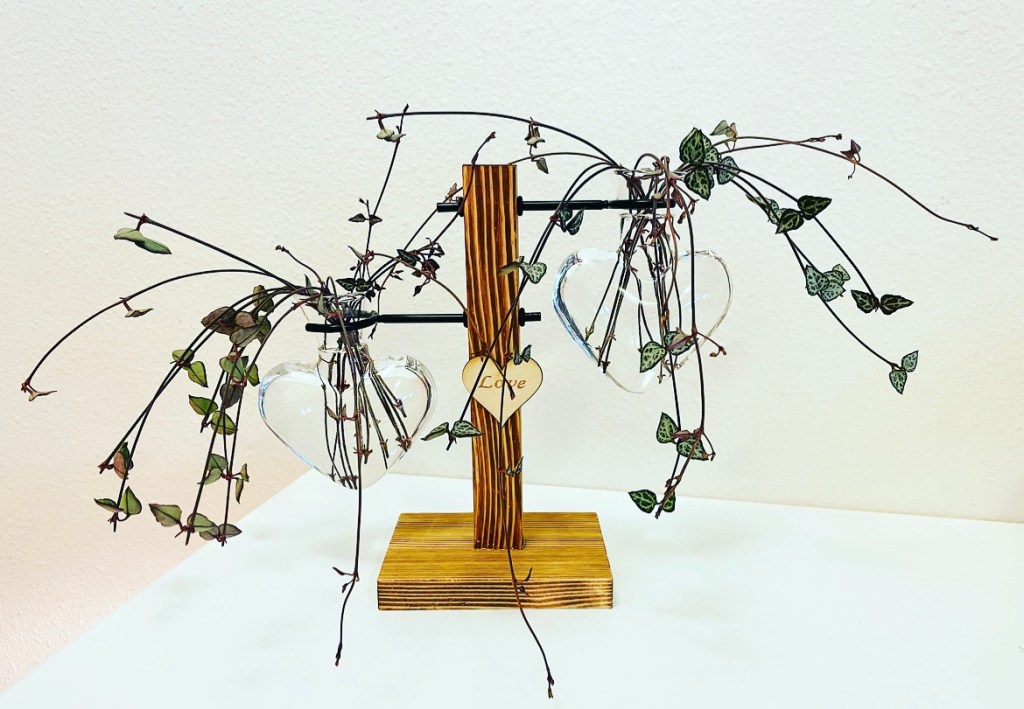
Let it trail. Or better yet — propagate it.
I placed some of my cuttings in heart-shaped glass propagation vases, which seemed especially fitting for a string of hearts project. ❤️
Caring for Your String of Hearts After Training
Training the plant doesn’t dramatically change its care requirements, but there are a few things worth watching.
Give It Plenty of Light
String of hearts generally does best with plenty of bright light.
Good light also helps maintain healthy growth and attractive leaf markings. If the plant starts producing long stretches of stem between leaves, it may be reaching for more light.
Just be cautious about suddenly moving a plant from lower light into intense direct sun, which can stress or scorch foliage.
Don’t Overwater It
This is one plant that doesn’t appreciate constantly wet soil.
Allow the potting mix to dry substantially between waterings rather than watering on a rigid schedule.
A pot with good drainage is especially important.
When in doubt, check the soil before reaching for the watering can.
Keep Checking the Clips
As new growth develops, occasionally check any clips or ties you’ve used.
You may need to loosen or reposition them as the vines grow.
Eventually, you can also guide new vines around the support, gradually making the heart fuller.
What Happens as It Keeps Growing?
This may be my favorite part.
The project isn’t really finished.
As new vines grow, you can decide what you want to do with them.
Wrap some around the heart to make it thicker. Let others trail down the side. Trim and propagate a few.
Over time, the shape should become fuller and more established.
And because plants have absolutely no respect for our carefully constructed plans, I’m sure mine will eventually decide it has its own ideas. 😂
That’s half the fun.
Before and After
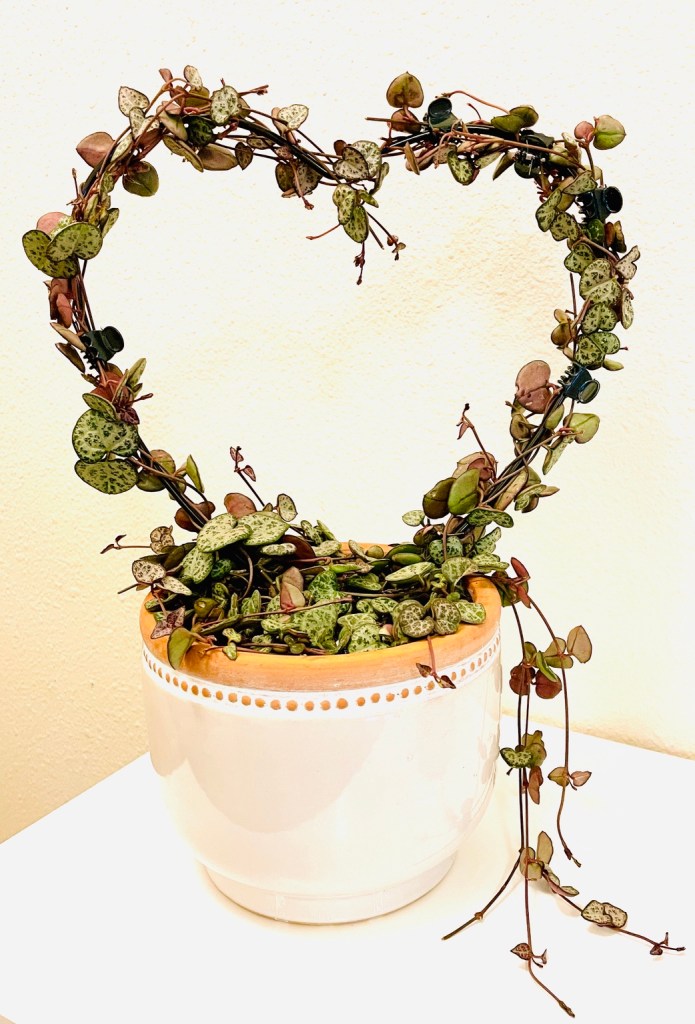
The difference between where this plant started and where it ended up is pretty dramatic.
Before, I had beautiful vines — everywhere.
Afterward, I still had the trailing look I loved, but the plant had become something decorative too.
And considering this transformation required only a support, a handful of clips, and some patient vine untangling, I’d call that a pretty good afternoon project.
A Simple Way to Have Fun With an Overgrown Houseplant
One of my favorite things about growing plants is figuring out ways to work with what they’re already doing.
My string of hearts wanted to grow ridiculously long vines.
Fine.
We’ll make a giant heart out of them. 😂❤️
You don’t need a perfectly shaped plant or an expensive setup to try this. Start with the vines you have, gently guide them onto a support, and let the plant continue doing what it does best — grow.
And if your heart looks a little wonky at first?
Give it time.
Plants have a wonderful way of filling things in.

