If you’ve ever looked at a beautiful garden online and immediately wondered…
Yeah, but will that grow HERE?
Welcome to northern gardening. 😂
Gardening in Zone 2 can feel intimidating at first. Winters are long. Temperatures can get extremely cold. The growing season is short, and frost always seems to arrive just when the garden is finally looking its best.
But here’s the good news:
You can grow an absolutely beautiful garden in Zone 2.
You can grow flowers.
You can grow vegetables.
You can grow berries, herbs, shrubs, and even some fruit.
The trick isn’t trying to garden exactly like someone living several growing zones farther south.
It’s learning how to garden where you live.
And once you understand a few basics, cold-climate gardening becomes a whole lot easier.
Affiliate Disclosure: This post contains affiliate links. As an Amazon Associate, Northern Home & Garden earns from qualifying purchases at no additional cost to you.
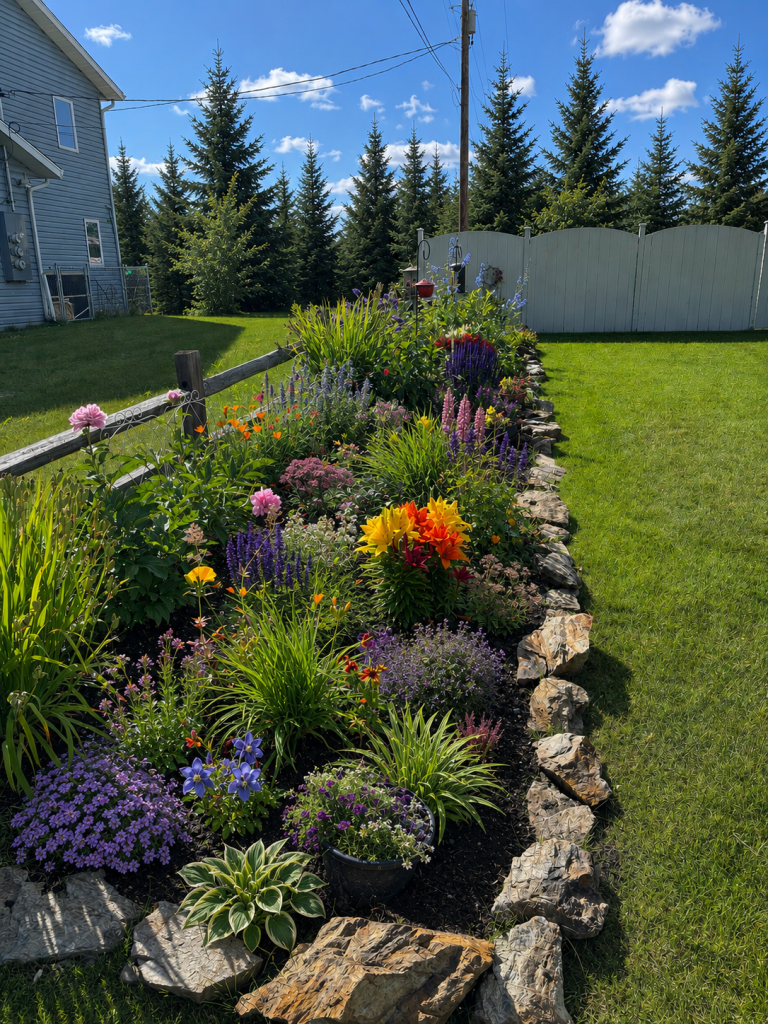
First, What Does Zone 2 Actually Mean?
When gardeners talk about “Zone 2,” they’re usually referring to a plant hardiness zone.
In the United States, the USDA Plant Hardiness Zone Map divides areas into zones based on their average annual extreme minimum winter temperature.
The zones help gardeners estimate whether a perennial plant is likely to survive winter in a particular location.
That’s important.
But your hardiness zone doesn’t tell you everything about gardening where you live.
It doesn’t tell you exactly when your last spring frost will happen.
It doesn’t tell you when the first fall frost will arrive.
It doesn’t tell you how warm your summers are.
And it doesn’t tell you how much sunlight your garden receives.
Think of your hardiness zone as one useful piece of information—not the entire gardening instruction manual.
❄️Northern Tip:
When choosing perennial plants, check the hardiness rating before falling in love with them.
Trust me.
It’s much easier to walk away from a beautiful Zone 6 perennial at the nursery than to spend all winter emotionally invested in whether it somehow survived 40 below. 😂
Your Growing Season Matters Just as Much
One of the biggest challenges in a northern garden isn’t necessarily summer temperatures.
It’s time.
Depending on your exact location and conditions, the period between the last spring frost and first fall frost can be relatively short.
That matters tremendously when you’re choosing vegetables and annual flowers.
A tomato variety needing a long growing season may struggle to ripen outdoors before fall temperatures arrive.
A faster variety may do beautifully.
This is why northern gardeners quickly learn to pay attention to something called:
Days to maturity.
When comparing two varieties of the same vegetable, the one that matures significantly earlier may be the better choice for a short-season garden.
❄️Northern Tip:
Look for descriptions such as early, short-season, cold-tolerant, or fast-maturing when shopping for seeds.
We don’t have time for a tomato that needs until Thanksgiving to make up its mind.
Don’t Forget About Our Long Summer Days
Northern gardening has challenges.
But we also get a pretty amazing advantage:
Long summer daylight.
At high latitudes, summer days can be extraordinarily long.
That extra daylight can help many plants grow quickly once conditions finally warm.
This is one of the wonderful things about gardening in the North.
Spring can feel like it takes forever to arrive…
and then suddenly everything explodes.
Plants grow.
Flowers bloom.
Vegetables take off.
And the yard can change dramatically in just a few weeks.
It’s almost as though the garden knows it has a deadline.
Honestly, same. 😂
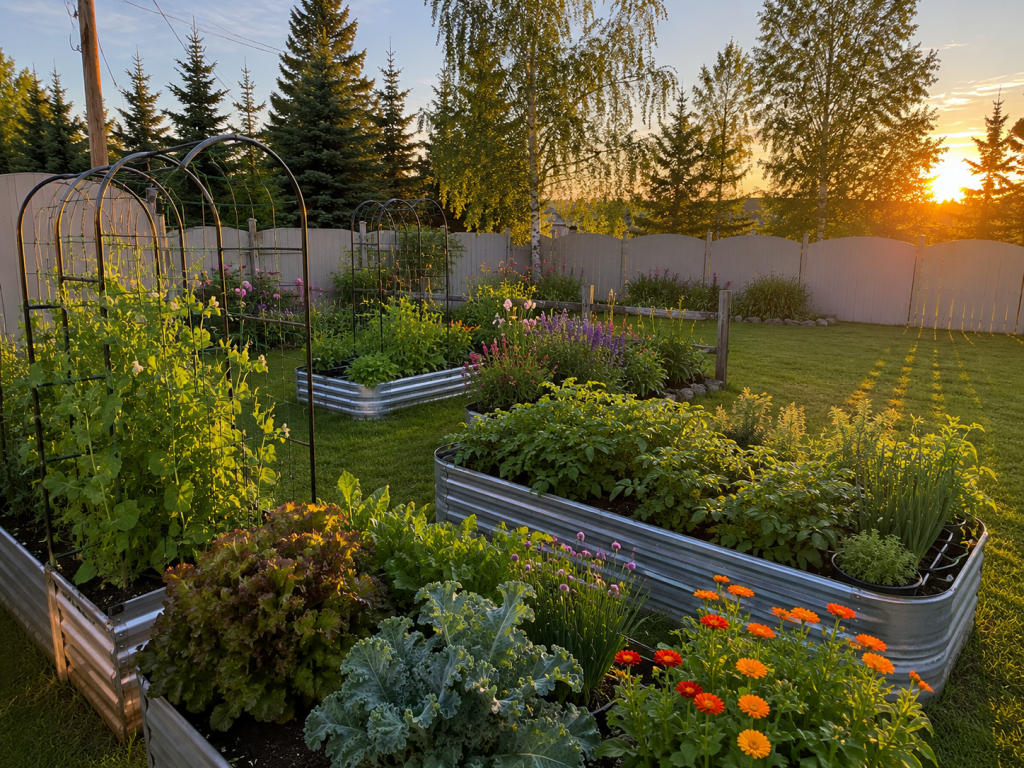
Choose Perennials That Are Actually Hardy
When choosing plants that need to survive year after year, hardiness matters.
Look for perennials rated for your zone.
Some gardeners even prefer plants rated one zone colder when available, especially for exposed locations or areas with inconsistent snow cover.
There are plenty of beautiful hardy perennials that can thrive in very cold climates.
Depending on the variety and your specific conditions, possibilities may include:
- Peonies
- Irises
- Delphiniums
- Yarrow
- Columbine
- Daylilies
- Sedum
- Asiatic lilies
- Lupines
- Some hardy varieties of bee balm
- Hardy geraniums
- Some varieties of hosta
- Some hardy ornamental grasses
- Many native or regionally adapted wildflowers
The exact cultivar matters.
Two plants with the same common name can have different hardiness ratings, so always check the label for the particular variety you’re considering.
❄️Northern Tip:
“Perennial” does not automatically mean perennial where you live.
A plant can be perennial somewhere else and still function as an annual—or simply die—in Zone 2.
That little hardiness label is your friend.
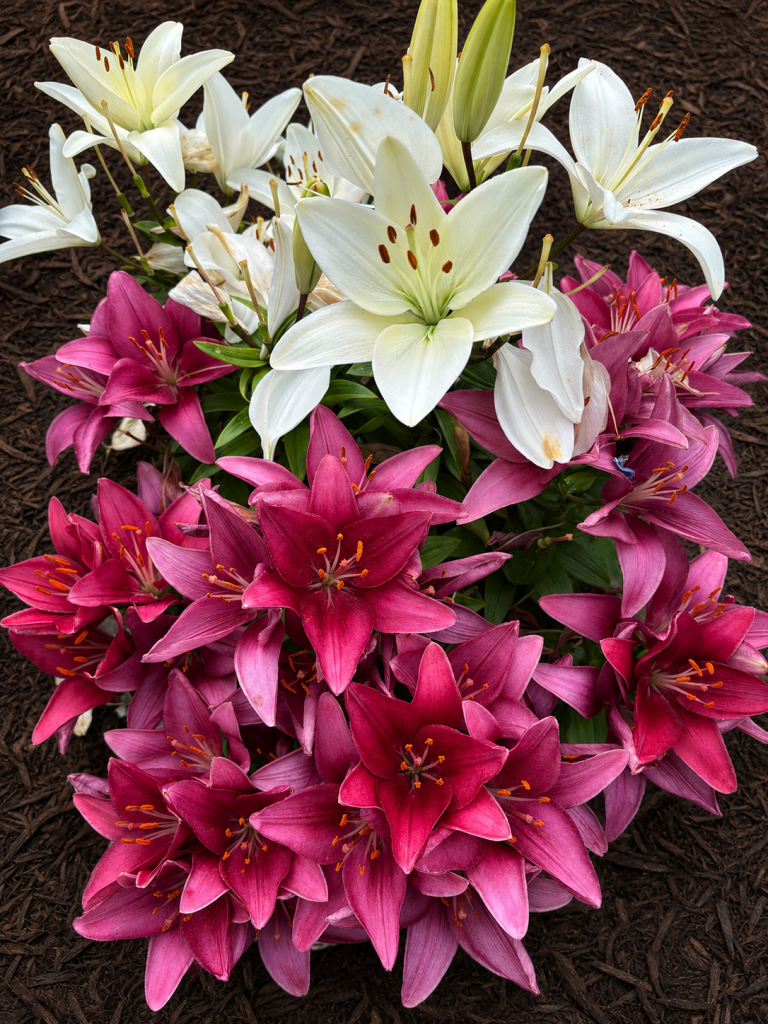
Annual Flowers Can Be Your Secret Weapon
Here’s something new northern gardeners sometimes don’t realize:
Annual flowers don’t need to survive winter.
They’re only expected to live for one growing season.
That means your extreme winter temperatures don’t matter nearly as much when choosing annuals.
The bigger question is whether they have enough time and suitable summer conditions to grow, flower, and possibly produce seed before frost.
This opens up an enormous number of possibilities.
Petunias, pansies, snapdragons, marigolds, calendula, sweet peas, nasturtiums, cosmos, sunflowers, and many other annuals can bring huge amounts of color to a northern garden.
Some annuals may even reseed themselves and surprise you the following year.
They’re not necessarily surviving winter as plants.
Their seeds are.
And sometimes those volunteer seedlings grow so enthusiastically that you begin wondering who exactly is in charge of the garden.
Spoiler:
It isn’t you. 😂
Plenty of Vegetables Love Cool Weather
A northern vegetable garden doesn’t have to revolve around trying to convince heat-loving plants that they’re somewhere else.
There are plenty of vegetables that actually appreciate cooler conditions.
Depending on your garden and varieties, excellent candidates can include:
- Peas
- Lettuce
- Spinach
- Kale
- Radishes
- Carrots
- Beets
- Broccoli
- Cabbage
- Turnips
- Swiss chard
- Potatoes
These crops can be fantastic choices for a short northern season.
Some tolerate light frost, and several actually perform better in cool conditions than they do during intense summer heat.
❄️Northern Tip:
If you’re brand new to vegetable gardening in a cold climate, start with a few crops that naturally like cool weather.
Gardening gets a lot more fun when you stop fighting your climate and start taking advantage of it.
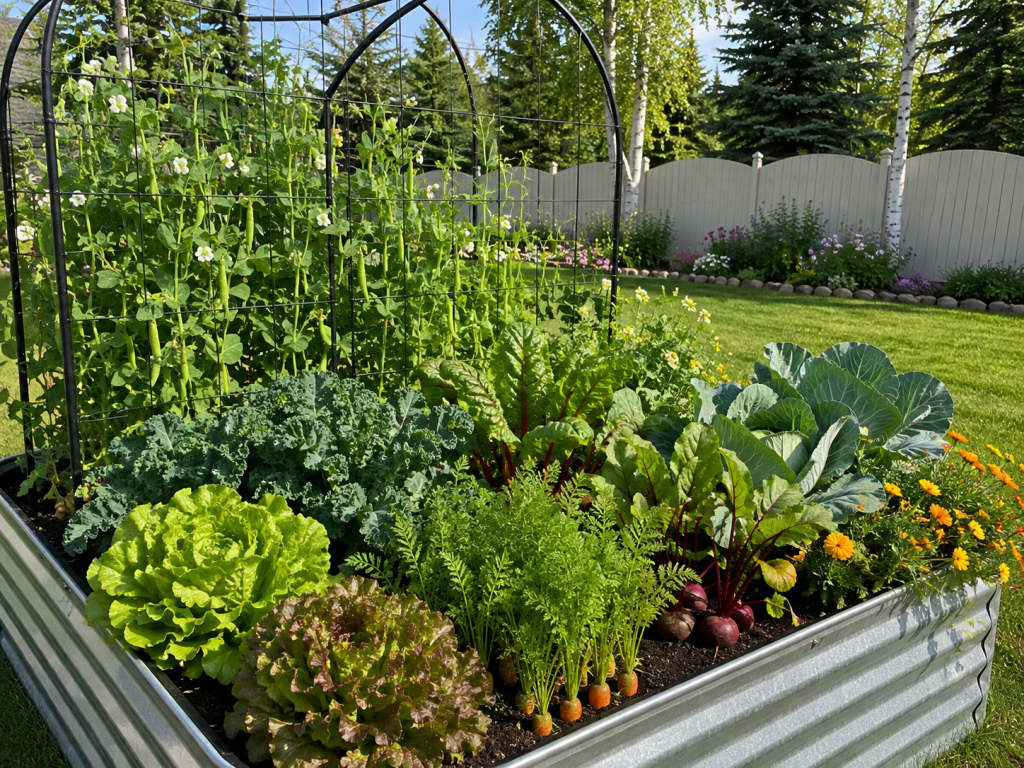
Yes, You Can Grow Warm-Season Vegetables Too
Cold-climate gardening doesn’t mean giving up tomatoes, cucumbers, squash, beans, or other summer favorites.
It just means you may need a little strategy.
Choose fast-maturing varieties.
Start appropriate plants indoors.
Plant them in the warmest, most protected microclimates in your yard.
Consider raised beds, greenhouses, high tunnels, row covers, or other season-extension techniques when appropriate.
And be prepared to protect tender plants when early or late frost threatens.
Some warm-season crops will be easier than others.
That’s okay.
Half the fun of gardening is figuring out what works in your yard.
The other half is apparently planting tomatoes every year despite repeatedly complaining about them.
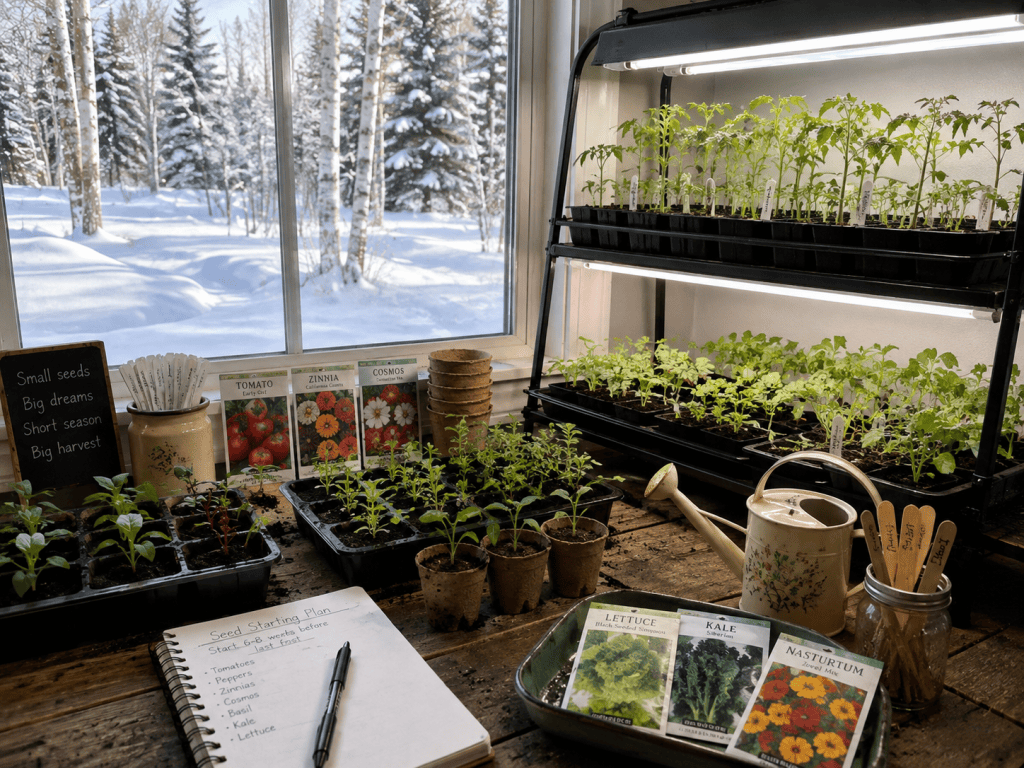
Seed Starting Can Give You a Head Start
When the outdoor growing season is short, starting appropriate plants indoors can give them weeks—or even months—of growth before it’s safe to plant outside.
Tomatoes, peppers, many flowers, and certain other crops may benefit from indoor seed starting.
But earlier isn’t always better.
Plants started too early can become root-bound, stretched, stressed, or simply enormous before outdoor conditions are ready for them.
Work backward from your approximate transplanting time and follow the recommendations for each particular plant.
And remember that not everything needs to be started indoors.
Many vegetables and flowers can be directly sown outside.
❄️Northern Tip:
Don’t turn February enthusiasm into an April jungle unless the plants actually need that much time indoors.
Ask any northern gardener who has tried to live with six-foot tomato plants in the house.😂
Learn Your Own Frost Dates
General frost-date estimates are useful starting points, but they’re not guarantees.
Weather doesn’t read gardening calendars.
Your own property may also behave differently from nearby locations.
A low area may frost earlier.
A protected garden near the house may stay warmer.
One side of the yard may lose snow weeks before another.
Keep notes from year to year.
Record:
- When your snow melts
- When your soil becomes workable
- Your last significant spring frost
- Your first fall frost
- Which areas warm first
- Which areas stay wet
- Where frost seems to hit hardest
After a few seasons, you’ll begin building something more valuable than a generic planting calendar:
a planting calendar for your own yard.
Microclimates Can Change Everything
Even a small yard can contain several different growing environments.
A south-facing wall may create a warmer pocket.
A fence may block cold wind.
A low spot may collect cold air.
An area near pavement may warm faster.
A shady north-facing bed may hold snow much longer than the sunny side of the house.
These are called microclimates.
Learning where they are can help you decide what to plant where.
Put plants that need extra warmth in your warmest protected areas.
Use cooler spots for plants that prefer them.
And pay attention to where snow naturally accumulates.
❄️Northern Tip:
Before redesigning your entire yard, spend a season watching it.
Where does the snow melt first?
Where does water collect?
Where is it windy?
Where does the sun hit in June?
Your yard will tell you a lot if you give it time.
Raised Beds Can Be Extremely Useful
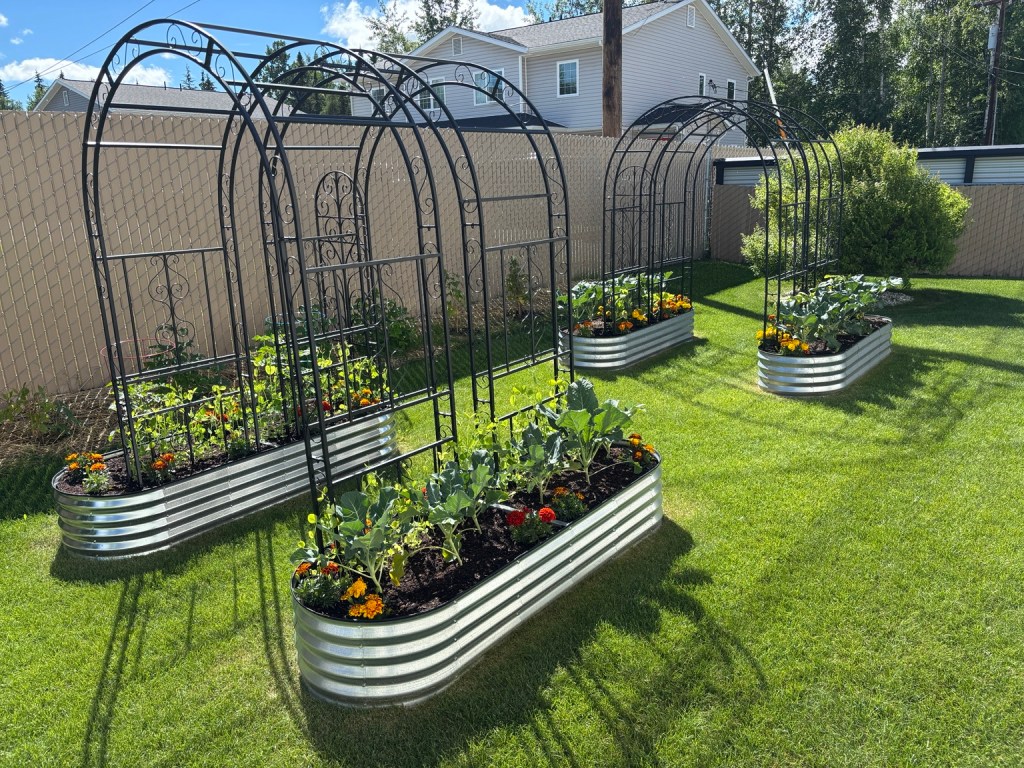
Raised beds can be a great option for northern vegetable gardening.
They can provide excellent drainage, allow you to control the soil, and may warm earlier than surrounding ground in spring.
They’re also convenient for adding compost and managing a smaller intensive growing space.
However, raised beds can dry out faster than in-ground gardens, so keep an eye on moisture during warm, sunny periods.
And remember that soil in raised beds can experience colder temperatures than the ground around them, which matters when you’re trying to overwinter marginally hardy perennial plants.
For annual vegetables, though?
Raised beds can be fantastic.
Especially when paired with trellises that let you grow vertically and squeeze even more into a short season.
Because apparently a limited growing season makes us respond by planting more things.
Perfectly reasonable. 😂
Snow Is Not Always the Enemy
We spend a lot of winter complaining about snow.
Fair.
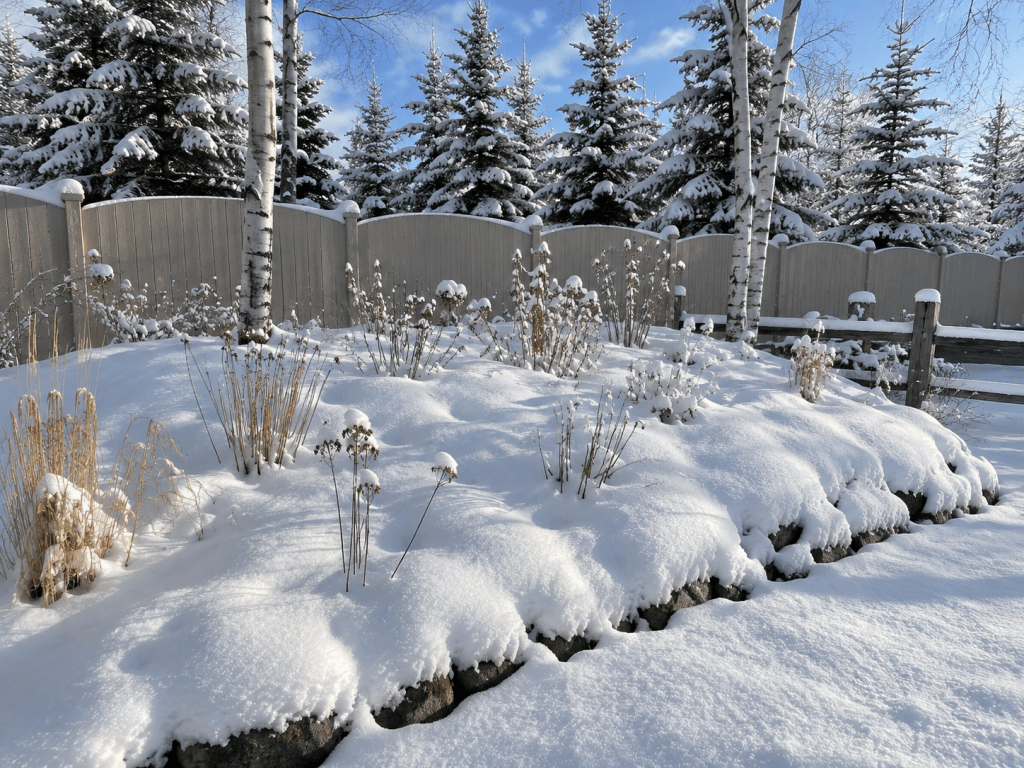
But in the garden, consistent snow cover can actually be extremely valuable.
Snow traps air and acts as insulation over the soil.
That blanket can help protect hardy perennial roots from extreme temperature fluctuations.
Problems can sometimes arise during winters with very little snow, repeated freeze-thaw cycles, or exposed areas where wind removes snow cover.
So while looking outside at several feet of snow covering your perennial garden may not feel particularly encouraging…
your plants may actually be quite comfortable underneath it.
❄️Northern Tip: Don’t assume the coldest-looking part of winter is automatically the hardest part for hardy perennials.
Stable frozen soil under insulating snow can sometimes be preferable to repeated warming and refreezing.
Don’t Rush Spring
This may be one of the hardest lessons in northern gardening.
The sun comes back.
Temperatures rise.
Snow starts melting.
You see dirt.
And suddenly:
IT IS GARDENING SEASON.
Except…
maybe not. 😂
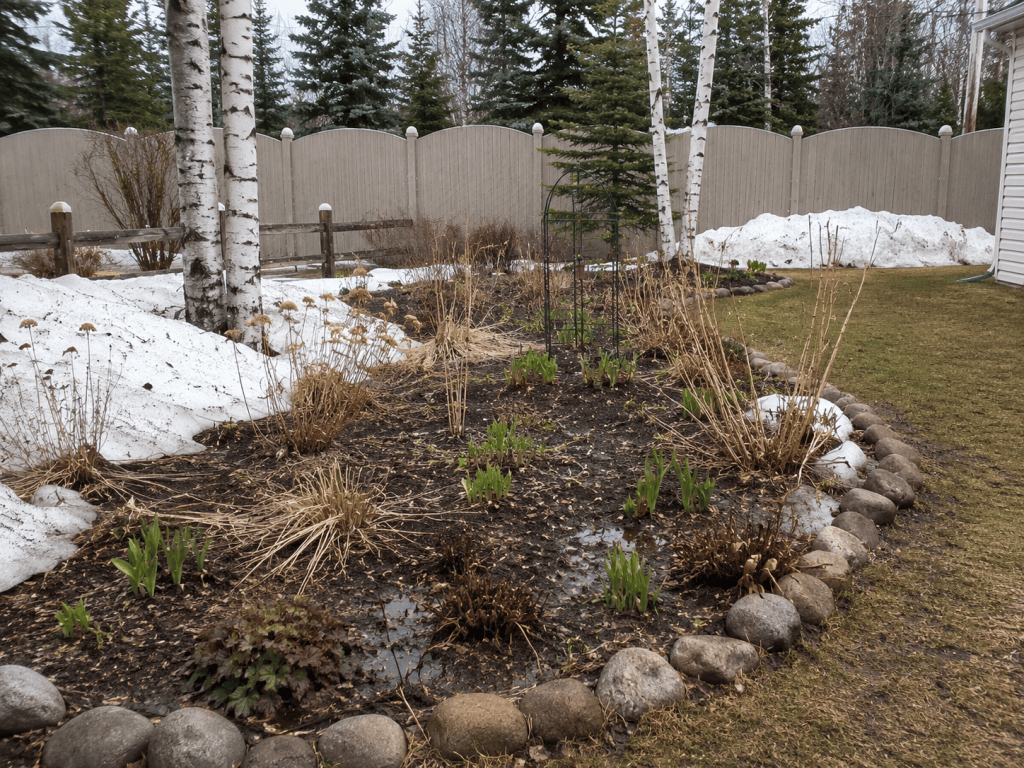
Northern spring weather can change quickly.
A beautiful warm afternoon doesn’t mean freezing nights are finished.
Soil may still be frozen underneath the surface.
A simple soil thermometer can help you see when the ground is actually beginning to warm rather than relying on air temperature alone.
And planting tender crops too early can erase weeks of careful seed starting in a single cold night.
Use the forecast, soil conditions, plant requirements, and your own experience rather than relying on one warm weekend.
Spring will come.
Eventually.
We promise.
Don’t Give Up on a Perennial Too Quickly
Cold-climate perennials sometimes take their sweet time waking up.
One plant may emerge immediately after snowmelt while another remains completely invisible for weeks.
Don’t assume a plant died just because everything around it is growing.
Give it time.
Check your notes or plant markers before digging in the area.
This is another reason marking plants in fall is so helpful.
Because nothing makes a perennial decide to finally emerge quite like you standing directly above it with a shovel.
Keep Notes — You’ll Thank Yourself Later
One of the best things a northern gardener can do is keep simple records.
You don’t need an elaborate garden journal unless you enjoy that.
Just record the useful things:
- What you planted
- The variety
- Where you planted it
- When you planted it
- What grew well
- What struggled
- What survived winter
- What definitely did not survive winter
- What you would plant again
- What you never want to see again 😂
Take pictures, too.
Over several years, those notes become your own personal cold-climate gardening guide.
And they’re based on something no book or website can perfectly reproduce:
your garden.
Start Small and Learn What Works
If you’re new to northern gardening, you don’t need to create your dream garden in one summer.
Start with a few hardy perennials.
Grow a small vegetable bed.
Try several annual flowers.
Plant some peas.
Experiment with one or two varieties you’ve never grown before.
Then watch what happens.
Some things will thrive.
Some things will struggle.
Some things will mysteriously disappear.
And at least one plant will probably grow so well that you’ll spend the next five years trying to stop it.
That’s gardening.
Not failure.
Every season teaches you something.
A Beginner’s Cold-Climate Gardening Checklist
If you’re starting a garden in Zone 2:
- Learn your plant hardiness zone
- Track your approximate frost dates
- Pay attention to days to maturity
- Choose genuinely hardy perennial varieties
- Grow annuals for easy seasonal color
- Start with vegetables that enjoy cool weather
- Choose short-season varieties of warm-weather crops
- Start appropriate seeds indoors
- Learn the microclimates around your property
- Consider raised beds where they make sense
- Take advantage of long summer daylight
- Remember that snow can provide valuable insulation
- Don’t rush tender plants outside in spring
- Keep notes about what works
- Take lots of pictures
- Give slow-emerging perennials time
- Expect to make mistakes
- Try again next year
Most importantly:
Don’t let Zone 2 scare you away from gardening.
A Beautiful Garden Can Grow Here
Cold-climate gardening requires patience.
Our winters are long.
Our summers are short.
Spring rarely arrives as quickly as we’d like, and fall usually shows up before we’re ready for it.
But those challenges make the growing season feel even more special.
There’s something remarkable about watching a garden emerge after months beneath the snow.
Tiny perennial shoots appear.
Seeds germinate.
Trees leaf out.
Flowers begin blooming.
Vegetables suddenly start growing faster than you can keep up with them.
And for a few glorious months, everything is green.
Gardening in Zone 2 isn’t about wishing you lived somewhere warmer.
It’s about discovering what can thrive exactly where you are.
Plant things.
Experiment.
Take pictures.
Learn from the failures.
Celebrate the things that survive.
And every spring, when the snow finally melts…
grow it all again. 🌱🌻❄️
Northern Home & Garden
Beauty That Grows Through the Cold

