An easy way to turn one snake plant leaf into a brand-new plant—with a little water and a whole lot of patience.
Snake plants have a reputation for being pretty tough houseplants.
They tolerate missed waterings. They don’t demand constant attention. And somehow, even after being ignored for a while, they usually just keep going.
But one of my favorite things about them is something I didn’t fully appreciate until I tried it myself:
You can grow an entirely new snake plant from a piece of a leaf. 🌿
I propagated mine by placing a snake plant leaf cutting in water and waiting for it to develop roots. Eventually, tiny new shoots began growing from the bottom of the cutting.
And I won’t pretend it happened overnight.
This is definitely one of those houseplant projects where you put the cutting in water, check it constantly for the first week…
…and eventually realize the plant has absolutely no intention of working on your schedule. 😂
But once those first roots—and especially those first little shoots—appear, it’s completely worth the wait.
Here’s how to do it.
Affiliate Disclosure: This post contains affiliate links. As an Amazon Associate, Northern Home & Garden earns from qualifying purchases at no additional cost to you.
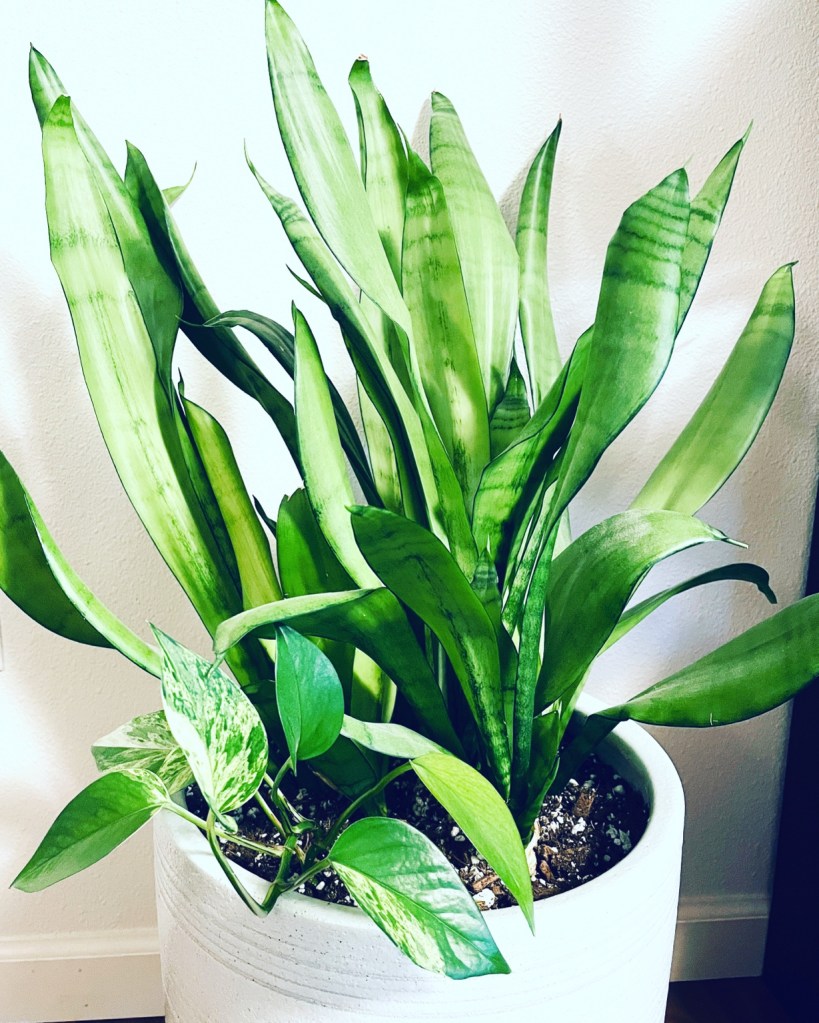
Can You Really Grow a Snake Plant From a Leaf?
Yes!
Snake plants can be propagated in several ways, including division and leaf cuttings.
With leaf propagation, a section of a healthy leaf can eventually develop roots and produce new growth from its base.
It’s a slower process than simply dividing an established plant, but there’s something especially satisfying about watching an ordinary piece of leaf turn into a completely new plant.
And you don’t need much equipment to try it.
What You’ll Need
You only need a few things:
- A healthy snake plant leaf
- Clean, sharp scissors or pruning shears
- A small glass or propagation container
- Clean water
- A bright location out of harsh direct sun
- Patience
Actually…
Lots of patience. 😂
We’ll get to that part.
Step 1: Choose a Healthy Snake Plant Leaf
Start with a healthy, mature leaf that doesn’t show signs of rot or disease.
Using a pair of clean, sharp plant snips, cut the leaf near its base.
You can propagate a whole leaf or divide a longer leaf into sections to create multiple cuttings.
If you do cut the leaf into several pieces, it’s important to remember which end was originally pointing down toward the roots.
That end needs to go into the water.
❄️ Northern Tip
If you’re making several sections from one long leaf, mark the bottom of each cutting or make your cuts in a way that helps you remember which direction is up.
Once they’re sitting on the counter looking exactly alike, you’d be surprised how quickly “Of course I’ll remember” turns into “Well… shoot.” 😂
Step 2: Let the Cut End Dry
Rather than immediately putting a freshly cut leaf into water, allow the cut surface some time to dry and callus.
This helps the cut end seal over before it spends weeks sitting in water.
Place the cutting somewhere dry and out of direct sunlight while the cut end heals.
Once it feels dry rather than freshly cut, it’s ready for the next step.
Step 3: Place the Cutting in Water
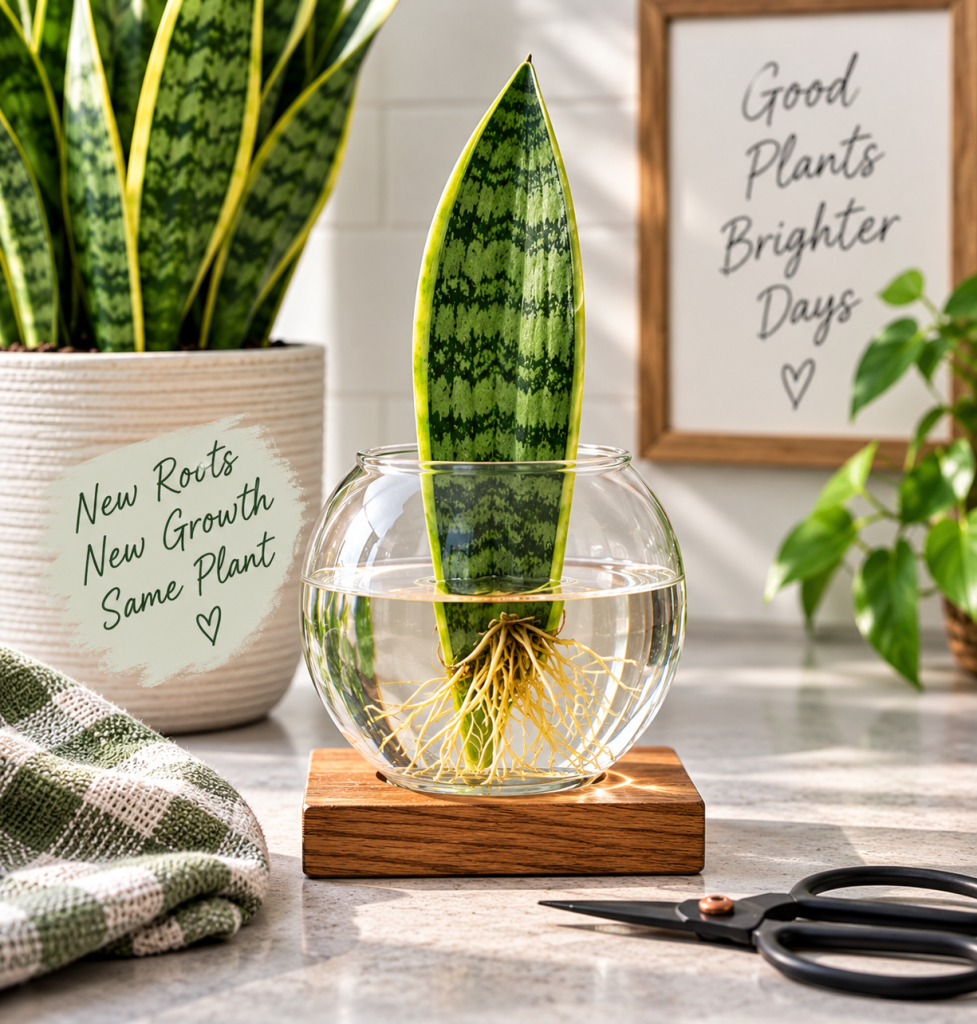
Put the bottom end of the snake plant cutting into a clean glass or glass propagation vessel.
You only need enough water to cover the lower portion of the cutting.
There’s no reason to submerge half the leaf.
Then place it somewhere with bright, indirect light.
A windowsill or nearby bright location can work well as long as the cutting isn’t baking in intense direct sun.
And then…
We wait.
🌿
And wait.
😂
Step 4: Keep the Water Fresh
Check the water regularly and replace it when it starts looking cloudy or dirty.
Even if it still looks reasonably clear, periodically giving the cutting fresh water helps keep things clean while roots develop.
If the water level drops through evaporation, add enough to keep the bottom of the cutting submerged.
While you’re changing the water, take a quick look at the base of the leaf.
Eventually, you may begin to see tiny roots emerging.
That’s when this project starts getting exciting.
Step 5: Wait for Roots
Snake plant leaf cuttings can take quite a while to root.
Don’t assume something has gone wrong simply because you don’t see roots immediately.
Temperature, light, the individual plant and the time of year can all affect how quickly a cutting develops.
As long as the leaf remains firm and healthy and the bottom isn’t turning soft or mushy, give it time.
This is not instant-gratification gardening.
This is more like:
“I’ll just leave you here and check again next Tuesday.” 😂
And eventually…
Roots.
Step 6: And Then Come the Babies 🌱
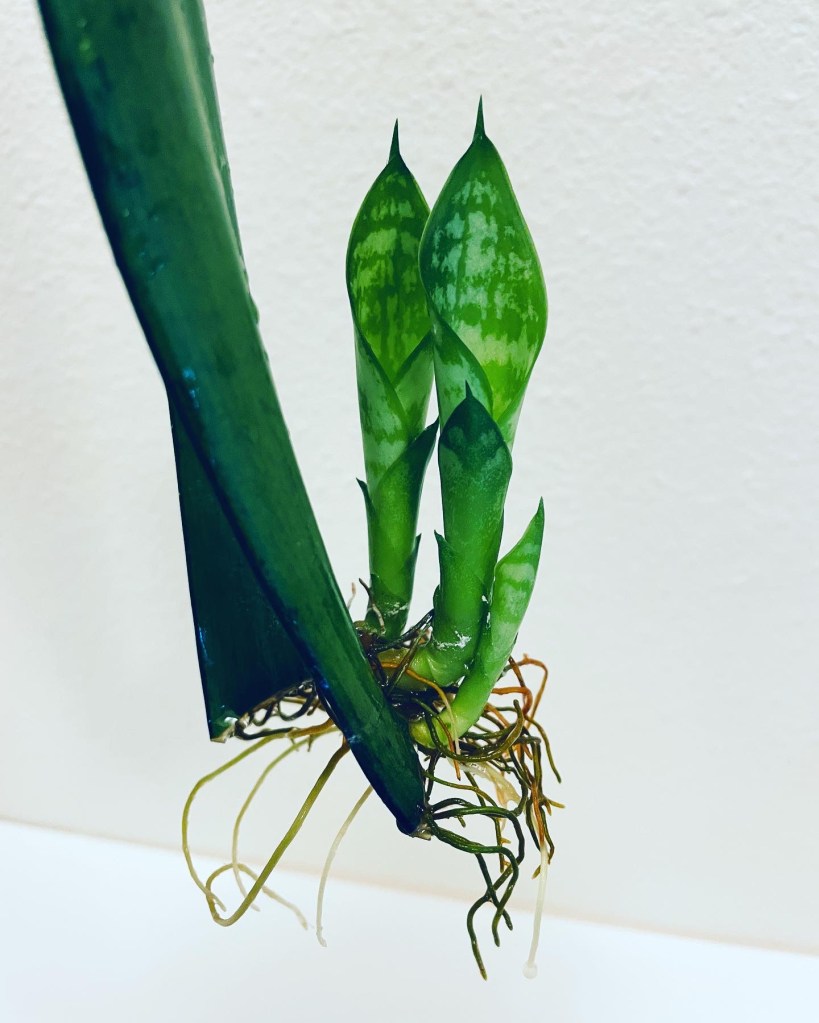
This was my favorite part.
After the cutting establishes roots, new shoots can eventually emerge from the base.
At first they’re tiny little pointed growths tucked against the original leaf.
Then they start getting taller.
And suddenly that piece of snake plant leaf you’ve been keeping in a glass of water has turned into an actual little plant.
It’s basically photographic proof that all that waiting paid off. 😂
❄️ Northern Tip
Don’t rush to pot your cutting the second you see one tiny root.
Giving it time to develop a stronger root system can make the transition from water to potting mix easier.
Step 7: Move Your New Snake Plant Into Its Pot
Once your cutting has developed a good root system and new growth, you can move it into a container.
Choose a relatively small pot rather than putting your tiny new plant into an enormous one.
Use a loose, well-draining potting mix and gently arrange the roots in the soil.
Keep the new shoots above the soil line and avoid burying the plant too deeply.
Then give your newly potted snake plant some time to adjust.
Moving from water into soil is a big change for those roots, so don’t panic if the plant seems to spend some time doing absolutely nothing.
Houseplants are very good at appearing to do nothing while secretly doing quite a lot. 🌿
What About Growing Snake Plants in LECA?
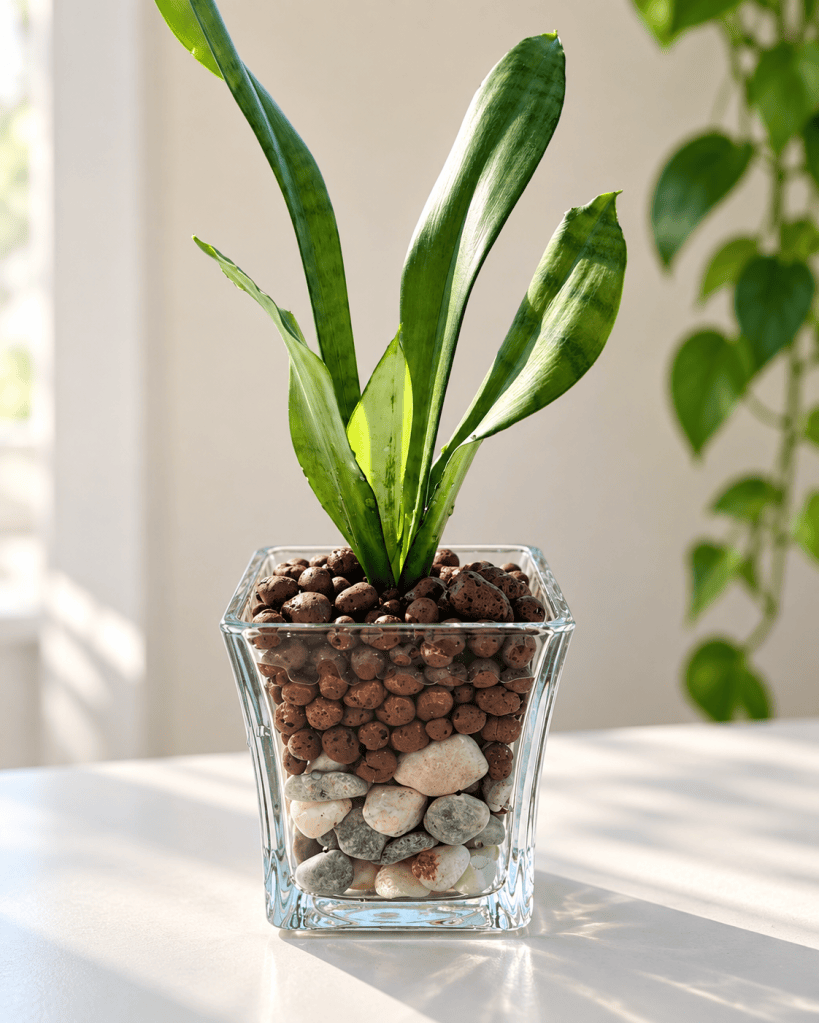
You may notice that I eventually moved mine into a clear container filled with LECA (lightweight expanded clay aggregate) rather than traditional potting soil.
LECA is made from small clay balls and is commonly used for semi-hydroponic growing.
I love that the clear container lets you see what’s happening below the surface, and it gave this propagated snake plant a really interesting finished look.
But you absolutely do not need LECA to propagate a snake plant successfully.
A regular pot with drainage and a well-draining potting mix works perfectly well.
We’ll save the deeper dive into growing houseplants in LECA for another day—because apparently we’ve just discovered another future article. 😂
A Note About Variegated Snake Plants
Here’s an interesting quirk of leaf propagation.
Some variegated snake plants may not reproduce the same variegation when propagated from leaf cuttings. New plants can revert toward greener coloring.
If maintaining a particular variegated pattern is important to you, division is generally the better propagation method because you’re separating genetically identical growth from the original plant.
If you’re mostly interested in making another snake plant?
It’s still incredibly fun to see what you get.
How Long Does Snake Plant Water Propagation Take?
This is the question everyone wants answered.
And unfortunately, snake plants aren’t great at deadlines. 😂
You may wait several weeks—or considerably longer—for substantial roots to develop, and new shoots can take longer still.
Rather than watching the calendar, watch the cutting.
You’re looking for:
- A healthy, firm leaf
- Developing roots
- Eventually, new shoots from the base
If those things are happening, the plant is doing exactly what it’s supposed to do.
Just perhaps… very slowly.
From One Leaf to a Whole New Plant
There are faster ways to make another snake plant.
But I think that’s part of what makes leaf propagation so much fun.
You start with what looks like nothing more than a cut piece of leaf sitting in a glass of water.
Then one day there are roots.
Later, there’s a tiny green shoot.
And eventually you’re looking at an entirely new snake plant that started from that one cutting.
It’s a great reminder that houseplants are doing an awful lot of work even when it looks like absolutely nothing is happening.
So if you’ve got a snake plant that’s big enough to spare a leaf, grab a little glass, make a cutting and give it a try.
Just don’t forget the most important ingredient:
Patience. Lots and lots of patience. 😂🌿

