
Affiliate Disclosure: This post contains affiliate links. As an Amazon Associate I earn from qualifying purchases.
Poinsettias are native to Mexico. Even mine, which was grown in a greenhouse in Anchorage, is a tropical plant at heart. So when you live in Fairbanks, the hardest part of owning one isn’t the watering or the light. It’s the walk from the store to the car.
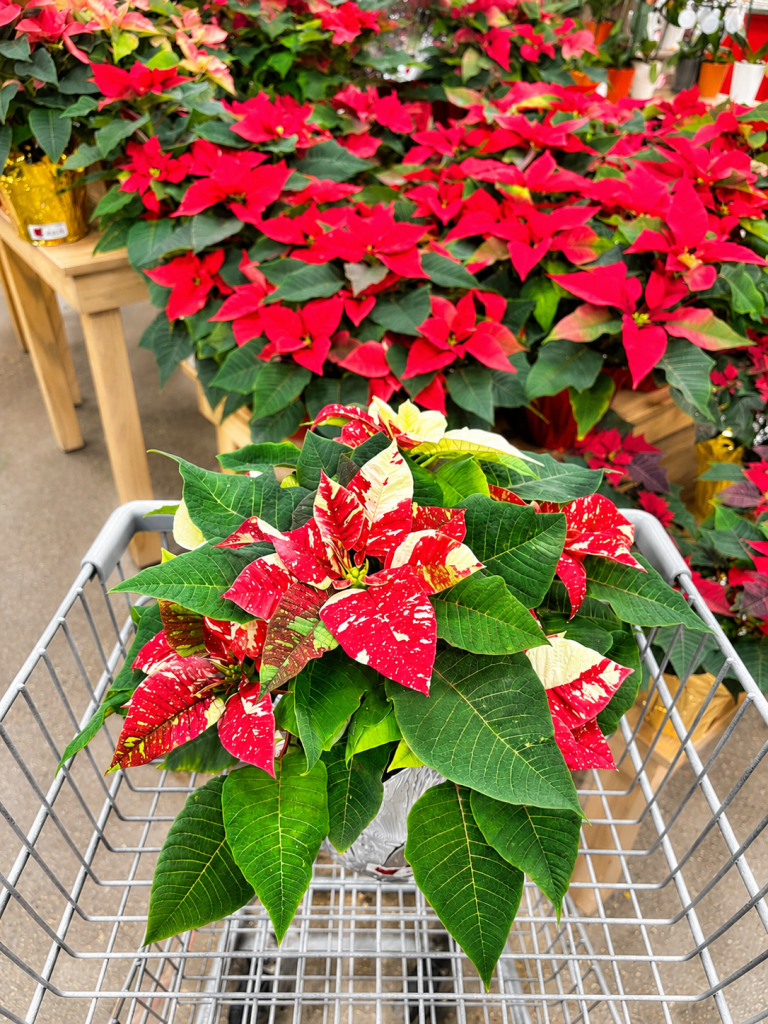
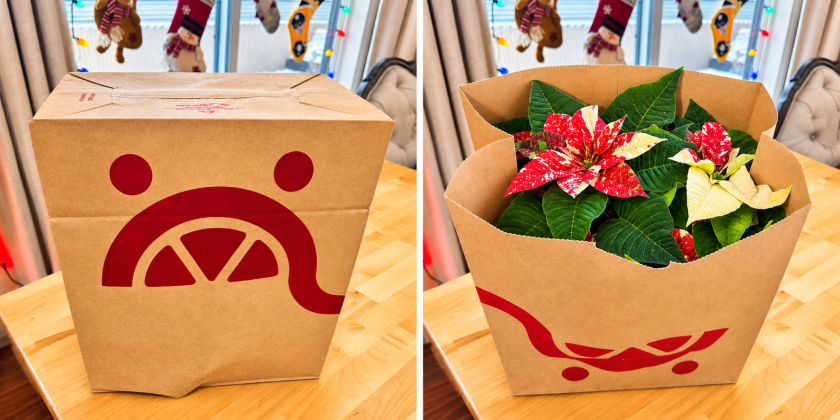
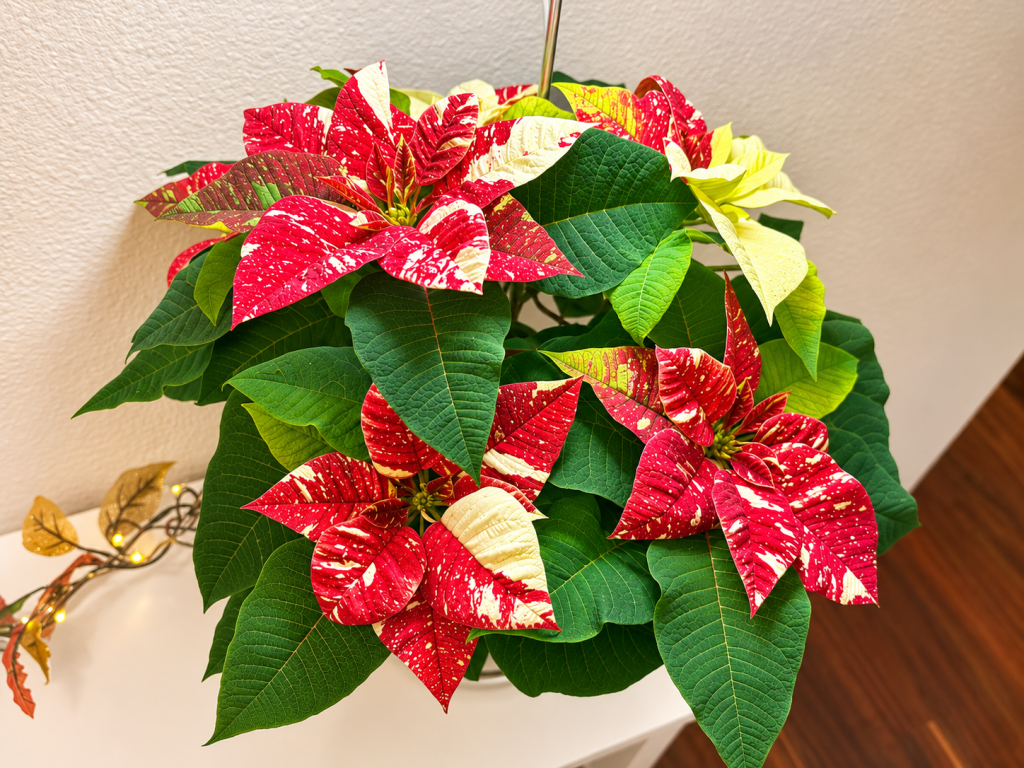
I brought a new poinsettia home this month: a red one splashed with cream, with a few all-cream branches that make it look like a candy cane. I stood in the store comparing two plants like I was picking out a puppy, and the store folded mine into a paper grocery bag for the trip home. It made it home just fine!
Here’s how to pick a healthy poinsettia, get it home when it’s below zero, and keep it looking pretty all through the holidays.
Picking a Healthy Poinsettia
A poinsettia that starts out healthy is much easier to keep happy. Before you put one in your cart, take a quick look:
- Full, dark green leaves all the way down the stems. Bare lower stems or yellow leaves mean it’s already stressed.
- Tight little centers. The colorful parts are actually leaves (called bracts). The real flowers are the tiny yellow-green buds in the middle. If they’re still tight and fresh, the plant will last longer.
- No bugs. Flip a few leaves over and check for tiny whiteflies.
- No droop. Skip plants that are wilting, sitting in soggy sleeves, or displayed by the store’s drafty front doors.
Speckled, marbled and two-tone poinsettias are bred that way, so cream splashes (or a whole cream branch, like mine has) are perfectly normal.
Getting It Home When It’s Below Zero
Poinsettias are tropical plants, and even a few minutes of cold can damage the leaves and colorful bracts. Extension experts recommend covering the plant any time you move it through air colder than 50°F. Up here, that’s basically October through April.
- Wrap it before you go outside. Ask for a plant sleeve, or have it bagged and folded shut at the top like mine was.
- Warm up the car first. Then go straight home. A poinsettia should never wait in a cold car while you run “just one more” errand.
- Unwrap it soon after you get home. A plant left sitting in its sleeve or bag can start to droop.
❄️ Northern Tip
On the really cold days (you know, the ones where your tires go square), double-bag your poinsettia or carry it in a cardboard box with the top folded closed. Bring it in the house before the groceries. The milk can wait. The poinsettia can’t.
Where to Put Your Poinsettia
Poinsettias like bright, indirect light, ideally at least six to eight hours a day. In a Fairbanks December, when the sun barely clears the trees, that’s a tall order. Put yours in your brightest spot, and if you already have a grow light, your poinsettia will happily share it. (Not sure where to start? Here’s how to choose a grow light for northern winters.)
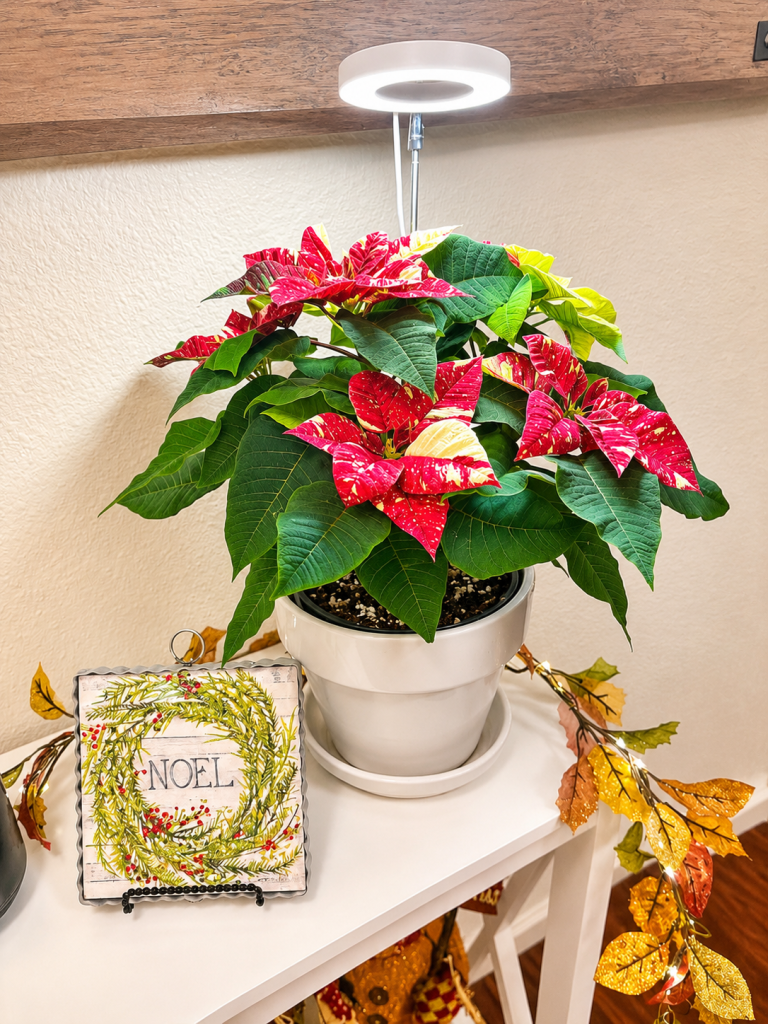
Mine sits on a console table away from the window, so it shares my halo grow light. I keep the ring a few inches above the top leaves, run it during the day, and give the pot a quarter turn every few days so every side gets its share.
Unlike a holiday cactus that’s still setting buds, a poinsettia that already has its color isn’t fussy about evening lamps, so the living room is fair game.
Temperature matters just as much as light. Poinsettias do best at about 60 to 70°F, and they shouldn’t drop below 55°F. Keep yours away from:
- Heat vents, woodstoves and space heaters
- Drafty doors (especially the one everyone stomps the snow off at)
- Cold window glass. At 30 below, the glass gets cold enough to damage any leaves that touch it.
Watering in Dry Winter Air
Most poinsettias come home wrapped in a pretty foil sleeve. It looks festive, but it also traps water, and soggy roots are one of the fastest ways to lose a poinsettia. Either poke a few holes in the bottom of the foil and set it on a saucer, or take the pot out of the sleeve to water it.
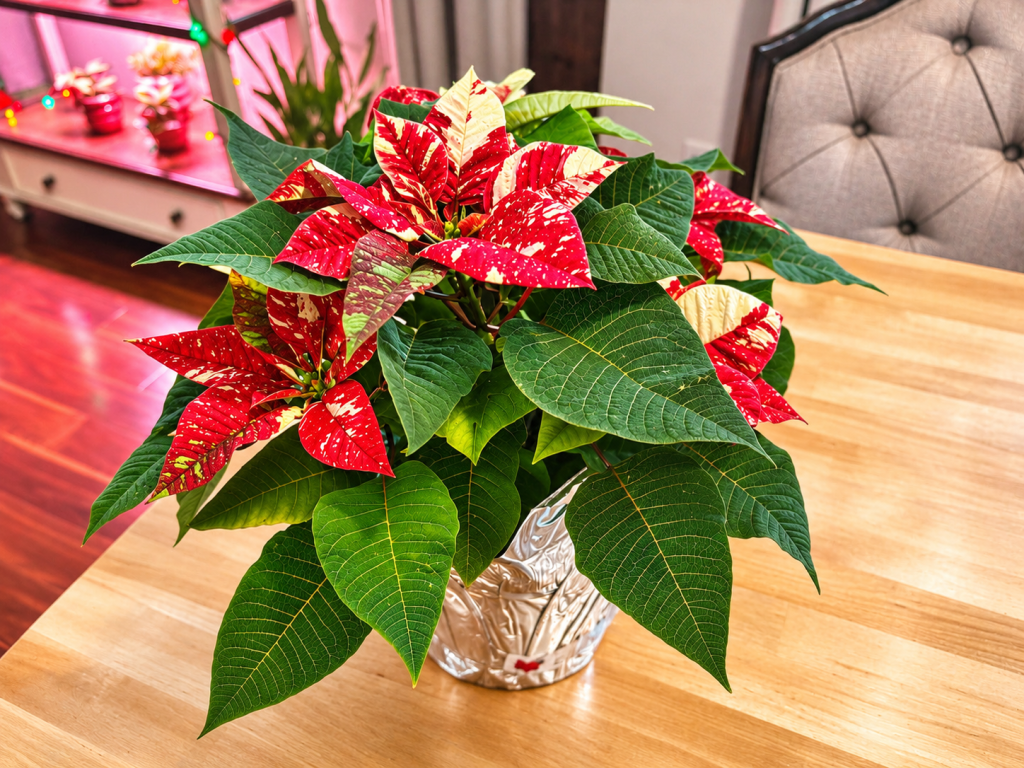
I took mine out of the foil and set the nursery pot inside a ceramic pot I already had. If you do the same, check the bottom of the outer pot after watering and pour out any water that collects there.
Water when the top of the soil feels dry, let the extra water drain away, and empty the saucer. Poinsettias don’t like to dry out completely, and they don’t like wet feet either. I use a soil moisture meter for all my houseplants, and it takes the guesswork out of it.
Our winter air is about as dry as it gets, too. Grouping your poinsettia with your other houseplants helps raise the humidity around all of them, and a humidifier helps even more (your skin will thank you, too).
Are Poinsettias Poisonous?
This one comes up every year, so here’s the good news: poinsettias are not the deadly plant their reputation says they are.
- For people: A University of Alaska Cooperative Extension agent puts it simply: poinsettias are not poisonous. Some people are sensitive to the milky sap, though, and can get a rash if it gets on their skin.
- For pets: The ASPCA lists poinsettias as mildly toxic to cats and dogs. The sap can irritate the mouth and stomach and sometimes cause vomiting, but the plant’s toxicity is generally overrated.
Even so, a poinsettia isn’t a snack. Keep it out of reach of curious pets and little ones, and call your vet if your pet eats some and seems unwell.
Why Is My Poinsettia Dropping Leaves?
- Leaves curling and dropping: Usually cold, a draft, warm dry air blowing from a heat vent, or soil that dried out too much. Check the spot first, then the soil.
- The whole plant wilting: It’s either too dry or too wet. If the soil is soggy, root rot may be starting, so let it dry out a bit and make sure the water can drain.
- Yellow lower leaves: Usually too much water or not enough light. A few yellow leaves at the bottom are nothing to panic over.
After Christmas: Keep It or Compost It?
With good care, a poinsettia stays pretty for weeks, and some varieties look good for months. When it starts looking tired, composting it is completely fine. No guilt allowed! Plenty of gardeners treat poinsettias like a long-lasting bouquet.
As for me, I’m going to try keeping mine. Wish me luck! I’ll report back and let you know how it goes.
If you’d like to keep yours going, treat it like a regular houseplant: keep it in your brightest spot, water when the top of the soil is dry, start feeding it about once a month once the holidays are over and it starts putting out new growth, and cut it back in spring so it grows bushy instead of leggy.
Getting It to Turn Red Again (the Fairbanks Part)
Poinsettias change color when the nights get long. To get yours to color up again for Christmas, it needs complete darkness from about 5 PM to 8 AM every night, starting around the end of September or early October and continuing until the bracts show good color, usually in early or mid-December. During the day, it goes back in a bright window.
You’d think Fairbanks would have this covered. We have no shortage of dark nights in October! The trouble is our lamps. Even a little light leaking in can stop the color from developing, so a closet or a cardboard box over the plant every evening is the way to go. (UAF plant science students actually grow poinsettias every fall to learn exactly this.)
There’s no guarantee it’ll look as full as it did from the greenhouse, but it’s a fun winter project if you’re up for the challenge.
A Little Bit of Mexico in a Fairbanks Window
Get it home warm, give it a bright spot away from drafts, and water when it’s dry. That’s really all a poinsettia asks for. In return, you get a splash of red (or red and cream!) through the darkest weeks of the year.
🌻 Northern Home & Garden
You May Also Like
If you’re keeping holiday plants happy through a northern winter, these guides might come in handy:
- How to Get Your Holiday Cactus to Bloom (And Keep It Blooming!)
If you’d love a holiday plant that’s easier to keep blooming year after year, a holiday cactus might be your new best friend! - How to Propagate a Christmas Cactus in Water (It’s So Easy!)
Turn one holiday cactus into a whole windowsill of new plants. - Grow Lights for Northern Winters: Keeping Houseplants Happy Through 4-Hour Days
A simple guide to giving your plants the light our winters don’t.
More Northern Tips, Straight to Your Inbox 🌻
Get practical gardening advice, seasonal ideas and new posts from Northern Home & Garden delivered to your inbox.

