An easy way to grow fresh herbs indoors—even when your outdoor garden is buried under snow.
When the outdoor garden season is short, growing a few herbs indoors is an easy way to keep something green going all year long. And you don’t need a fancy indoor garden system to do it.
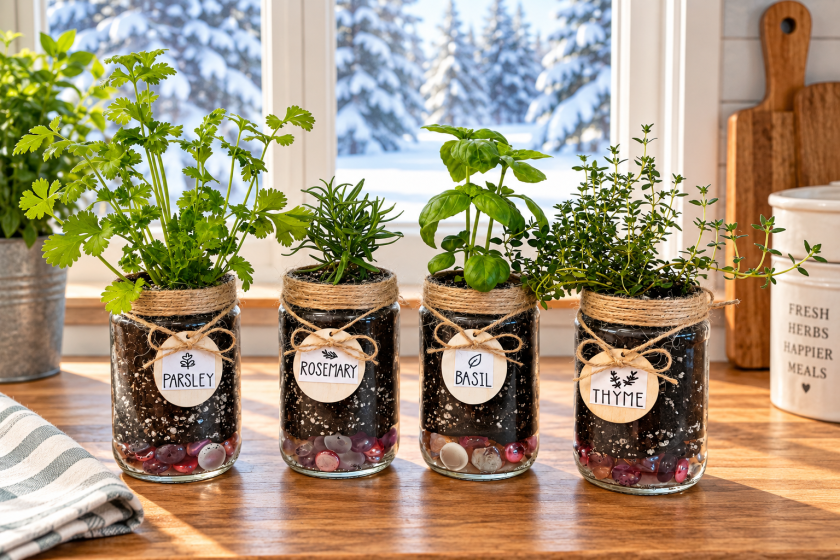
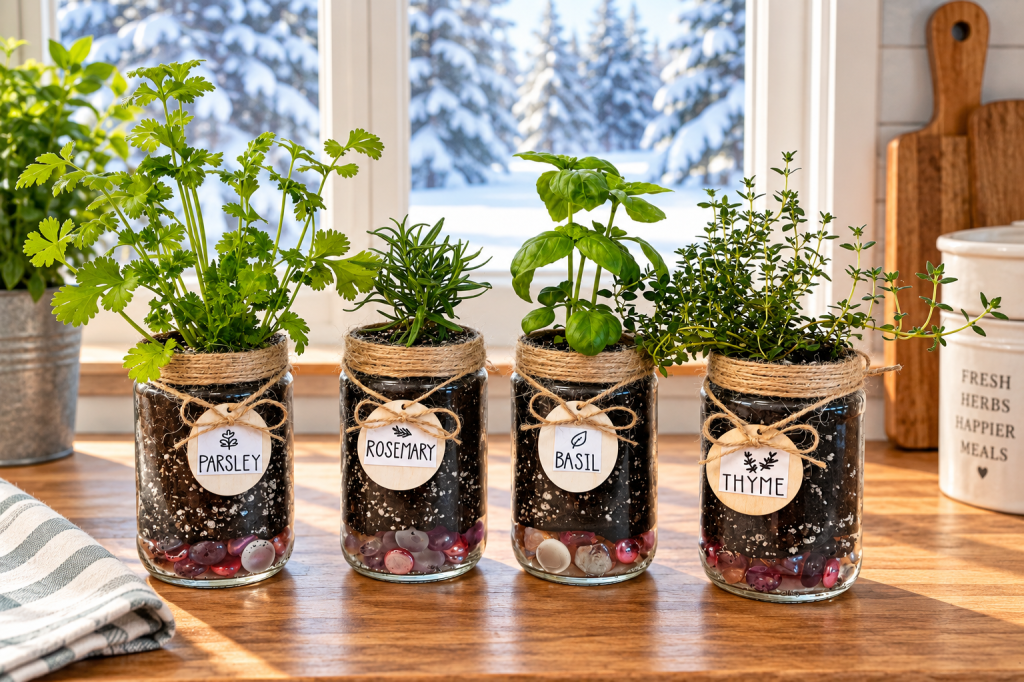
I grew this little herb garden using four mason jars, some potting soil, seeds, and a few simple supplies I already had around the house. I planted parsley, rosemary, basil, and thyme—and over the following weeks, those little jars turned into a surprisingly productive indoor herb garden.
Mason jars also make this project especially fun because they’re inexpensive, easy to find, and pretty enough to leave sitting out in the kitchen. Add a simple label and a little twine, and suddenly your windowsill garden looks intentional instead of like you ran out of flowerpots. 😂
There is one catch: mason jars don’t have drainage holes. That means watering them requires a little more attention than watering herbs in traditional pots. But with the right setup and careful watering, they can work beautifully for a small indoor herb garden.
Here’s how I did mine—and what I’d recommend if you’d like to grow one of your own.
Affiliate Disclosure: This post contains affiliate links. As an Amazon Associate, Northern Home & Garden earns from qualifying purchases at no additional cost to you.
What You’ll Need
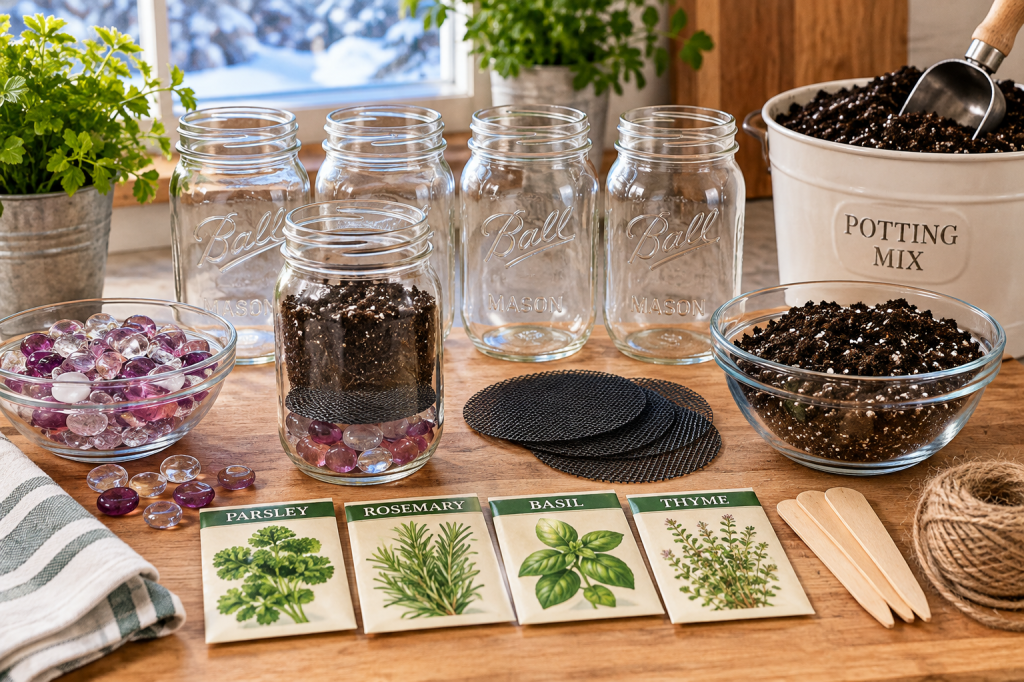
One of the best things about this project is that you don’t need much to get started. Most of the supplies are inexpensive, and you may already have several of them around the house.
- Wide-mouth mason jars
- Small rocks, pebbles, or decorative glass stones
- Good-quality indoor potting mix
- Herb seeds or small starter plants
- Plant labels
- Planter drainage mesh
- Twine or ribbon, if you’d like to dress up the jars
- A small watering can or cup for careful watering
- A bright windowsill or grow light
I used parsley, rosemary, basil, and thyme for my mason jar garden. You certainly don’t have to grow the same combination—choose herbs you’ll actually use in the kitchen and that fit the light you have available.
❄️ Northern Tip
Don’t underestimate indoor light during a northern winter. A windowsill that seems bright to us may not provide enough light for herbs once the days get short. If your plants start stretching, leaning toward the window, or looking weak and pale, a small grow light can make a huge difference.
Start With a Drainage Layer
Because mason jars don’t have drainage holes, I started each jar with a layer of decorative glass stones at the bottom. Then I placed a small piece of planter drainage mesh over the stones before adding the potting mix.
The mesh helps keep the soil from falling down between the stones, which keeps the layers separated and makes the clear jars look much neater.
It’s important to remember that the stones and mesh don’t create true drainage—the jar still has no place for excess water to escape. The key is careful watering. Add only as much water as the soil needs and avoid allowing water to continually collect at the bottom.
One advantage of using clear mason jars is that you can actually see what’s happening below the soil. If you notice water sitting in the bottom for a long time, that’s a good sign to cut back on watering.
❄️ Northern Tip
Clear jars give you a built-in moisture check. Take a quick look at the bottom before watering. If you can still see moisture or standing water below the soil, give your herbs a little more time before adding more.
Plant Your Herbs
Once the drainage layer, mesh, and potting mix are in place, it’s time to plant your herbs.
Fill each jar with potting mix, leaving a little room at the top so water doesn’t spill over the sides. Lightly moisten the soil before planting, then sow your seeds according to the depth recommended on the seed packet. Most herb seeds are fairly small and don’t need to be buried very deeply.
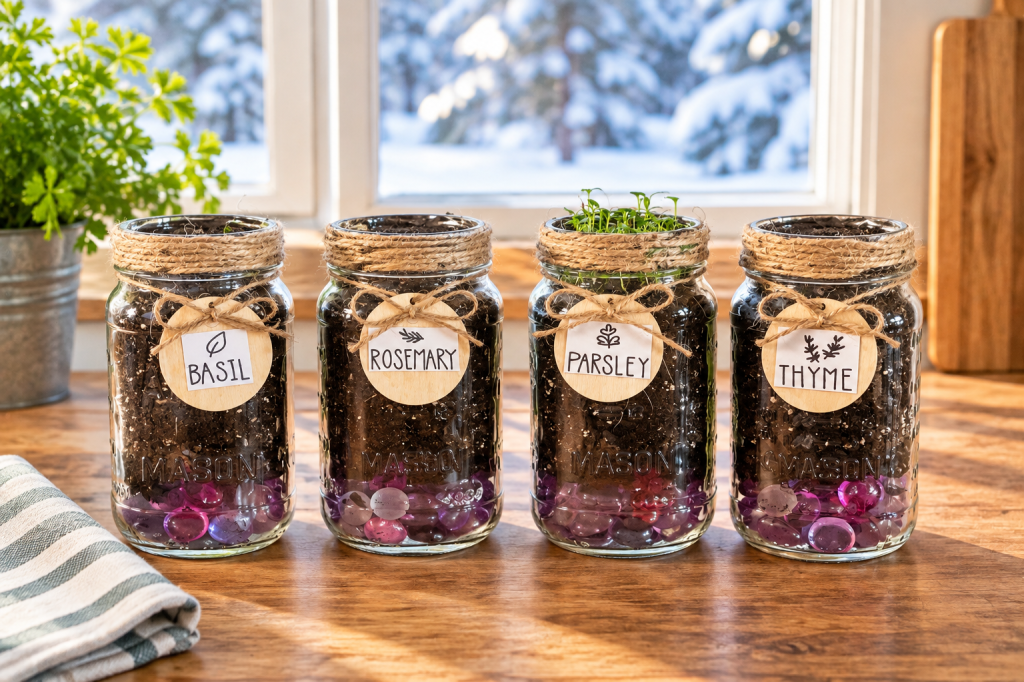
I planted parsley, rosemary, basil, and thyme in separate jars. Keeping each herb in its own jar makes it easier to adjust watering and care as the plants grow—and, of course, cute labels make it much easier to remember what’s what before anything sprouts. 😂
Place the jars somewhere warm and bright while you wait for germination. Keep the soil lightly moist, but resist the temptation to keep adding water just because the surface looks a little dry.
❄️ Northern Tip
Patience counts as gardening. Different herbs germinate at very different speeds. Basil may pop up quickly while parsley and especially rosemary can take their sweet time. Don’t assume an empty-looking jar is a failed jar and start digging around looking for signs of life. 🌱
Give Your Herbs Plenty of Light
Once your herbs begin to sprout, good light becomes one of the most important parts of keeping them healthy.
Place your mason jar garden near the brightest window you have. Most herbs prefer several hours of strong light each day, and you’ll probably notice the seedlings beginning to lean toward the window if they aren’t getting enough.
During the darker months, natural window light may not be enough—especially in northern climates where winter days can be very short. A small grow light placed above the jars can help keep seedlings compact and encourage stronger, healthier growth.
Rotate the jars every few days so the plants don’t continually grow toward one side. As they get larger, you may also need to adjust their spacing, so one enthusiastic herb isn’t shading out its slower-growing neighbor.
❄️ Northern Tip
Watch the plants, not just the calendar. Long, thin stems, pale leaves, or plants noticeably stretching toward the window are all signs that your herbs may need more light.
Water Carefully — Mason Jars Don’t Forgive Overwatering
Watering is a little different when you’re growing herbs in mason jars because excess water has nowhere to escape. Unlike a traditional flowerpot, there’s no drainage hole at the bottom to save you if you get a little too enthusiastic with the watering can.
Check the soil before adding water rather than watering on a set schedule. If the top of the soil still feels damp, give it another day or two. When the soil begins to dry, add a small amount of water and give it time to soak in before deciding whether the plant needs more.
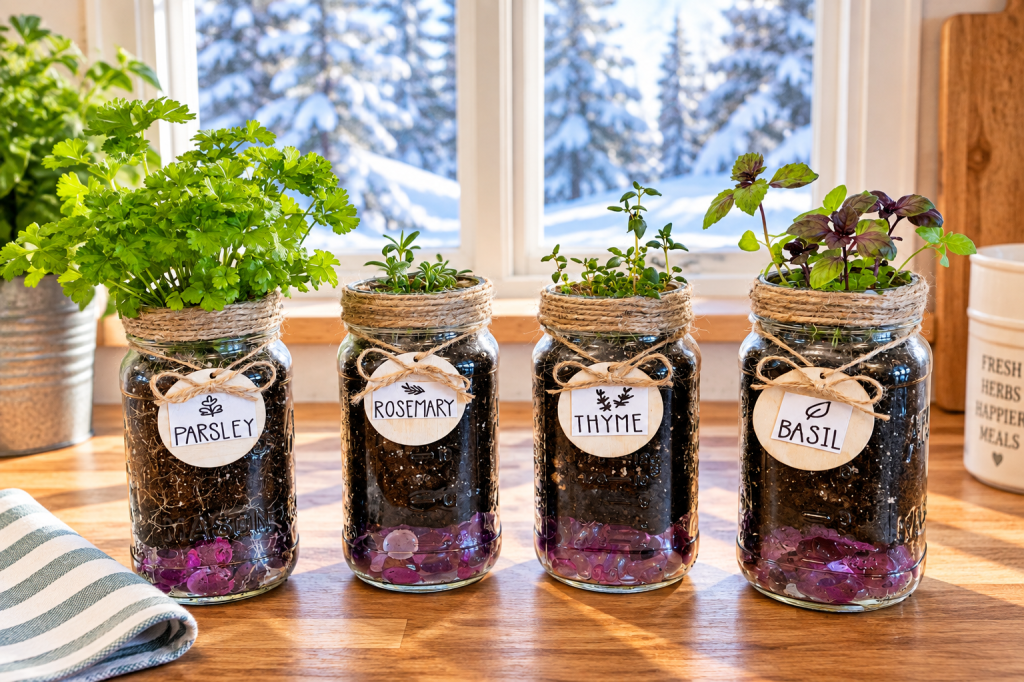
This is where clear mason jars are surprisingly helpful. You can see moisture along the sides of the jar and keep an eye on the layer of stones at the bottom. If water begins collecting there, hold off on watering until the soil has had time to use some of that moisture.
Different herbs may also dry out at different rates as they grow, so don’t assume all four jars need water just because one of them does.
❄️ Northern Tip
When in doubt, wait. It’s much easier to add a little more water tomorrow than it is to rescue herb roots that have been sitting in soggy soil all week.
Harvest Your Herbs Regularly
Once your herbs are established and putting on plenty of healthy growth, don’t be afraid to use them! Regular harvesting can actually help many herbs grow fuller and bushier instead of becoming tall and leggy.
For basil, pinch or snip stems just above a set of leaves rather than removing individual leaves here and there. Thyme can be harvested by snipping small sprigs as needed, while parsley is best harvested by cutting the larger outer stems near the base of the plant.
Rosemary grows more slowly, especially indoors, so I like to be a little more conservative with it. Snip small amounts from established growth and give the plant plenty of time to recover between larger harvests.
Try not to remove too much of any plant at once. Your little mason jar garden still needs plenty of leaves left behind to keep growing.
And honestly, there’s something pretty satisfying about walking over to the kitchen window and snipping fresh herbs for dinner when everything outside is covered in snow.
❄️ Northern Tip
Harvest from the healthiest growth first. Frequent small harvests are usually better than giving your herbs one giant haircut. You’ll get fresh herbs for the kitchen while keeping enough foliage on the plants to continue growing.
How Long Can Herbs Grow in Mason Jars?
Mason jars are wonderful for starting and growing a small indoor herb garden, but they aren’t necessarily a forever home.
As the plants mature, their roots will eventually fill more of the available space. You may notice growth slowing down, the soil drying much faster than it used to, or roots becoming crowded against the glass.
At that point, you can simply move the herb into a larger container with drainage holes and let it keep growing.
That’s one of my favorite things about this project: the mason jars don’t have to be the final destination. They can be an attractive way to start an indoor herb garden, enjoy it on the windowsill, and then move individual plants into larger pots when they’re ready.
A Little Greenery for the Long Winter
Growing herbs indoors is one of those simple projects that gives you a surprising amount of enjoyment for very little effort. A few mason jars, some seeds, and a sunny spot can turn into fresh herbs for the kitchen—and something green to tend when the outdoor garden is taking its long winter nap.
I loved watching these jars change from freshly planted soil to tiny sprouts and eventually into full little herb plants. Parsley, rosemary, basil, and thyme all grew at their own pace, which was a good reminder that plants rarely care about our schedules. 😂
If you’re trying this project during the darker months, don’t worry if your herbs need a little extra help from a grow light or if one variety takes much longer than the others. Give them good light, water carefully, and let them do their thing.
And when spring finally returns, you may have herbs ready to move into larger pots—or even outside once the weather allows.
Until then, having a little garden growing on the windowsill makes winter feel just a bit shorter.
❄️ One Last Northern Tip
Grow what you’ll actually use. It’s tempting to plant every herb on the seed rack, but four jars of herbs you regularly cook with are far more useful than a windowsill full of plants you never harvest. Start small, see what grows well in your home, and add more from there.

