With a little pruning, patience, and plenty of light, an ordinary coleus can be trained into a colorful little tree—and it’s easier than you might think.
Coleus is one of those plants that can surprise you.
Most of us think of coleus as a colorful, bushy plant tucked into containers or garden beds for the summer. But with a little patience and some strategic pruning, you can train a coleus into an entirely different shape—a miniature tree with a tall trunk and a full canopy of colorful leaves.
That’s exactly what I did with mine.
I started with small young coleus plants and gradually trained them upward, removing lower growth and encouraging branching at the top. Eventually, those little plants turned into beautiful, full coleus trees that became some of my favorite indoor plants.
And because coleus is so easy to propagate, you don’t necessarily need to buy a large plant to get started. A small plant—or even a cutting—is enough.
Here’s how I grew mine.
Affiliate Disclosure: This post contains affiliate links. As an Amazon Associate, Northern Home & Garden earns from qualifying purchases at no additional cost to you.
What Is a Coleus Tree?
A coleus tree isn’t a special variety of coleus.
It’s simply a coleus plant that has been trained into a standard or tree form rather than allowed to grow naturally as a bush.
Instead of encouraging branching all along the stems, you select one or two strong main stems and allow them to grow taller while gradually removing lower growth. Once the plant reaches the height you want, you begin pinching and pruning the upper growth to encourage a full, rounded canopy.
Eventually, you end up with something that looks surprisingly like a miniature tree—except the “leaves” can be bright pink, burgundy, green, purple, or just about every combination in between.
❄️ Northern Tip:
Coleus grows quickly under good conditions, which makes it a fun plant for experimenting. If your first attempt isn’t perfectly tree-shaped, don’t panic. Plants are wonderfully forgiving—and coleus gives you plenty of new growth to work with.
Start With a Healthy Coleus Plant or Cutting
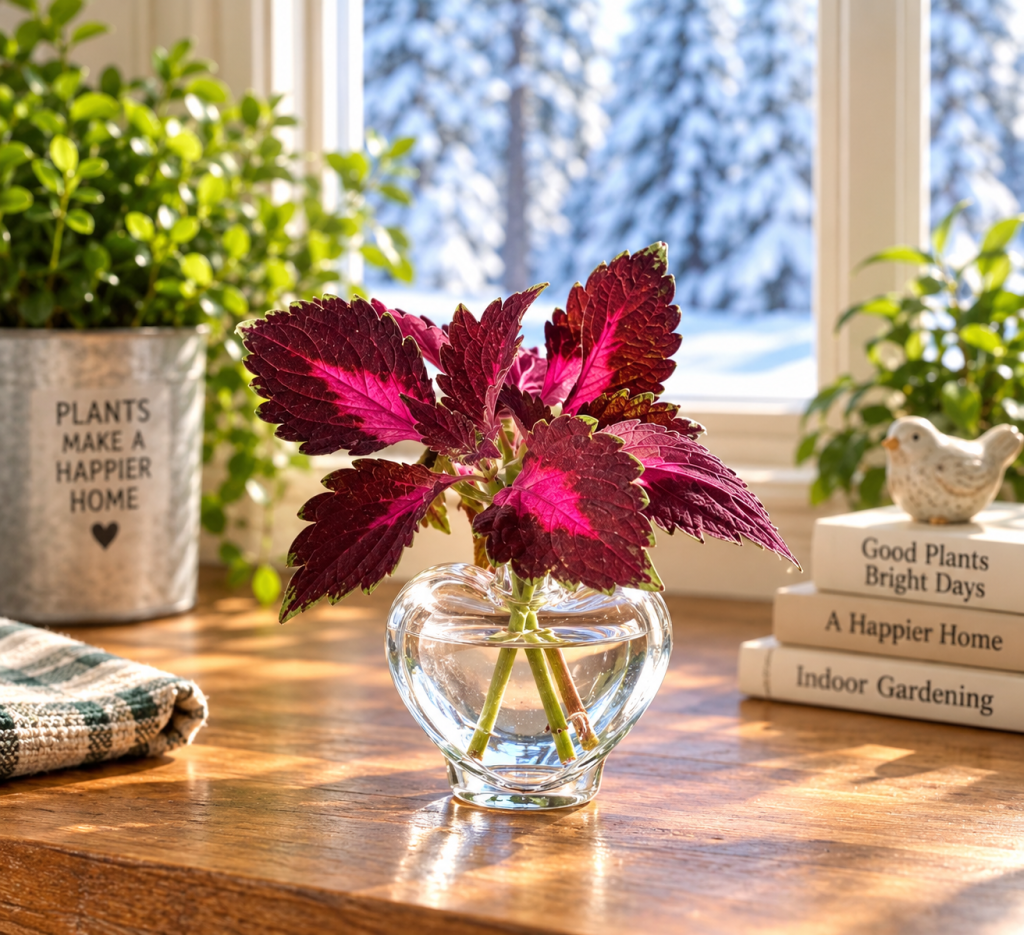
You don’t need a large plant to start a coleus tree.
A healthy young plant works beautifully, but you can also begin with a cutting from an established coleus.
If you’re propagating your own, take a healthy stem cutting just below a leaf node and remove the leaves from the lower portion of the stem. Place the cutting in water until it develops a good set of roots, then transplant it into potting soil.
Once your young plant is established and actively growing, you can begin training it.
The important thing at this stage isn’t having a perfect plant. It’s starting with one or two healthy plants with strong, fairly straight stems that can eventually form your little tree trunk.
Choose Your Main Stems
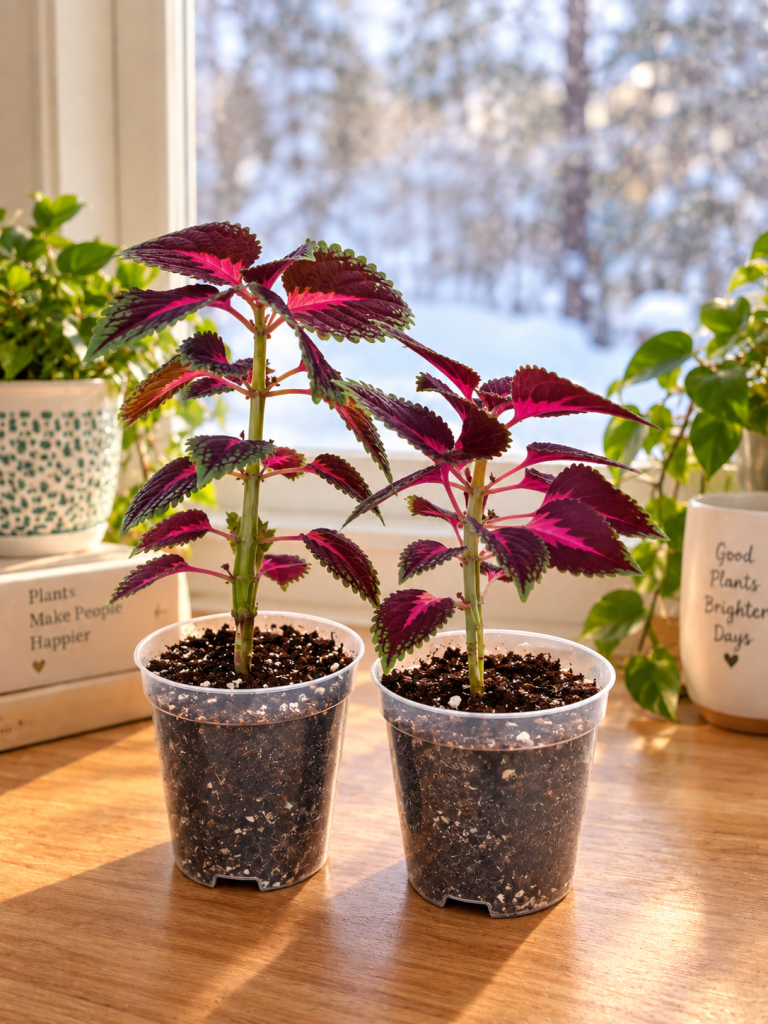
For my coleus trees, I actually started with two young coleus plants growing together in the same pot rather than using a single stem.
As the plants grew, I gently wrapped the two stems around one another to create the trunk. I continued guiding them together as they grew taller, while gradually removing the lower side growth.
Over time, the two stems created a thicker, more interesting-looking trunk and supported the leafy canopy above.
Don’t worry if the stems look ridiculously skinny at first.
Mine certainly did. 😂
You don’t have to use two plants—a single strong coleus stem can also be trained into a tree—but I really liked the look I got from growing two together.
❄️ Northern Tip:
If your young coleus leans, use a thin clear plant support stake beside the stem. I like clear acrylic stakes because they provide support without being very noticeable once the plant fills in.
Let It Grow Up Before You Let It Grow Out
This is probably the hardest part—especially if you’re someone who wants to start shaping everything immediately.
For a coleus tree, we want height first and bushiness later.
Allow the main stem to continue growing upward. As new side shoots develop along the lower portion of the stem, gently remove them.
You can also remove lower leaves gradually as the plant gets taller.
Don’t strip the entire stem bare all at once. Those leaves are still helping the young plant produce energy. Instead, gradually remove lower growth as the plant becomes established and continues upward.
Over time, you’ll begin seeing that little trunk appear.
And yes, there may be an awkward phase.
Actually, there will almost certainly be an awkward phase. 😂
That skinny stem with a handful of leaves at the top doesn’t look particularly impressive—but don’t give up on it.
That’s the beginning of your tree.
Decide How Tall You Want Your Coleus Tree
Once your coleus reaches approximately the height you want, it’s time to change strategies.
Instead of encouraging upward growth, we’re now going to encourage branching at the top.
The final height is entirely up to you. A smaller tabletop tree can be kept fairly compact, while a larger coleus can become an impressive floor or plant-stand specimen.
Keep in mind that the canopy will add additional height once it begins filling out.
When you’re happy with the height of the main stems, pinch or prune the growing tips.
It may feel wrong to cut the growing tips after you’ve spent all this time encouraging the stems to grow taller.
Do it anyway. 😂
That single snip tells the coleus to stop concentrating all its energy on one growing tip and begin producing branches below it.
And that’s when the fun really starts.
Remove the Lower Leaves and Side Shoots
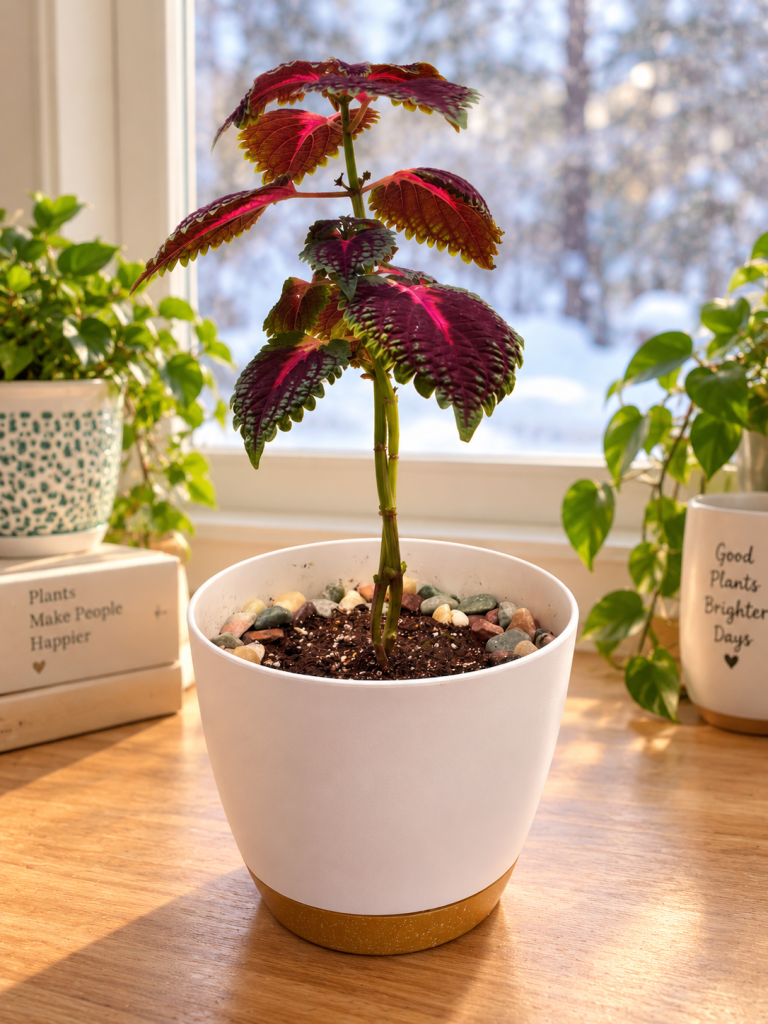
Once my two coleus stems had gained some height, I gradually began removing the leaves and small side shoots growing along the lower portion of the stems.
This is what starts turning an ordinary bushy coleus into something that actually resembles a little tree.
I didn’t strip the stems bare all at once. Instead, I removed the lower growth gradually as the plants continued growing taller. I wanted the plants to keep plenty of healthy leaves at the top while I slowly created a clean trunk underneath.
Because I grew two coleus plants together, I continued gently wrapping the stems around one another as they grew and removed the lower growth from both stems.
Eventually, the goal was pretty simple:
- a clean, exposed trunk
- plenty of leafy growth at the top
- very little growth along the lower stems
❄️ Northern Tip:
Don’t get too aggressive with the scissors! Your coleus still needs those leaves to produce energy while it’s growing. Think of this as a gradual haircut—not a buzz cut. 😂
Pinch and Prune to Build the Canopy
Once the upper branches begin growing, your goal changes from creating height to creating fullness.
Allow several branches to develop near the top of the plant.
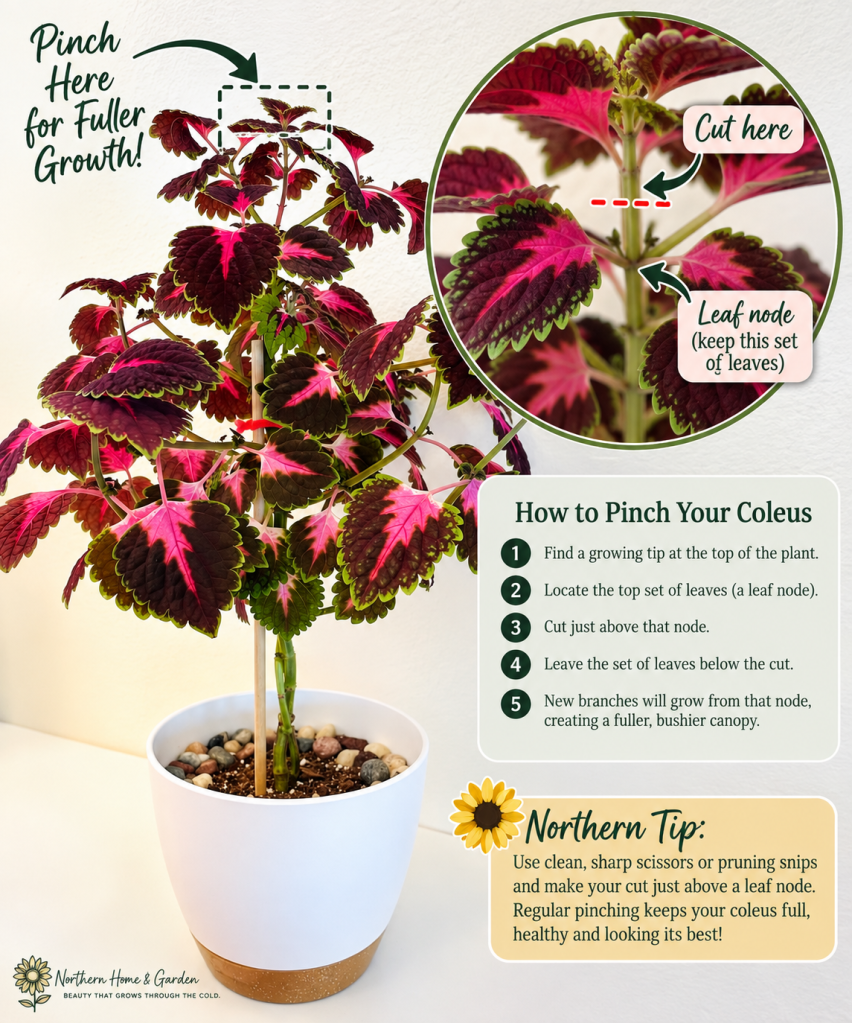
As those branches grow, pinch their tips as well. Use clean, sharp pruning snips to make your cuts just above a leaf node.
Each time you pinch a growing tip, the plant can respond by producing additional branching below the cut. Repeating this process gradually creates the dense, rounded canopy that makes a coleus tree so pretty.
Rotate the plant regularly so all sides receive good light.
Otherwise, your beautiful little tree may decide that the window is its one true love and lean dramatically in that direction. 😂
Don’t worry about achieving a perfectly round canopy immediately. Shape it gradually.
You’re growing a plant—not trimming a hedge.
Give Your Coleus Plenty of Light
Light makes an enormous difference in how a coleus grows.
Indoors, place your plant near a bright window where it receives plenty of indirect light. Depending on the variety and your conditions, some gentle direct sun may be fine, but watch the leaves for signs of stress.
During our long northern winters, natural window light isn’t always enough.
I grew mine under grow lights, which helped keep the plants actively growing when outdoor daylight was limited.
Adequate light also helps keep the growth more compact. A coleus that isn’t getting enough light may develop long spaces between leaves, weaker stems, or begin stretching toward the light.
If your coleus starts looking like it’s desperately trying to escape toward the nearest window, that’s usually a pretty good clue. 😂
Water Without Keeping the Soil Soggy
Coleus generally prefers consistently moist soil, but that doesn’t mean constantly wet soil.
Use a pot with drainage holes and water thoroughly when the upper portion of the soil begins to dry.
Then allow the excess water to drain away.
A badly wilted coleus can look incredibly dramatic—and sometimes recover surprisingly quickly after watering—but repeatedly allowing the plant to wilt puts unnecessary stress on it.
On the other hand, constantly saturated soil can cause root problems.
The goal is somewhere in the boring-but-effective middle: even moisture with good drainage.
Keep Removing Growth From the Trunk
Even after you’ve established your tree shape, your coleus may occasionally try to grow new shoots farther down the trunk.
Apparently it did not receive the memo about your landscaping plans. 😂
Simply pinch those shoots off when you notice them.
At the same time, continue trimming the canopy periodically to keep it full and balanced.
This ongoing maintenance is what keeps your coleus looking like a tree instead of slowly turning back into a giant bush.
Can You Keep a Coleus Tree Indoors Through Winter?
Absolutely.
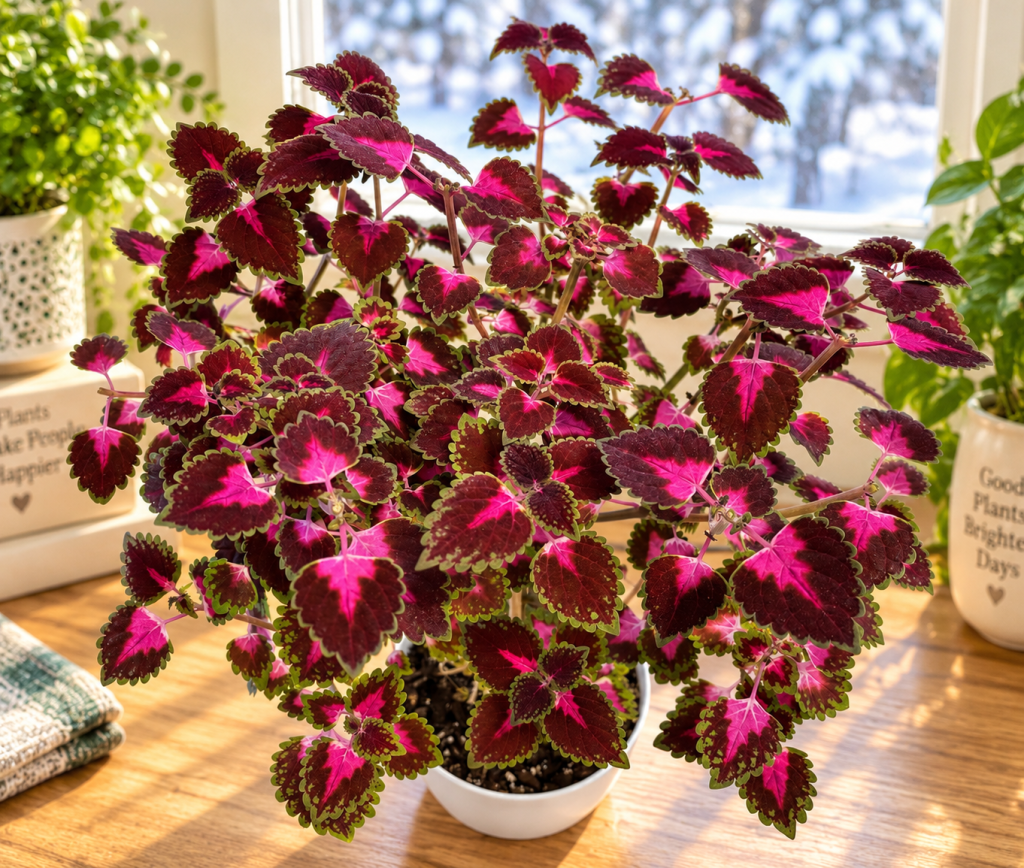
Coleus is typically grown as an annual outdoors in cold climates because it cannot tolerate frost, but indoors it can continue growing as a houseplant.
Bring outdoor plants inside before frost, check carefully for pests, and give them the brightest indoor location you can.
For northern gardeners, a grow light can make overwintering much easier.
Growth may slow during winter, and that’s perfectly normal. Continue monitoring water carefully and avoid overwatering simply because you’re following the same schedule you used during summer.
When brighter days return, your coleus will usually begin growing more vigorously again.
And if the original plant becomes too large or woody over time, you have another option:
Take a cutting and start over.
That’s one of my favorite things about coleus. One plant can keep giving you future plants almost indefinitely.
From a Little Plant to a Coleus Tree
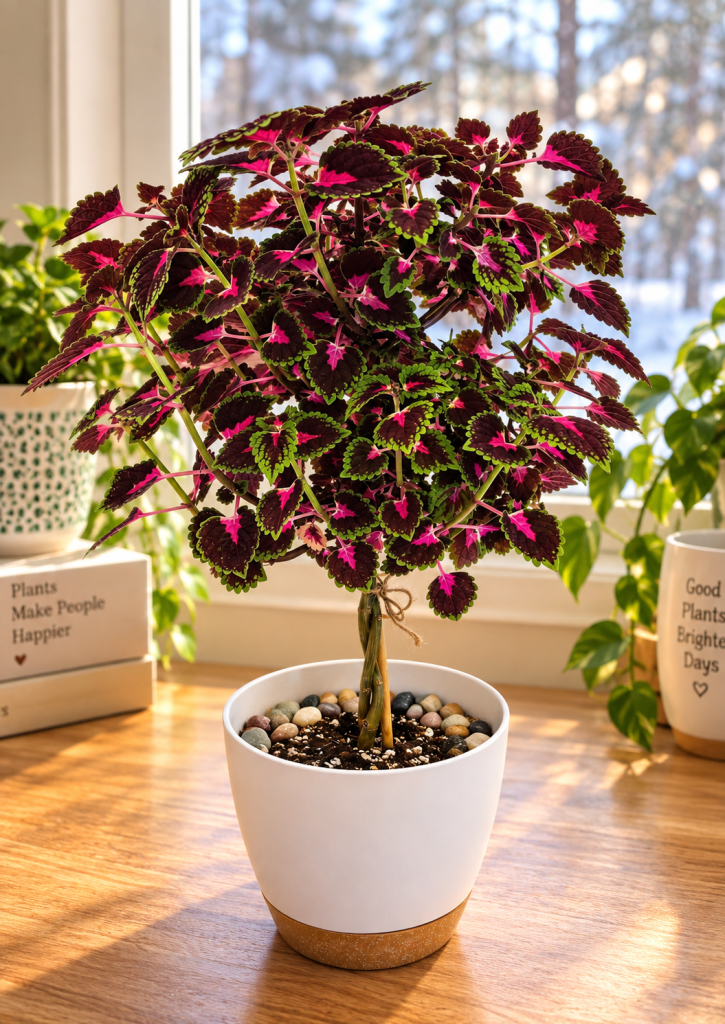
Watching this plant change was half the fun.
It went from a small coleus in a nursery pot, through a rather awkward tall-and-skinny stage, and eventually became a full, colorful little tree.
The process didn’t require anything complicated.
Mostly, it required knowing which growth to remove, which growth to encourage, and when to leave the plant alone and let it grow.
If you already have a coleus growing at home, this is a fun project to try—especially during the colder months when outdoor gardening is on hold.
Start with one or two healthy stems.
Let them grow tall.
Build the canopy.
And don’t be afraid of the scissors.
You might be surprised by what that little coleus turns into. 🌿
❄️ Northern Tip:
Take pictures along the way. The awkward middle stages don’t seem particularly exciting while they’re happening, but when you compare that tiny plant to the finished tree later, you’ll be glad you documented it.
Northern Home & Garden
Beauty That Grows Through the Cold

