A simple step-by-step guide to separating snake plant babies and turning one houseplant into several.
Snake plants are already pretty generous houseplants. Give them a decent spot, don’t drown them, and they’ll usually carry on without demanding much attention.
Then one day, you look down into the pot and realize…
You have babies. 🌿
Affiliate Disclosure: This post contains affiliate links. As an Amazon Associate, Northern Home & Garden earns from qualifying purchases at no additional cost to you.
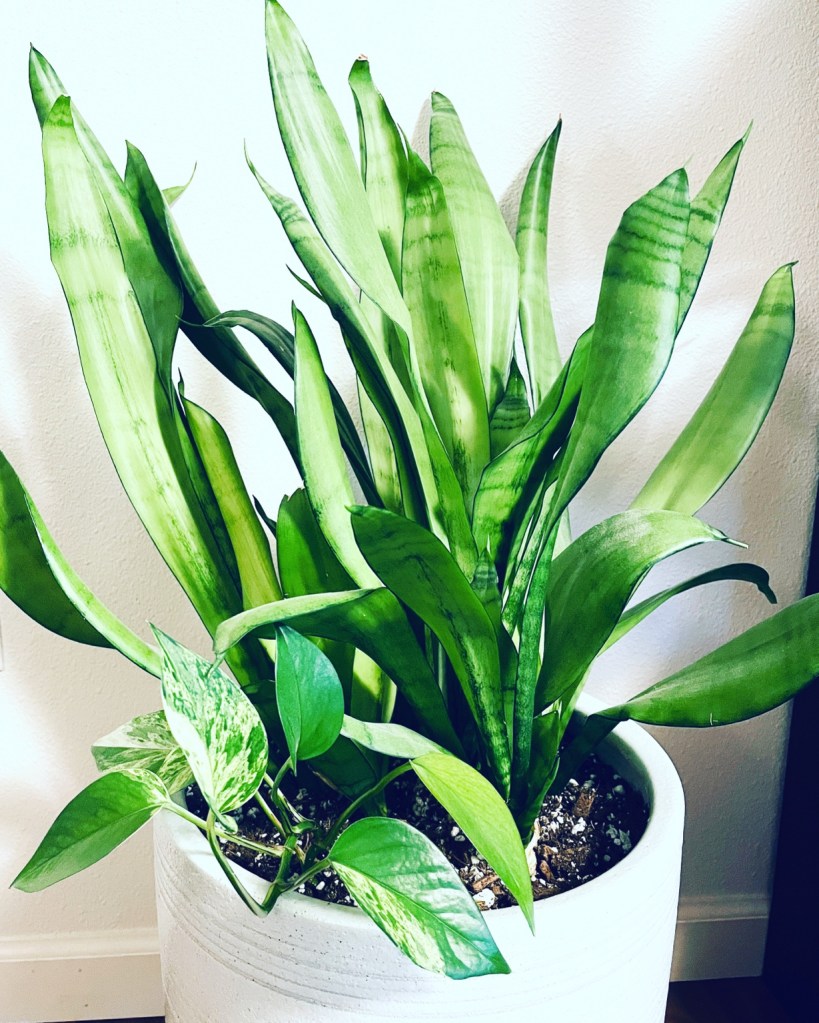
Those little shoots popping up beside the parent plant are commonly called pups, and once they’re established enough, they can be separated from the mother plant and grown on their own.
Which means one plant can eventually become two.
Then three.
Then suddenly you’re looking around the house wondering where exactly you’re supposed to put all these snake plants. 😂
I’ve divided snake plant pups from my own plants, and once you see what’s happening underneath the soil, the process makes a lot more sense. The pups aren’t just random little leaves—they’re connected to the parent plant underground.
Here’s how to separate them without making the whole thing more complicated than it needs to be.
What Is a Snake Plant Pup?
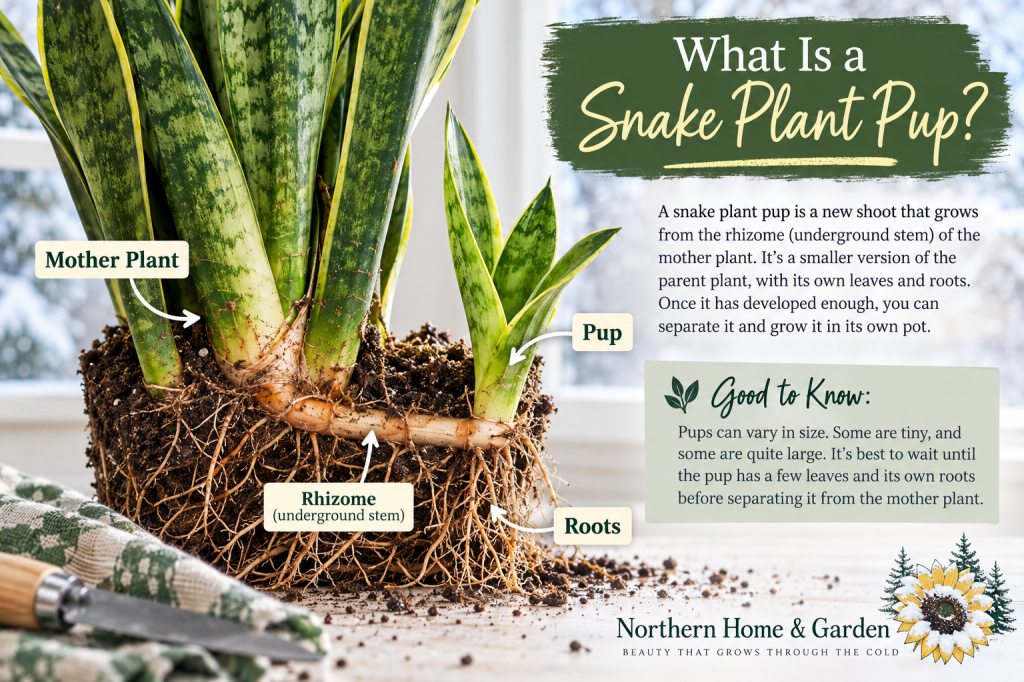
Snake plants spread underground through thick stems called rhizomes. As the plant grows, those rhizomes can produce new shoots that eventually emerge from the soil beside the original plant.
Those new shoots are the pups.
At first, they may look like tiny pointed leaves tucked against the parent plant. As they grow, they’ll develop their own leaves and roots while remaining connected to the mother plant through the rhizome.
And that’s exactly what makes division possible.
❄️ Northern Tip
Don’t be in too much of a hurry to separate a brand-new pup. Giving it some time to develop its own roots makes the transition to its own pot much easier.
When Is a Snake Plant Pup Ready to Separate?
There’s no magical height at which every pup has to be removed.
In fact, you don’t have to separate them at all. Leaving the pups attached will eventually give you a fuller, thicker snake plant.
But if you’d like another plant—or the original pot is getting crowded—you can divide a pup once it has developed a few leaves and ideally has some roots of its own.
A pup with an established root system has a head start when you move it into a new pot.
And if you pull yours out and discover roots like the ones on mine?
Congratulations. That little guy is ready for its own apartment. 😂
What You’ll Need
This is a wonderfully short supply list:
- A small pot with a drainage hole
- Well-draining potting mix
- A clean, sharp knife or pruning shears
- Gloves if you prefer them
- Your snake plant and its unsuspecting baby 😂
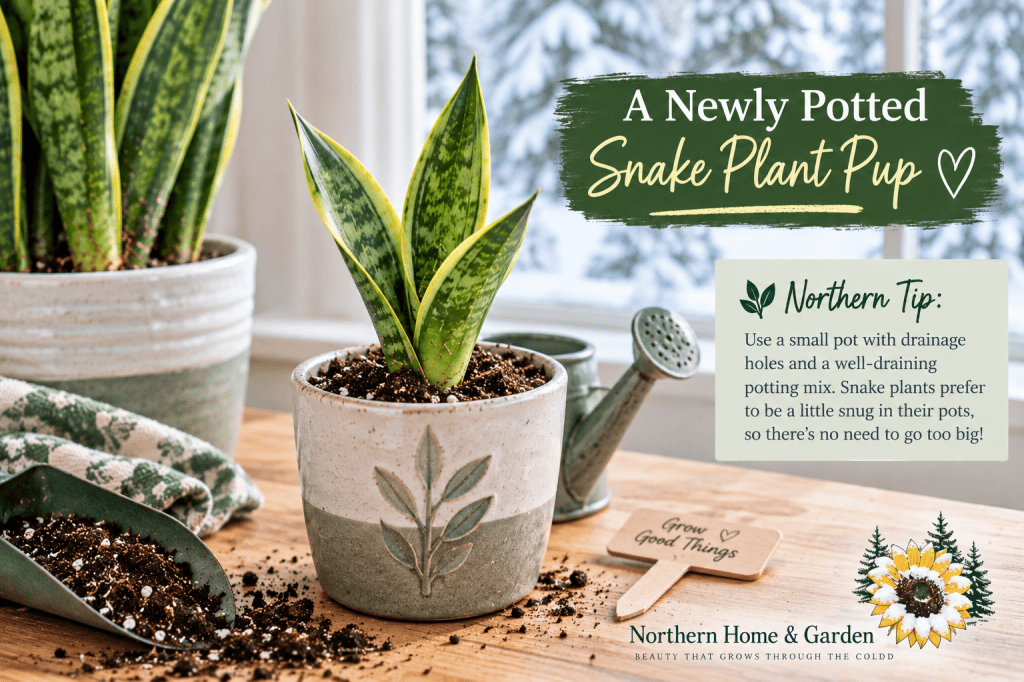
Choose a pot that’s only slightly larger than the pup’s root system. A 4-inch pot with drainage is usually plenty for a newly divided pup. A huge pot holds more wet soil than a small plant needs, which can increase the chance of root problems.
❄️ Northern Tip
Repotting snake plants can get a little messy once you start working soil away from the roots. I use a waterproof repotting mat to catch the mess—it makes cleanup much easier, especially when I’m working with plants indoors.
Step 1: Remove the Snake Plant From Its Pot
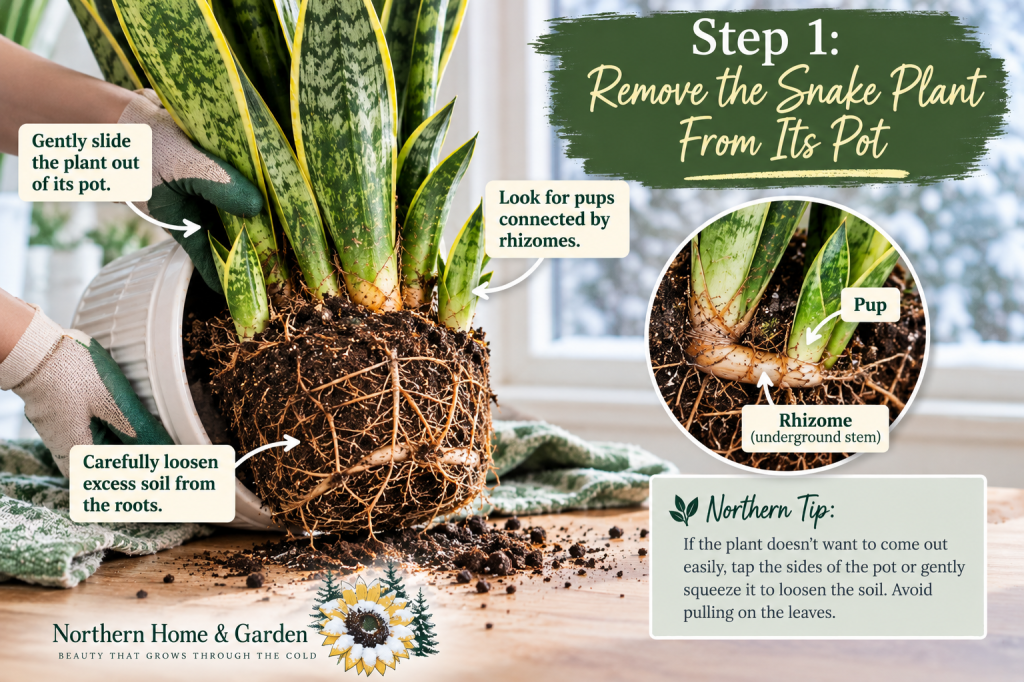
Gently slide the plant from its container so you can see what’s happening below the soil.
If the plant doesn’t want to come out, avoid yanking on the leaves. Loosen the soil around the edge of the pot and work the root ball out gradually.
Snake plants can develop surprisingly substantial root systems, especially when they’ve been happily living in the same pot for a while.
Step 2: Find Where the Pup Connects to the Parent Plant
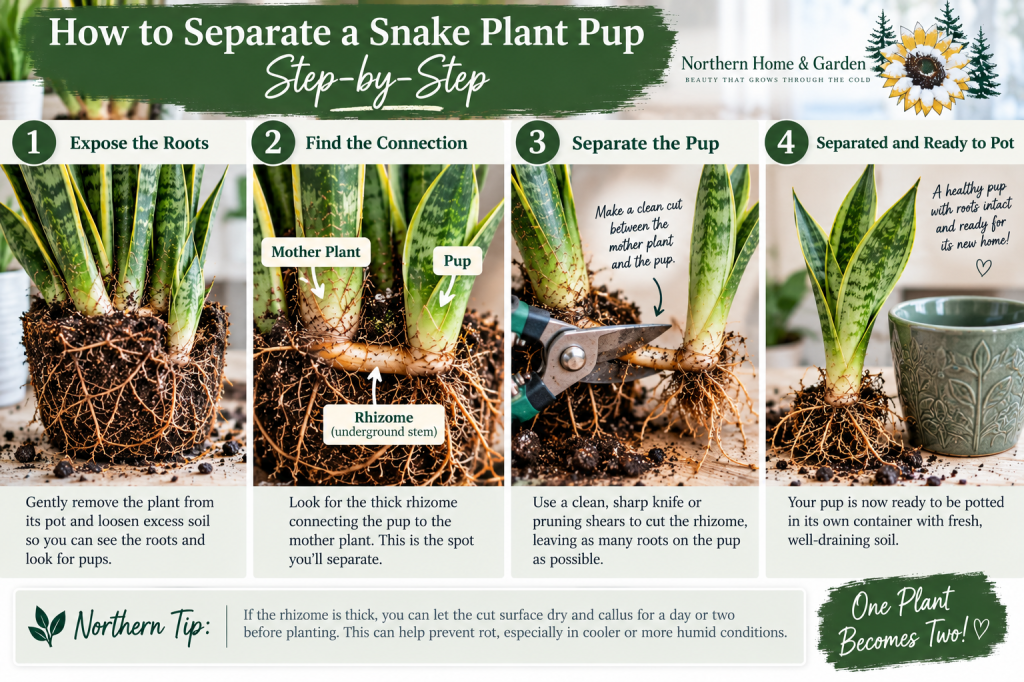
Brush away enough soil to expose the roots and rhizome.
Look for the thicker underground connection running between the parent plant and the pup.
This is the part you’ll separate.
And this is also the moment when the whole process suddenly makes sense—you can actually see how that little plant has been growing from the mother plant.
Step 3: Separate the Pup
Once you’ve exposed the connection between the pup and the parent plant, gently separate the surrounding roots so you can clearly see the rhizome.
If it’s still firmly connected by a thick rhizome, use a clean, sharp knife or pair of pruners to cut between the parent plant and the pup.
Try to preserve as many roots on the pup as possible.
You don’t need a gigantic root system, but those existing roots will help the new plant establish itself much more quickly.
❄️ Northern Tip
This is one of those jobs where a clean cut beats ten minutes of tugging, twisting and negotiating with a plant. 😂 If the rhizome isn’t separating easily, use a clean blade rather than damaging the roots trying to pull it apart.
Step 4: Give the Cut a Little Time
If you made a fresh cut through a substantial rhizome, you can allow the cut surface to dry slightly before planting.
Snake plants store moisture in their leaves and rhizomes, so there’s no need to rush the pup immediately into wet soil.
The important thing is avoiding a freshly cut rhizome sitting in soggy conditions.
Step 5: Pot the New Snake Plant
Fill a small container with a loose, well-draining potting mix formulated for snake plants or succulents.
Make a space for the roots and gently position the pup at approximately the same depth it was growing before. Fill around it with soil and lightly firm everything into place so the plant stands upright.
Don’t bury the leaves or pack the soil down like you’re pouring concrete. 😂
The roots need both moisture and air.
Step 6: Don’t Love It to Death With Water
This may be the hardest part.
You’ve just performed plant surgery. You’ve given the baby its own pot. Naturally, every instinct says:
WATER IT. TAKE CARE OF IT. CHECK ON IT EVERY 14 MINUTES.
Resist. 😂
Snake plants are much more tolerant of being a little dry than sitting in consistently wet soil.
If you’ve made a fresh cut during division, avoid immediately saturating the potting mix. Once the plant settles in, water thoroughly when appropriate and then allow the mix to dry substantially before watering again.
Caring for Your New Snake Plant
Once it’s potted, treat the pup much like an established snake plant.
Give It Good Light
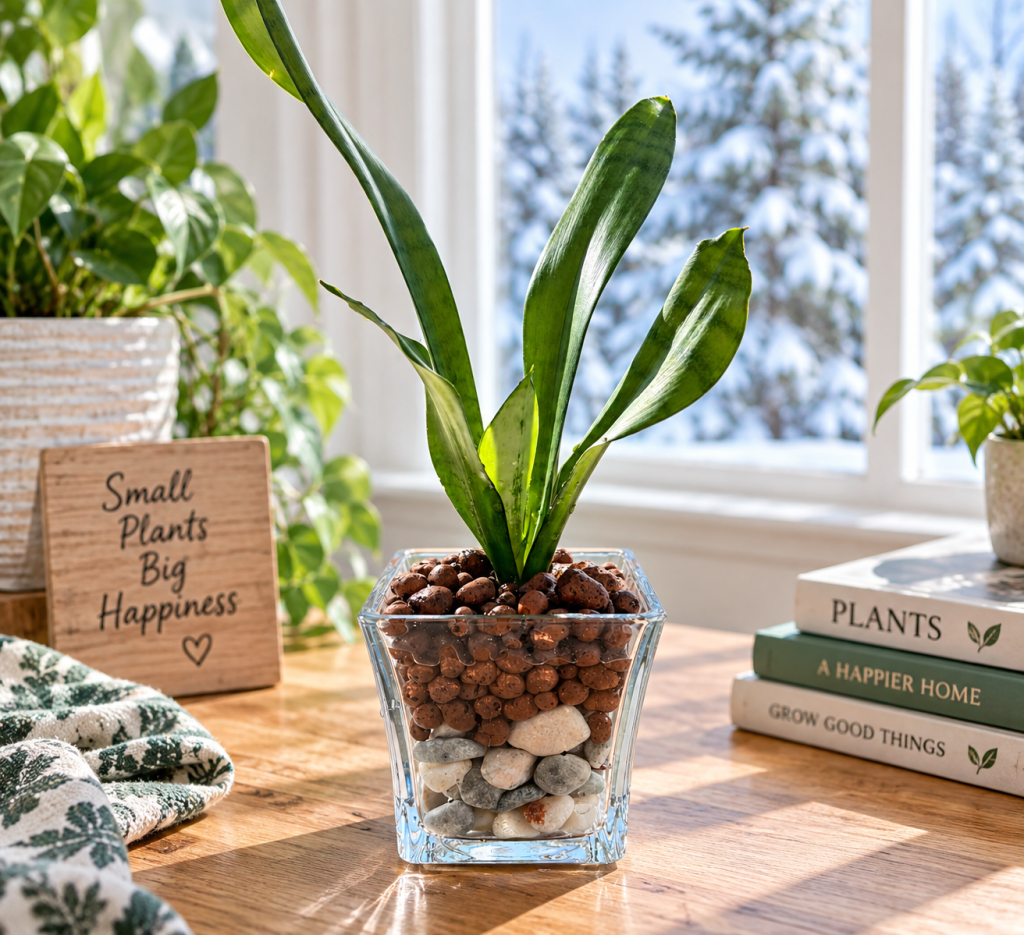
Snake plants tolerate lower-light conditions, but they’ll generally grow better with bright, indirect light.
Avoid suddenly placing a newly divided plant in intense direct sunlight if it isn’t accustomed to it.
Be Conservative With Water
Overwatering is one of the easiest ways to get into trouble with snake plants.
Rather than watering on a rigid calendar, check the soil first. Let it dry substantially between waterings.
During the darker winter months, your plant may use water considerably more slowly than it does during brighter periods.
And for those of us living through a northern winter, “darker months” isn’t exactly a short season. 😂❄️
Don’t Panic if Nothing Happens Immediately
Your newly divided snake plant may not immediately start throwing out new leaves.
It’s busy establishing roots and adjusting to life without the mother plant.
Give it time.
Houseplants operate on their own schedule, and unfortunately they have yet to show much interest in ours.
One Plant Becomes Two
There’s something ridiculously satisfying about propagation.
You start with one plant, notice a tiny shoot appearing from the soil, wait for it to grow—and eventually realize you’ve got an entirely new plant sitting there.
No trip to the garden center required.
Although let’s be realistic.
We’re probably still going to the garden center. 😂🌿
Snake plant pups are one of the easiest ways to see how fascinating houseplants are below the soil as well as above it. Once you’ve successfully divided your first one, that little pup popping up beside the mother plant stops looking like another leaf.
It starts looking like your next houseplant. 🌿

