Coleus might be one of the most dangerously easy plants to propagate.
You start with one plant. You snip off a little cutting. You stick it in a glass of water.
And suddenly you’re looking around the house wondering where you’re going to put the other 14 coleus plants you somehow acquired.
Ask me how I know. 😂
But that’s also one of the things I love most about coleus. They’re colorful, fast-growing, incredibly forgiving, and ridiculously easy to multiply. And for those of us gardening in cold northern climates, propagation is an especially handy way to save our favorite plants before winter arrives.
Instead of trying to drag every giant container indoors before the first frost, you can take a few cuttings, root them inside, and have brand-new plants ready for next spring.
Here’s how.
Affiliate Disclosure: This post contains affiliate links. As an Amazon Associate, Northern Home & Garden earns from qualifying purchases at no additional cost to you.
Why Coleus Is So Easy to Propagate
Coleus stems root very readily, which makes them a fantastic plant for beginners who want to try propagation.
You don’t need fancy equipment, a greenhouse, or a degree in plant science.
For water propagation, you really only need:
- A healthy coleus plant
- Clean scissors or pruning snips
- A small glass or jar
- Water
- A bright spot indoors
That’s it.
Coleus also grows quickly, so you usually don’t have to stare at a bare stem for three months wondering whether anything is happening.
You’ll often see progress surprisingly fast.
When Should You Take Coleus Cuttings?
You can propagate coleus throughout the growing season, but late summer and early fall are especially useful times for northern gardeners.
Coleus won’t survive our freezing winters outdoors, so taking cuttings before the first hard frost gives you a simple way to preserve plants you particularly love.
And there’s another advantage.
A few little rooted cuttings take up considerably less space inside the house than several enormous outdoor planters.
Your windowsills will thank you.
❄️ Northern Tip
If frost is approaching, don’t wait until the night before to start taking cuttings. Give yourself a little time to choose healthy stems and get them rooting comfortably indoors before winter really settles in.
How to Choose a Good Coleus Cutting
Look for a healthy stem with several sets of leaves.
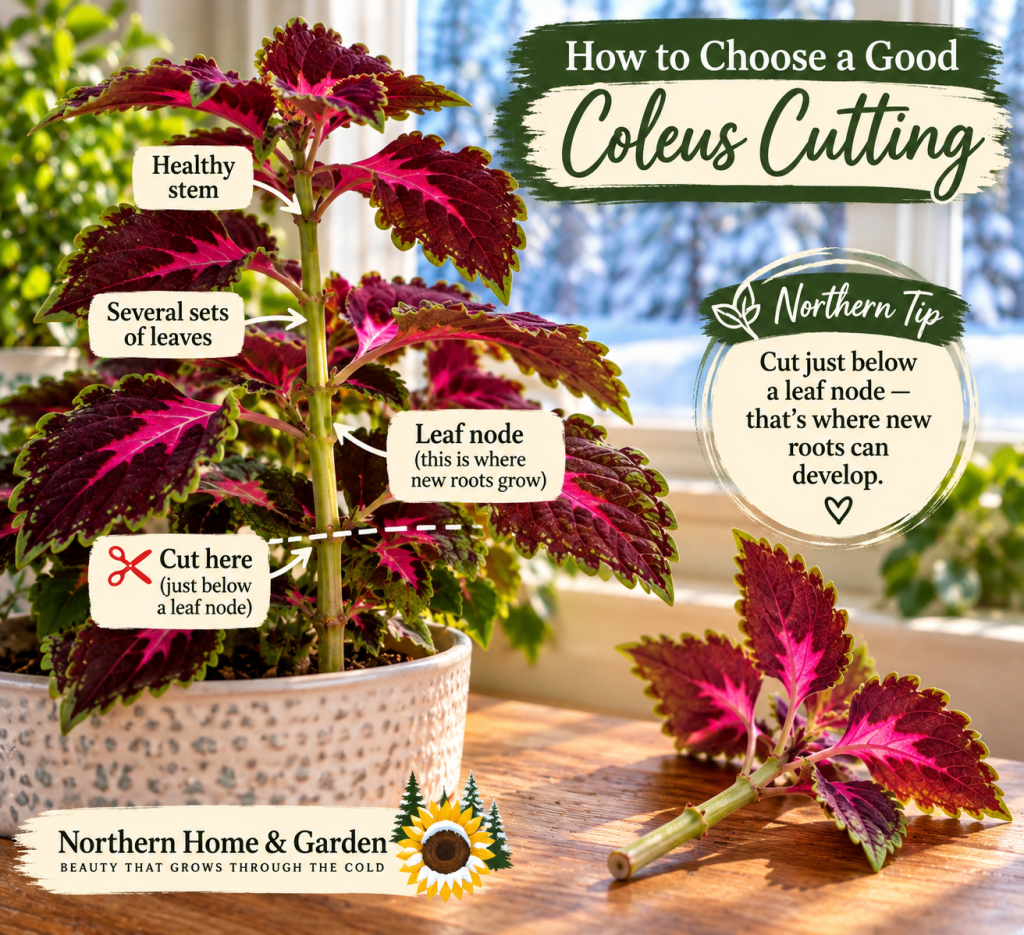
Ideally, choose fresh growth that isn’t flowering heavily or showing signs of disease, pests, or damage.
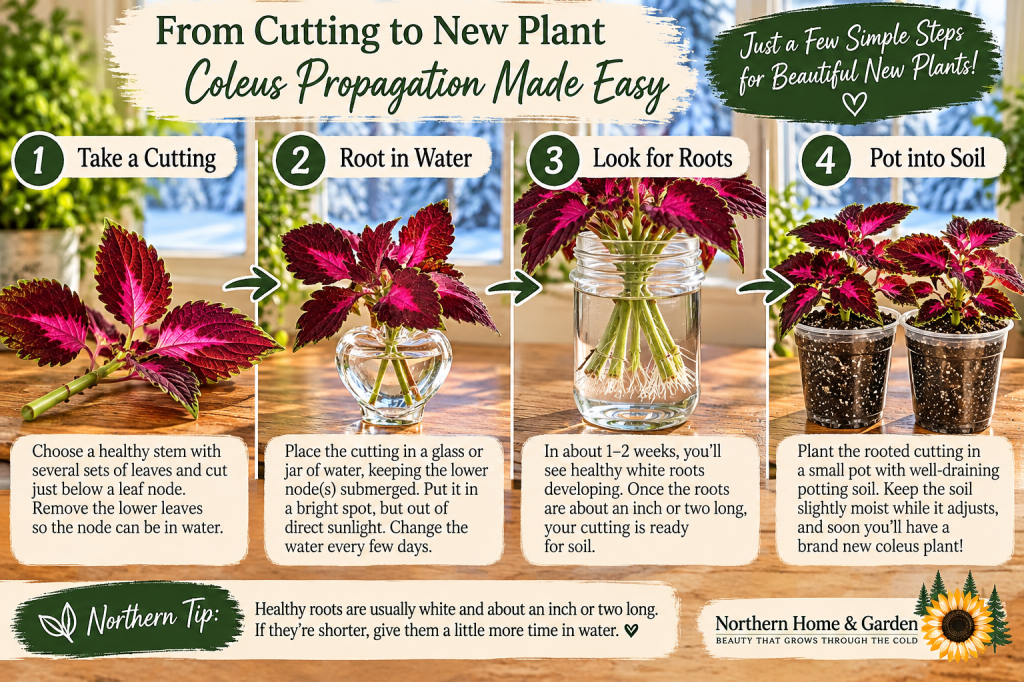
Using clean scissors or pruning snips, cut a section of stem approximately 4–6 inches long.
Try to make your cut just below a leaf node.
A node is the little area along the stem where leaves grow. This is important because nodes are also where new roots can develop.
Remove the leaves from the lower portion of the stem, leaving several healthy leaves near the top.
You don’t want leaves sitting underwater because they can begin to rot.
And nobody invited leaf soup to this project.
How to Root Coleus in Water
This is my favorite part because it’s almost ridiculously simple.
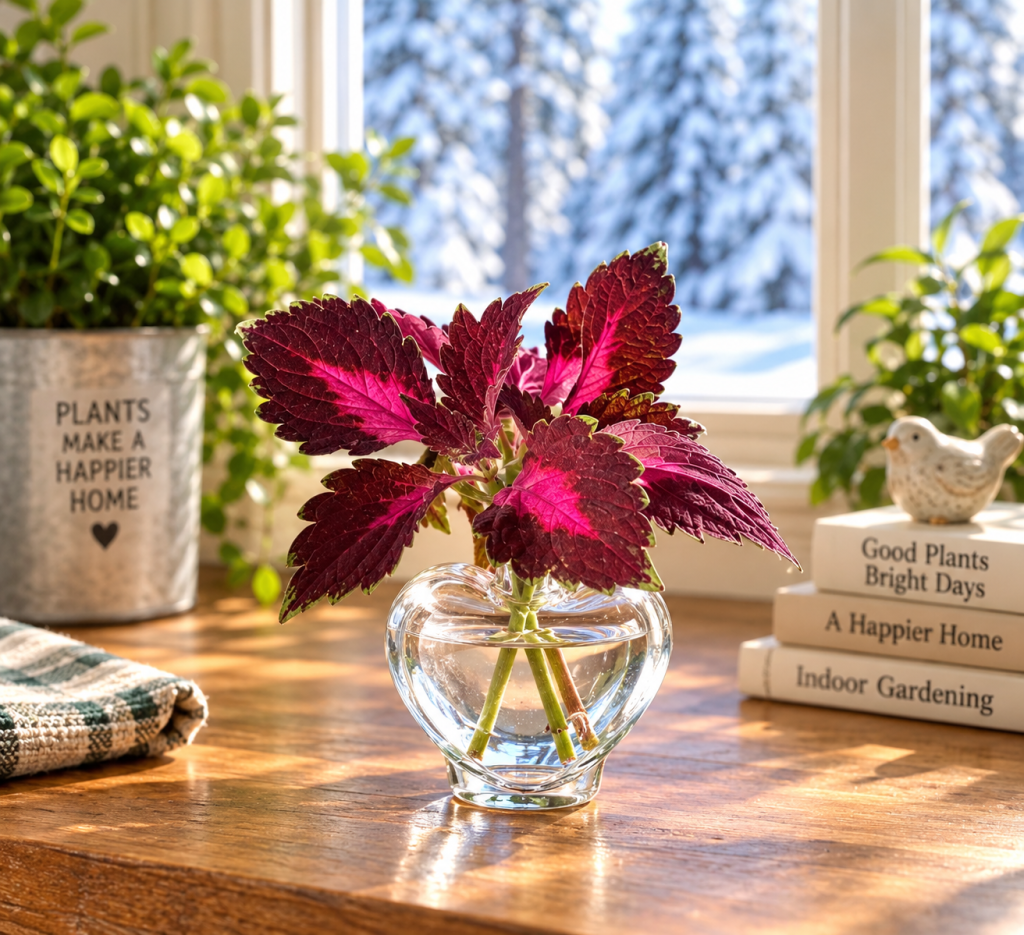
Place your prepared cutting into a small jar, glass of water, or propagation vase—I use a little heart-shaped glass propagation vase that works perfectly for this—making sure at least one or two nodes are submerged.
Keep the upper leaves above the waterline.
Then place the jar somewhere that receives plenty of bright, indirect light.
Avoid scorching direct sunlight, especially through a hot window.
Change the water every few days—or anytime it begins looking cloudy—and keep an eye on the water level.
Then wait.
Before long, you should begin seeing tiny white roots forming along the submerged nodes.
And once they start, they can grow surprisingly quickly.
When Is a Coleus Cutting Ready for Soil?
There’s no need to wait until your cutting has grown an underwater beard.
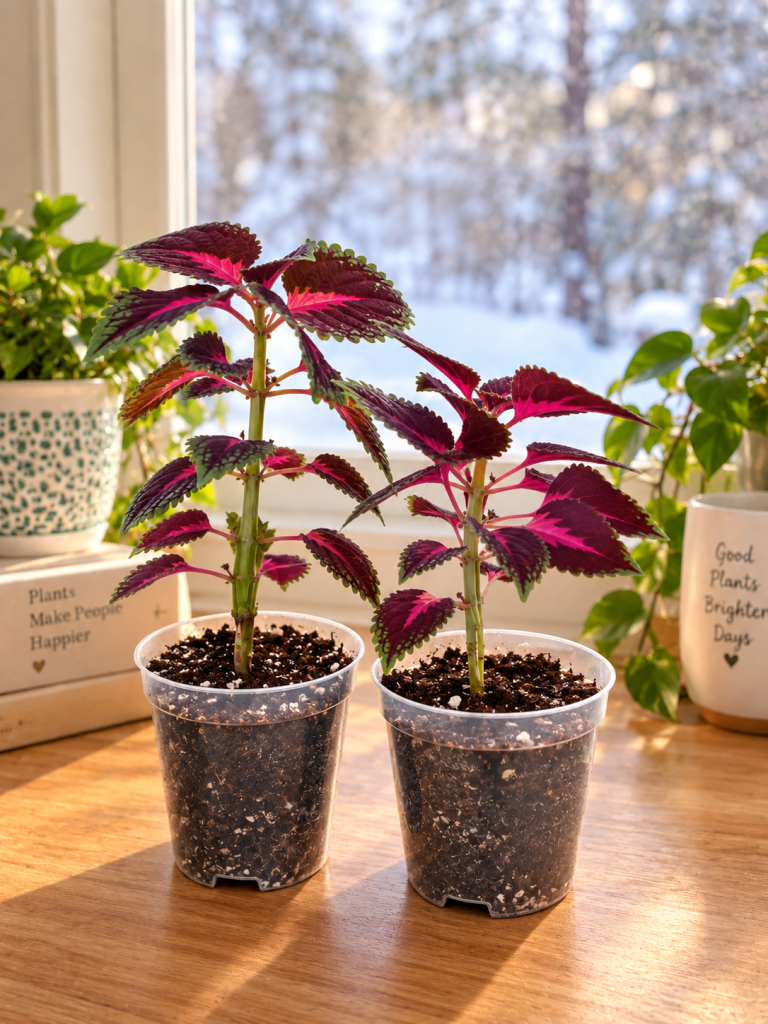
Once your coleus has developed several healthy roots about an inch or two long, it can usually make the move into potting soil.
Choose a small nursery pot with drainage holes and fill it with a good-quality indoor potting mix. I like clear nursery pots because you can keep an eye on root development without disturbing the plant.
Make a small hole in the soil, gently place the rooted cutting inside, and carefully tuck the soil around the roots.
Water it thoroughly and allow excess water to drain away.
For the first week or so, keep the soil slightly moist while the plant adjusts from living in water to growing in soil.
After that, you can begin treating it like a regular coleus plant.
Keeping Coleus Happy Indoors Through Winter
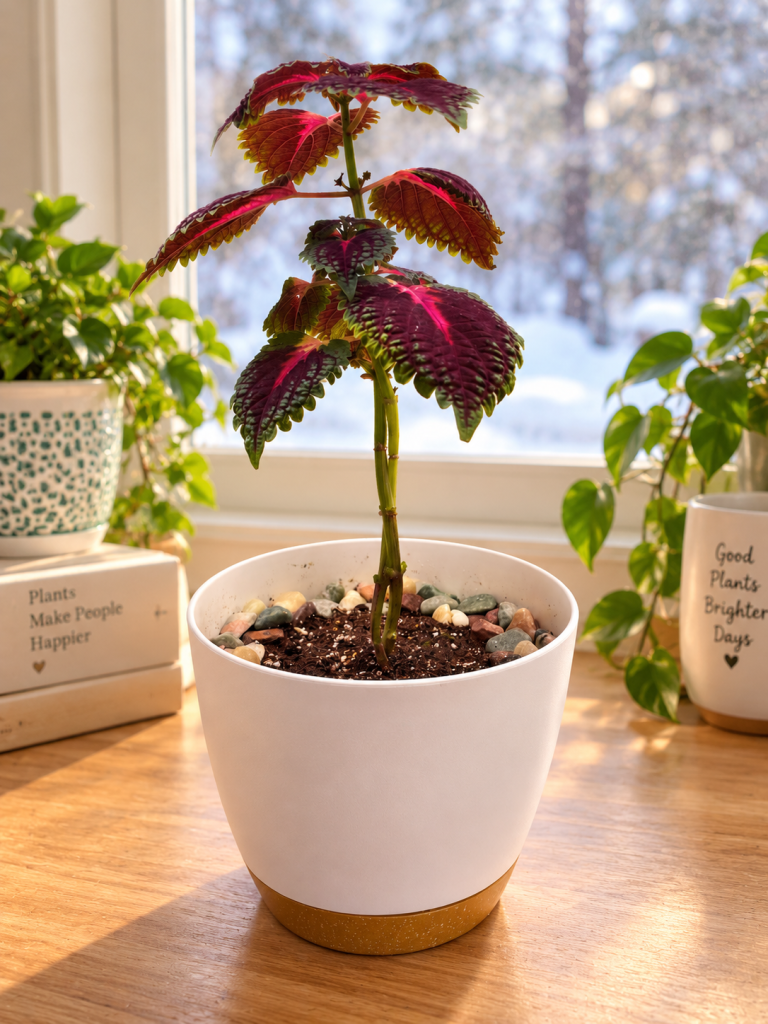
This is where northern winter makes things interesting.
Coleus loves bright light—and bright natural light isn’t exactly something we’re overflowing with during the middle of winter.
Place your plants near your brightest window if possible.
If they begin stretching, leaning heavily toward the window, or losing some of their vibrant color, they may need more light.
A simple grow light can make overwintering coleus considerably easier.
Pinching the growing tips occasionally will also encourage the plant to branch instead of becoming one long, lanky stem.
If you enjoy experimenting with the shape of your coleus, you can even train one into a little coleus tree.
Common Coleus Propagation Problems
Coleus is wonderfully forgiving, but a few things can still go wrong.
The stem starts rotting:
Remove the cutting, trim away the damaged portion with clean scissors, and place the healthy section into fresh water.
The leaves are wilting:
Some temporary wilting can happen after taking a cutting, but persistent wilting may mean the cutting is too hot, losing too much moisture, or isn’t getting enough water through the stem.
The water keeps getting cloudy:
Change it more frequently and make sure there aren’t any leaves submerged below the waterline.
The plant gets tall and leggy indoors:
It probably needs more light. Move it closer to a bright window or consider adding a grow light.
The cutting has roots but struggles after potting:
Keep the soil slightly moist during the transition, but not soggy. A cutting that has been living happily in water needs a little time to adjust to life in soil.
What Do You Do With All Those Coleus Plants?
This is where propagation gets dangerous.
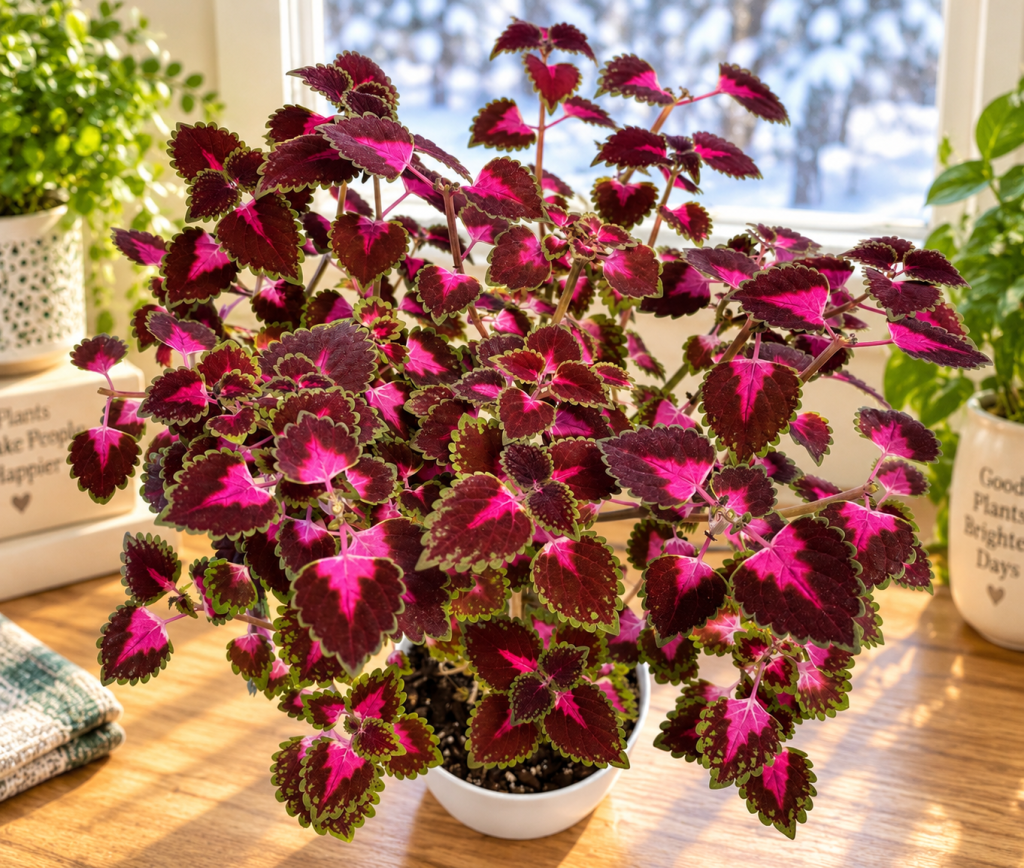
Because once you realize how easy this is, stopping becomes the difficult part.
Your new plants can become:
- Container plants for next summer
- Colorful additions to garden beds
- Houseplants
- Gifts for friends and family
- Mixed planters
- Experiments with different pruning and growing styles
Or you can do what I did and start trimming one until it looks suspiciously like a tiny tree.
Because apparently regular coleus wasn’t entertaining enough.
Save Your Favorites for Next Year
One of my favorite things about gardening is finding ways to carry a little piece of one growing season into the next.
Here in a cold climate, winter eventually wipes the outdoor slate clean. But that doesn’t mean every plant has to disappear with the first frost.
Taking a few coleus cuttings lets you preserve your favorite colors, enjoy a little greenery through the long winter months, and start the next gardening season with plants you already know and love.
And considering it only takes a pair of scissors and a glass of water, that’s a pretty good return on investment.
Just don’t blame me when every windowsill in your house has a coleus on it.
I warned you. 😂
Want to Try Something Fun With Your New Coleus?
Once your cutting is rooted and growing, you don’t necessarily have to let it become a traditional bushy coleus.
I trained one of mine into a little coleus tree, and it turned into one of my favorite plant projects.
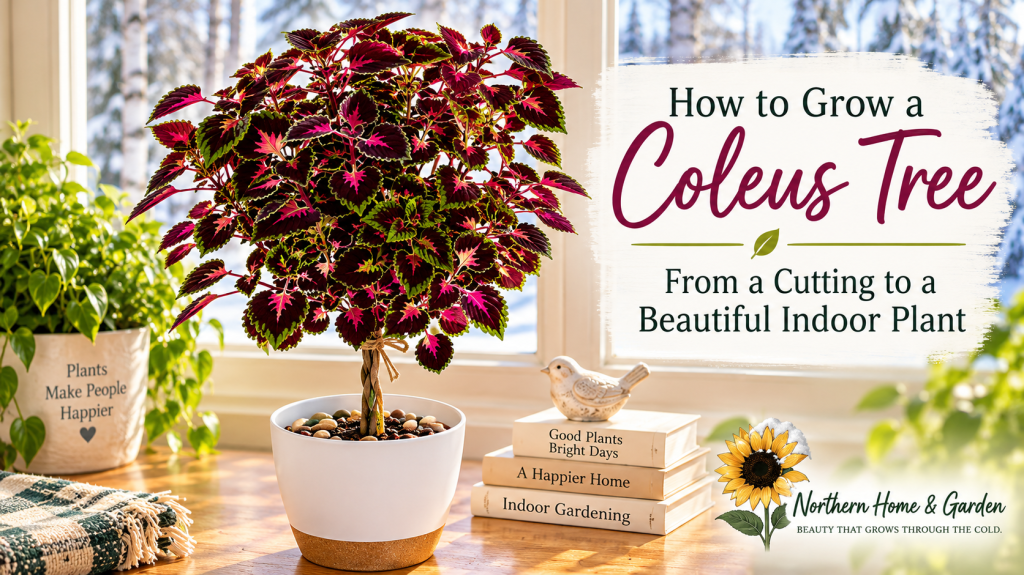
I’ll show you exactly how I did it, step by step, in How I Turned a Coleus Into a Little Tree.

