Every fall, there comes a point when I start looking around outside and deciding which plants I’m willing to let go…and which ones are getting rescued from the cold.
Because apparently after spending all summer growing a beautiful plant, I’m supposed to just calmly let the first hard freeze take it?
Absolutely not. 😂
Tender plants like coleus can often be brought indoors for winter, giving you a chance to enjoy them a little longer—or even keep them going until it’s warm enough to head outside again.
But there’s one tiny problem.
The plant may not be the only thing coming inside.
Aphids, spider mites, fungus gnats and other little hitchhikers can turn one innocent-looking plant into a houseplant headache surprisingly quickly.
So before carrying an outdoor plant straight into the house and setting it beside your favorite houseplants, here’s how I prepare it for the move.
Affiliate Disclosure: This post contains affiliate links. As an Amazon Associate, Northern Home & Garden earns from qualifying purchases at no additional cost to you.
First: Decide Whether the Plant Is Worth Bringing Inside
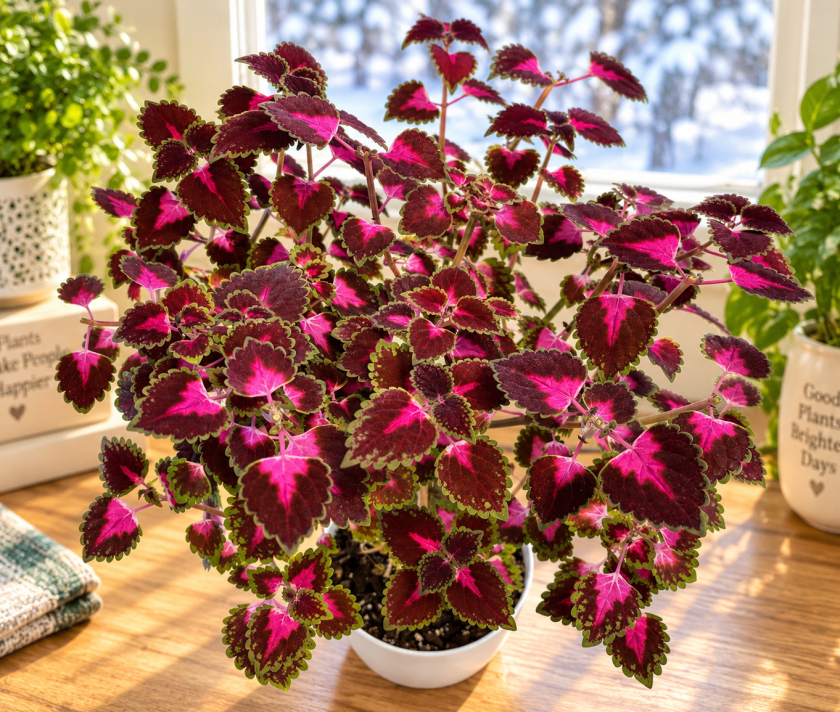
I love plants.
But I also don’t need to turn my house into a botanical rescue center every September. 😂
Before bringing a plant indoors, take a good look at it.
I would generally choose plants that are:
- Healthy and vigorous
- Relatively free of pests
- Small enough to reasonably keep indoors
- Something I especially like or want to save
- Tender plants that won’t survive winter outdoors in my climate
Coleus is a great example.
It’s commonly grown outdoors during summer, but it won’t survive our cold winters. A healthy coleus can be brought indoors, or you can take cuttings and grow smaller plants inside instead.
Start Before the First Hard Freeze
Don’t wait until temperatures are dangerously cold to make your decision.
Plants that have spent the summer outdoors are already going to experience an adjustment when they come inside. Suddenly changing their temperature, humidity and light conditions all at once can add even more stress.
If possible, start preparing plants while the weather is still mild enough to work outside comfortably.
❄️ Northern Tip
Fall garden cleanup gets pretty chilly where I live, so a pair of insulated, water-resistant gardening gloves makes these last outdoor plant chores much more comfortable. They also give me enough grip to handle damp pots and foliage without freezing my fingers off!
Inspect the Plant Carefully for Pests
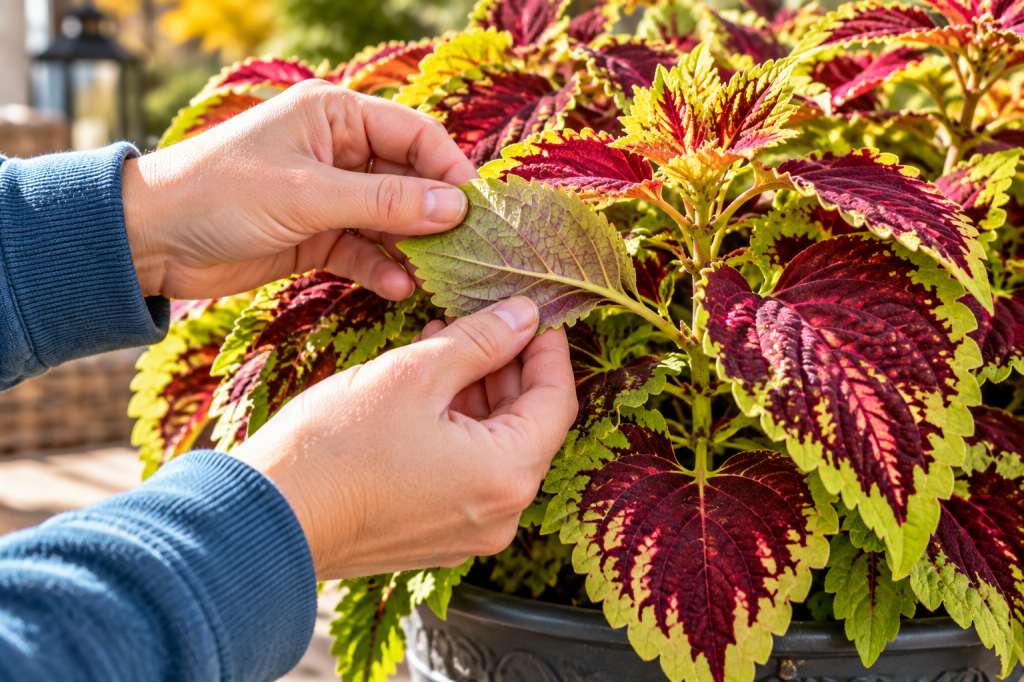
This is probably the most important step.
Before anything comes inside, I give the entire plant a careful inspection.
Look at:
- The tops and undersides of leaves
- Leaf joints and stems
- New growth
- Flower buds
- Around the rim and drainage holes of the pot
- The surface of the potting soil
You’re looking for actual insects, but also for signs that they’re there.
Watch for things like sticky residue, webbing, stippled or discolored leaves, curled new growth, tiny clusters of insects or little bugs moving around the soil.
Sometimes the best form of pest control is simply saying:
“You had a lovely summer. Goodbye.” 😂
Check the Pot Too
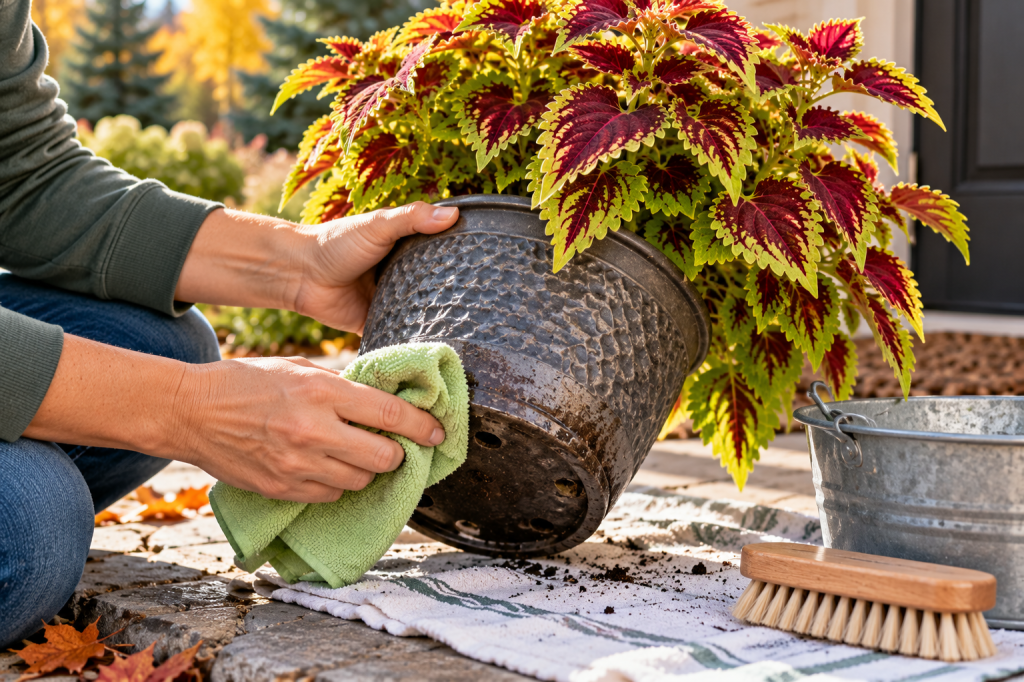
It’s easy to concentrate on the leaves and completely forget about the container.
But pots that have spent months outdoors can collect dirt, algae, spiderwebs—and occasionally things with considerably more legs than I’d like to find in my house. 😂
Wipe or rinse the outside of the pot, paying particular attention to:
- The bottom
- Drainage holes
- The rim
- Saucers
- Decorative outer pots
If you’re using a saucer indoors, clean that separately too.
This is also a good time to make sure the pot actually has adequate drainage before you bring it inside.
Do You Need to Spray Plants Before Bringing Them Inside?
Not necessarily.
I don’t love the idea of automatically treating a perfectly healthy plant with pesticides simply because it spent the summer outdoors.
If the plant looks clean, a thorough inspection and cleanup may be all that’s needed.
If you do find pests, identify what you’re dealing with first. Treatment depends on the pest and the plant involved.
In some cases, physically rinsing pests from the foliage can make a big difference. In others, an appropriate insecticidal soap or other plant-safe treatment may be useful when used according to its label.
The important part is not to assume that one treatment works for everything.
Identify first. Treat second.
Keep New Arrivals Away From Your Other Houseplants
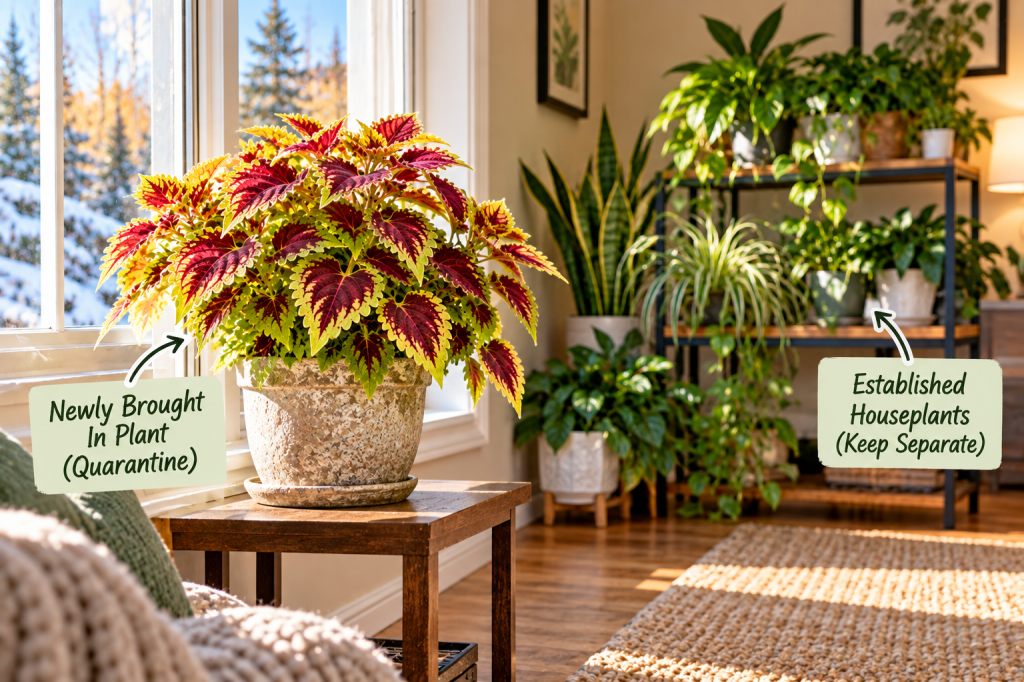
Even after a thorough inspection, I wouldn’t carry an outdoor plant inside and immediately tuck it into the middle of my houseplant collection.
Give it some space.
If possible, keep newly brought-in plants separated from your established houseplants for a couple of weeks while you continue checking them for pests.
A separate room or an area away from your main collection can be enough to make monitoring easier.
During that time, periodically check:
- Under the leaves
- Along stems
- New growth
- The soil surface
- Around the pot
One simple trick is to place a yellow sticky trap near the new plant for the first couple of weeks. It can help you spot fungus gnats or other tiny flying pests before you realize there’s a problem.
Catching a pest problem on one plant is considerably easier than discovering it after everybody has become acquainted.
Expect Some Leaf Drop
You can do everything right and still have a plant look slightly offended about being moved indoors.
That’s normal.
Outdoor plants are accustomed to much stronger light than they usually receive inside—even when they’re placed near a bright window.
They may also experience changes in temperature, humidity and airflow.
Some plants respond by dropping leaves, slowing their growth or simply looking a little unhappy for a while.
That doesn’t automatically mean you’re doing something wrong.
Give the plant time to adjust.
Find the Brightest Appropriate Spot
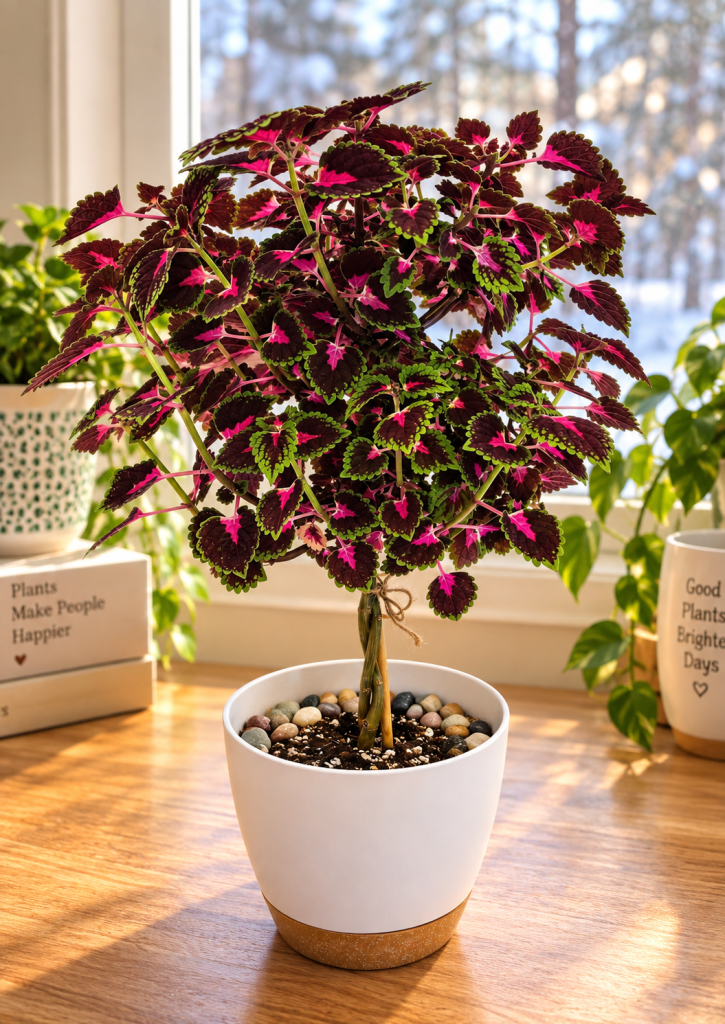
One of the biggest changes your plant will experience is light.
What looks like a bright room to us can be dramatically darker than outdoor light from a plant’s perspective.
Put the plant somewhere that provides the amount of light that particular species needs.
For sun-loving plants, that may mean your brightest available window or supplemental grow lighting.
Coleus generally appreciates plenty of bright light indoors, especially if you want to maintain those beautiful colors and keep growth from becoming thin and stretched.
Keep an eye on the plant after the move.
It’ll usually tell you whether it’s happy.
Change the Way You Water
This is an easy mistake to make.
A plant sitting outside in summer sun, wind and warm temperatures may dry out quickly.
Bring that same pot indoors and suddenly it’s losing moisture much more slowly.
If you continue watering on the exact same schedule, you may end up keeping the soil too wet.
Instead of watering by the calendar, check the soil.
❄️ Northern Tip
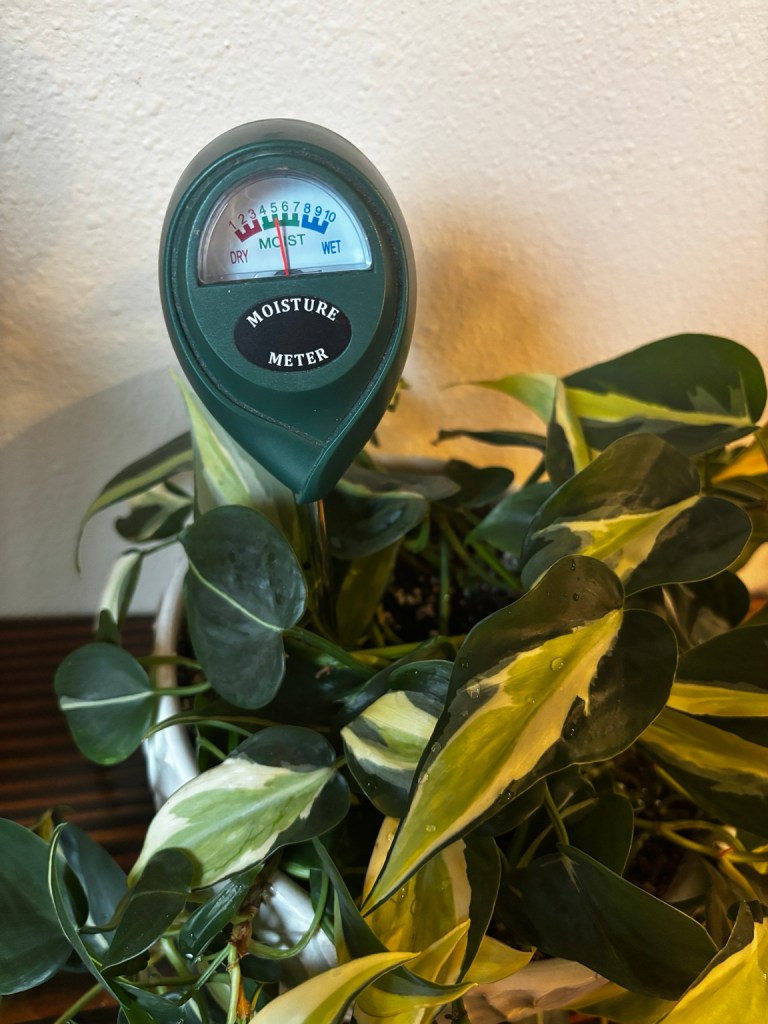
One little tool I use all the time is a simple soil moisture meter. I especially like it for larger or fuller houseplants where sticking a finger into the soil isn’t always practical. It takes the guesswork out of deciding whether the plant actually needs water—which becomes especially helpful once plants come indoors and start drying out more slowly.
Consider Taking Cuttings Instead
Sometimes the easiest way to save an outdoor plant isn’t bringing the entire plant inside.
It’s taking part of it.
Coleus is a perfect example.
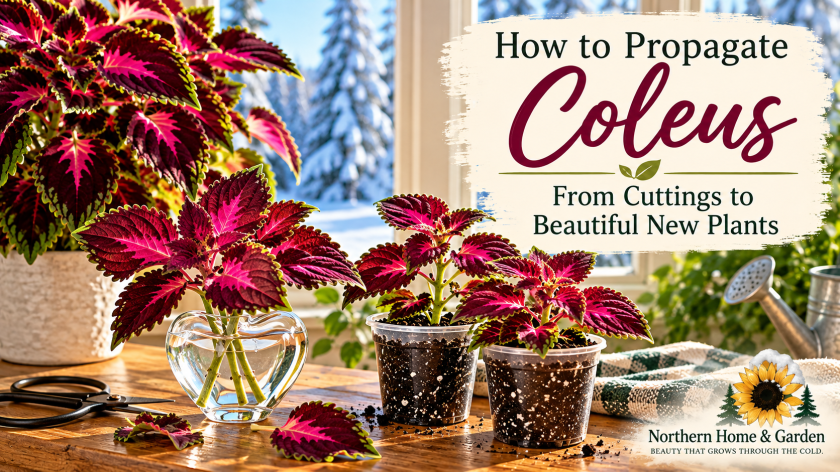
Healthy stem cuttings can be rooted and kept indoors, giving you smaller plants that require far less space than a mature outdoor coleus.
And one plant can potentially become several.
If you’d like to try that instead, I’ve already walked through the process in:
Propagating Coleus: How to Turn One Plant Into a Whole Collection
Is Every Outdoor Plant Worth Overwintering?
Nope. 😂
And I think this is worth saying.
Sometimes we put so much effort into saving a plant that we forget gardening is supposed to be enjoyable.
If bringing a particular plant indoors means battling pests all winter, rearranging half your living room and installing enough grow lights to make the neighbors wonder what’s happening over there…
it’s okay to let the plant finish its season.
You can always grow another one next year.
Save the plants you really love.
Take cuttings when that makes more sense.
And give yourself permission not to rescue everything.

